The cost of cooking around a half-broken range
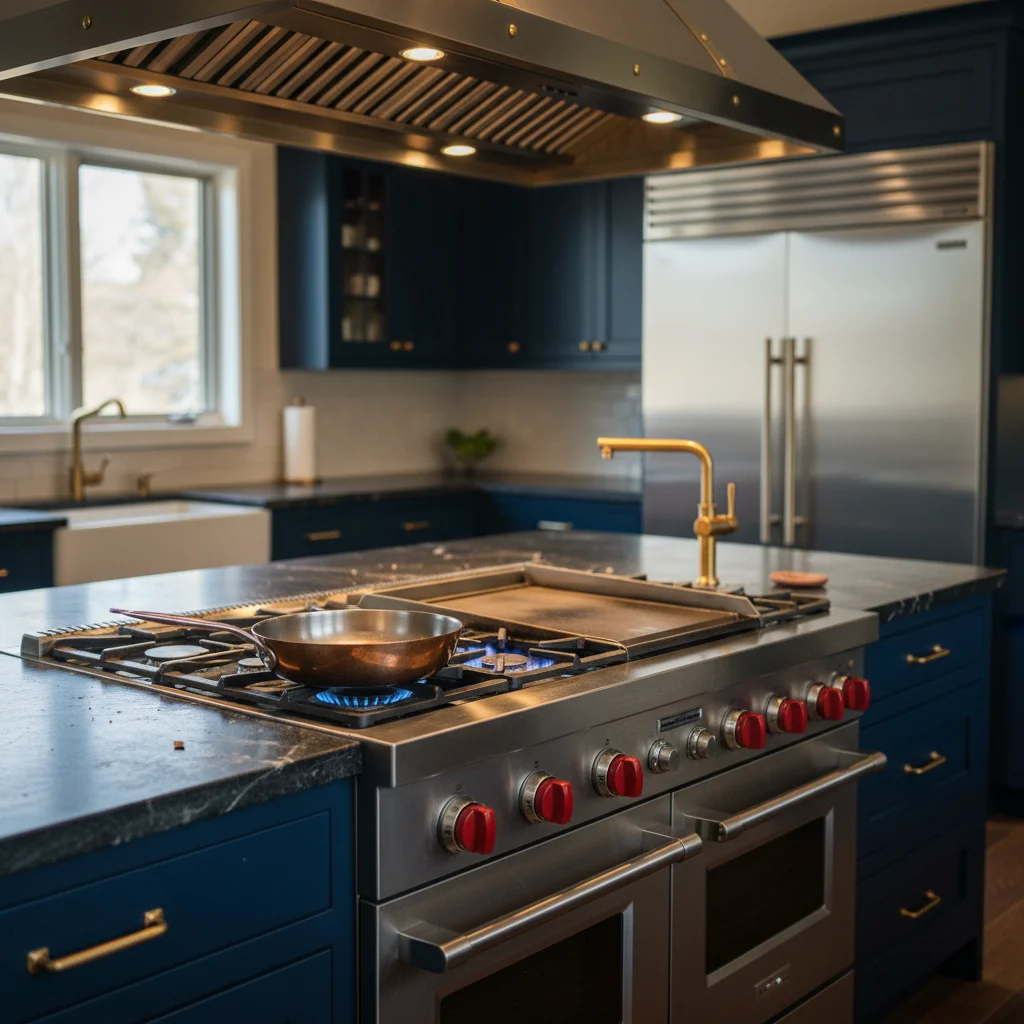
A range rarely dies all at once. It limps — one burner that won’t hold a simmer, an oven that needs an extra fifteen minutes, a broiler that fires only some of the time. In a University Hills kitchen, where the range was likely the centerpiece of a remodel that pulled down a wall and reopened the room, that limp is easy to work around for weeks. The trouble is what the workaround hides. A burner left clicking keeps venting raw gas. An oven cycling hot to compensate for a leaking gasket cooks its own control board faster. A bake igniter on its last legs strands you mid-recipe with a full sheet pan. Booking the repair early usually means one part and one visit; waiting turns it into a cascade. Call (720) 770-4189 and we trace the fault while it is still small.
What is usually behind it
University Hills is a mid-century neighborhood — long brick ranches built in the postwar boom, sitting on roomy lots between Yale and Hampden, near DU and the Highline Canal. The original kitchens were tidy 1950s galleys with a freestanding stove against the wall. Over the past two decades, owners have steadily gutted and reopened them, dropping in pro ranges the houses were never wired or plumbed for. That gap between old bones and new equipment shapes how these ranges fail:
- Sealed gas burners — clogged ports, worn electrodes, or a valve that won’t settle into a steady low flame.
- Spark and ignition — a failed spark module, or a harness jarred loose when a heavy range was nudged back into its alcove.
- Oven heating — fatigued bake igniters, drifting temperature sensors, and burned-out bake, broil, or convection elements.
- Electric and induction — failed elements, worn infinite switches, or a power module that has lost its interface.
- Control boards — the electronics that time the oven, often baking in a tighter retrofitted surround than the factory allowed for.
How we work the diagnosis
Reading the install, then the fault
We start by checking how the range sits in its rebuilt cabinet run — clearances, venting, and the gas run a remodel added. A boxed-in install can cook its own electronics, and a long supply line can leave high-BTU burners gasping. We confirm the access path before pulling the unit so your remodel stays unmarked.
Tuning for 5,280 feet
Three local forces steer the call. Thin air at altitude leaves a sea-level-tuned burner running rich — yellow flame, soot on the pan — and shorts a weak igniter of its firing margin, often a tuning fix rather than a swap. Denver’s bone-dry climate hardens oven gaskets early, leaking heat. And on any water-fed range, hard water scales the injector valves. We read all three before reaching for a part.
Coverage and brands
We cover every block of University Hills, from the canal greenway and Eisenhower Park to the streets bordering Wellshire and the shopping district. We service pro-style gas, dual-fuel, electric, and induction ranges, and we can look at the built-in fridge, wine column, or dishwasher in the same kitchen on one visit, so you are not booking separate trips.
Get it fixed
Call (720) 770-4189 any hour — the phone is answered 24/7 — or book online. On-site repairs run daily 8:00 AM to 6:00 PM, the diagnostic is a flat $89 credited toward the repair, and you always have an up-front price before we begin. Independent and serving the Denver metro since 2012.