Overview
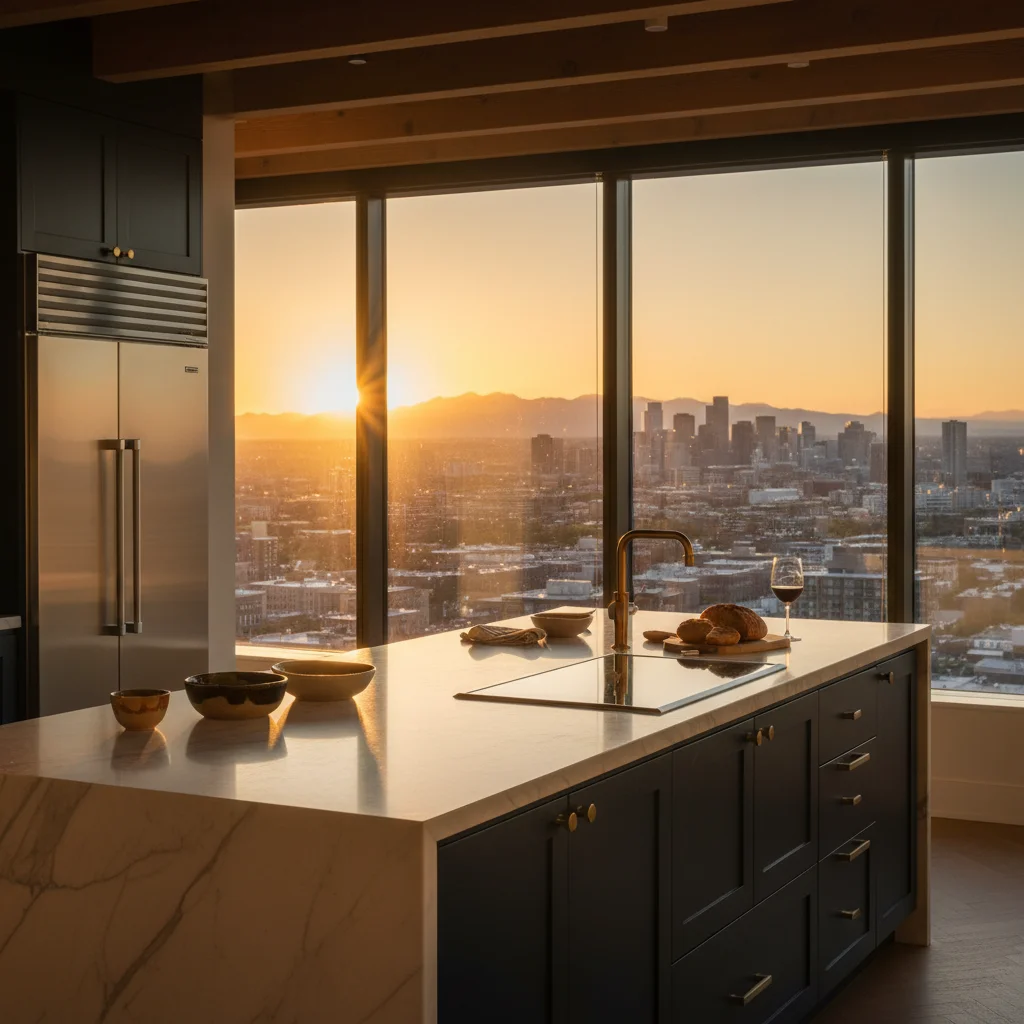
It usually happens on a weekend. You open the Sub-Zero column to grab something for dinner, the interior light comes on, but the air inside feels closer to a cool basement than a refrigerator — and the butter on the door is soft. Across the kitchen, the matched Wolf range is fine, which somehow makes it worse: one half of a carefully planned, expensive kitchen is failing while the other half hums along. That is the exact moment most Washington Park homeowners go looking for someone who actually knows these appliances, and it is the moment this page is written for.
Washington Park is one of Denver’s most distinctive residential neighborhoods, and its kitchens reflect that. The neighborhood is defined by its tree-lined grid wrapped around the park itself — block after block of brick Denver Squares (those boxy, foursquare two-stories with deep front porches) and 1920s bungalows, many of which have been gut-renovated over the last two decades. When owners remodel a Wash Park bungalow, they tend not to do it halfway. The single most common high-end kitchen pairing we walk into here is a Sub-Zero built-in or column refrigerator standing next to a Wolf gas or dual-fuel range — a deliberate, matched suite dropped into a footprint that was originally framed in 1924 for an icebox and a coal stove.
That tension — twenty-first-century appliances inside a century-old shell — is the whole reason premium repair in Wash Park rewards a specialist over a general handyman. We are an independent service, not a manufacturer, and we have worked Denver metro kitchens since 2012. Our job is simple to describe and harder to do well: find the actual cause of the failure, reach it without tearing up a renovation someone is proud of, and quote a clear, up-front price before any work begins. The $89 diagnostic service call covers that inspection and is applied toward the repair if you go ahead.
Why the housing stock shapes the repair
It is worth being concrete about how Wash Park’s homes change the job, because it is not a small thing:
- Denver Squares are tall and deep but narrow, and their original kitchens sat at the back of the house. Renovations push a modern island and a built-in fridge into a space with limited width, so a Sub-Zero column often goes in tight against a return wall — condenser airflow is compromised before the unit is ever plugged in.
- Renovated bungalows are single-story with low original ceilings and basements directly below the kitchen. Refrigerant lines, water lines, and dishwasher drains frequently route down through that basement, which changes how a leak or a drain fault shows up — sometimes you see water on the basement ceiling before you see it on the kitchen floor.
- High-end remodels lean hard into integrated, panel-ready installs. The Sub-Zero disappears behind cabinet panels and the Wolf sits flush in a custom surround, so service access is deliberately hidden. Pulling a unit forward means clearing a finished millwork run, not just sliding a box.
None of that is a problem — it is simply the context. But it is the context a national service manual written for a suburban garage kitchen tends to ignore.
Common problems we diagnose in Washington Park
Across the neighborhood’s squares, bungalows, and the larger homes toward Bonnie Brae, a recognizable set of failures comes up over and over. Here is what we most often find behind each complaint:
- A Sub-Zero that cools, but not enough. The classic Wash Park call. Usually a condenser choked with dust, a failing condenser or evaporator fan, a tired start relay, or — less often — a slow sealed-system refrigerant fault. In a column wedged tight against a wall, the condenser loses airflow fast, and the thin Denver air makes that worse.
- Frost sheeting up on the freezer’s back panel. Typically a defrost heater, a failed defrost sensor, or a control board mistiming the defrost cycle so ice never clears.
- A Wolf range with lazy, yellow-tipped, or uneven flames. Frequently an altitude-and-combustion issue rather than a broken burner — orifice and air-mix settings dialed in at sea level run rich at 5,280 feet. We check the flame itself, not just the igniter.
- A Wolf burner that clicks but won’t light. Often a fouled igniter, a clogged port, or moisture in the spark module — common in dry-then-humid summer swings.
- An oven that overshoots or drifts off its set temperature. The usual suspects are the bake element, a drifting temperature sensor, or a control board that needs recalibration.
- Ice production that drops off or turns cloudy. Almost always scale from Denver’s hard water building up in the fill valve, line, and mold.
- A dishwasher leaving film or refusing to drain. Scale on the heating element and spray arms, a failed drain pump, or a clogged sump — hard water is usually the root.
- Water appearing in the basement under the kitchen. A blocked defrost drain, a cracked drain pan, or a scaled, weeping water line that routes downward through a bungalow’s floor.
- A wine column that can’t hold its set point. A weak compressor or thermoelectric module, a fan fault, or a gasket gone brittle in the dry air.
If your symptom isn’t on that list, it still belongs on the phone — these are the patterns, not the boundaries of what we fix.
Services we offer in the neighborhood
Within Washington Park, we regularly handle:
- Built-in and integrated refrigerator repair — Sub-Zero columns, under-counter drawers, and panel-ready units.
- Professional range repair — Wolf and other gas and dual-fuel ranges, with attention to altitude-affected combustion.
- Wall oven and cooktop repair — temperature, igniter, and control faults on built-in and rangetop configurations.
- Freezer and ice maker repair, including the scale-and-water issues that dominate here.
- Dishwasher repair, where hard-water scale and drain problems lead the list.
- Wine and beverage column service for the remodels that built one in.
Our diagnostic process
We are deliberately skeptical of the fast diagnosis, because in a tight Wash Park install the cost of being wrong is a second trip through someone’s finished kitchen. Here is how a visit actually runs:
- You tell us the brand and the symptom. When you call or book online, let us know whether it’s the Sub-Zero, the Wolf, or something else, what it’s doing, and roughly where you are in the neighborhood. That lets us bring the right common parts and plan access.
- The technician inspects on-site and reads the system. They confirm the symptom, pull any stored fault codes, and work methodically through whatever the appliance calls for — the sealed refrigeration loop, the gas combustion path, the water path, or the control logic. On a column that’s warming, that means checking condition and airflow at the condenser, testing both fans and the start components, and verifying the charge behaves correctly at this elevation before anyone reaches for a refrigerant conclusion.
- We trace the fault back to its cause, not just its symptom. A condenser fan can be swapped in twenty minutes, but if it burned out because a dust-caked condenser ran it hot — a failure pattern altitude makes worse — the new fan is just the next part to fail. We follow the chain backward so the repair holds.
- You get a plain-English diagnosis and an up-front price. Before any wrench turns, you know what failed and what it costs. The $89 diagnostic covers this inspection and is credited toward the repair if you proceed.
- We complete the repair and explain what to watch. Using OEM-grade, model-matched parts, we finish the job and tell you plainly what was replaced and why — so you’re not guessing later.
The point of the sequence is that nothing happens behind your back. You approve the cause and the cost before the work, and the price you’re told is the price you pay.
Denver-specific factors at 5,280 feet
It is easy to treat “mile-high” as a marketing line. It isn’t — the elevation genuinely changes how these appliances behave, and Washington Park sits right at it. The physics break down into a few concrete forces:
- Thinner air means weaker heat rejection. At roughly 15% lower air density, a Sub-Zero’s condenser and cooling fans move less mass per revolution, so the system sheds heat less efficiently than the same unit would near the coast. A column that’s even slightly dusty or tight against a wall — the standard Wash Park install — starts to struggle here sooner. Refrigerant charge and compressor heat rejection are both sensitive to that thin air, which is why we read the system the way it behaves in Denver, not the way a national manual assumes it behaves at sea level.
- Combustion changes on the Wolf range. Thinner air carries less oxygen per cubic foot, so the fuel-to-air mixture shifts. Orifice sizing and burner tuning that were correct at sea level can run rich at altitude, producing lazy, yellow-tipped, or sooty flames and harder ignition. A burner that looks “broken” is often a combustion-and-altitude problem we can actually correct on a properly equipped professional range.
- Hard water is relentless. Denver’s supply commonly runs around 150 to 250 ppm, and that mineral load is brutal on ice makers, dishwasher internals, and the thin water lines feeding a built-in fridge or a plumbed Wolf griddle. It is the leading reason ice output drops, cubes come out cloudy and small, and dishwashers start leaving film. A repair that ignores the water chemistry just resets the clock to the next failure.
- The dry climate and strong UV age seals early. Denver’s low humidity and intense Colorado sun harden and crack door gaskets faster than the warranty math assumes. A gasket that no longer seals lets warm air leak in, the compressor runs longer, and the whole system works harder — so we check seals as part of every refrigeration diagnosis here, not as an afterthought.
A technician who understands those four forces fixes the cause. One who doesn’t fixes the symptom, and you see them again next summer.
Brands and related work
Sub-Zero and Wolf are the pairing we see most in Washington Park, but the premium kitchen here often includes more than two names. We service the full range of high-end and built-in brands homeowners install during a serious renovation:
- Refrigeration — Sub-Zero built-ins, columns, and under-counter drawers, plus other premium and integrated refrigerators and freezer columns.
- Cooking — Wolf gas and dual-fuel ranges, rangetops, wall ovens, and cooktops, along with comparable professional ranges from other premium makers.
- Dishwashers — integrated, panel-ready units where hard-water scale and drainage dominate the fault list.
- Wine and beverage columns — temperature, compressor, fan, and seal faults on built-in and standalone units.
If you have a mixed suite — say a Sub-Zero column, a Wolf range, an integrated dishwasher, and a wine column from a third brand — that’s normal here, and it’s exactly the kind of kitchen we’re set up to service in a single visit.
Booking a Washington Park repair
We’ve kept booking simple and built it around how this neighborhood actually lives:
- Call (720) 770-4189. The phone is answered 24/7, so you can reach a real person the moment something quits — late at night, early morning, or over a weekend.
- Or book online any time that’s convenient for you.
- Repairs are performed daily, 8:00 AM to 6:00 PM. When we schedule, we’ll confirm a window and check any access details — a tight galley return wall, a panel-ready install behind finished millwork, basement routing under a bungalow, or street parking on the busier blocks near the park.
- The $89 diagnostic service call covers a full on-site inspection and is applied toward your repair, so the diagnosis is never wasted money.
We’ve served the Denver metro as an independent specialist since 2012, and Washington Park — with its Denver Squares, its renovated bungalows, and its Sub-Zero-and-Wolf kitchens dropped into century-old homes — is exactly the kind of work we’re built for.
Ready to get a Sub-Zero column, a Wolf range, or any built-in back in service? Call (720) 770-4189 or book online today — same-day and next-day appointments are available across Washington Park and south-central Denver, and the $89 service call goes straight toward your repair.