It starts with a soft pint of ice cream. No alarm, no error code — just a freezer in a rebuilt University Hills ranch that has quietly eased from a hard zero up to something slushy over three or four days, long enough that the contents are already at risk before anyone notices. The job is to find why it slipped, and to put one honest number in front of you first.
Overview
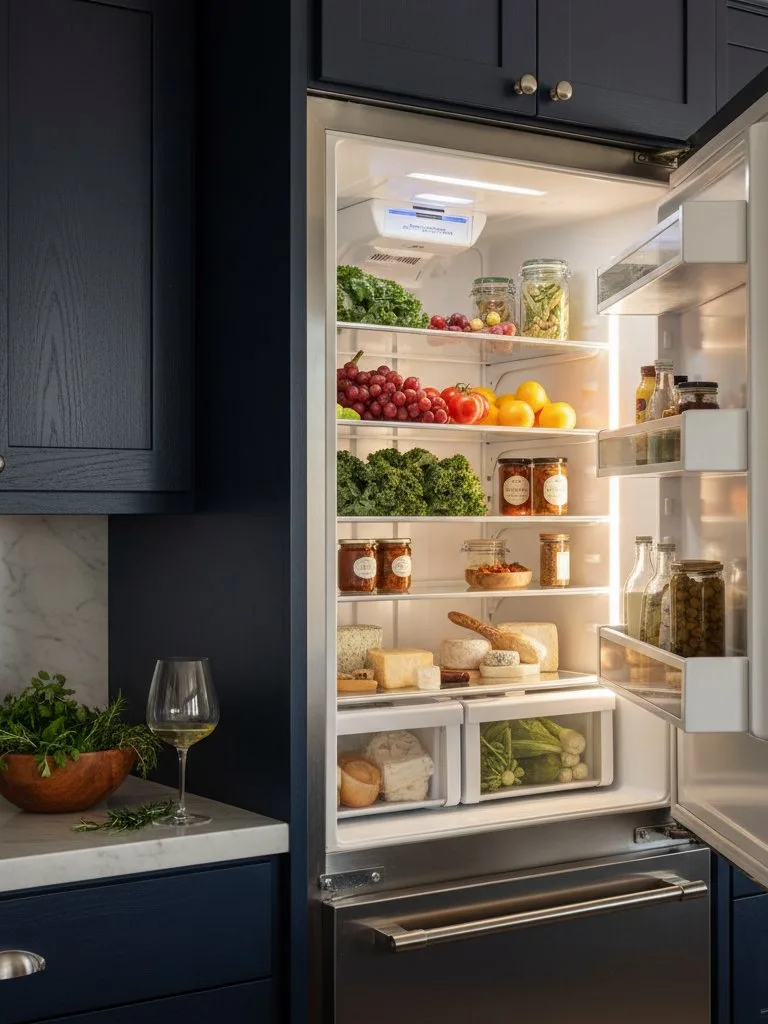
University Hills is a planned postwar subdivision — long, low brick ranches near DU and the Highline Canal, most of them built around 1955 with a single-wall galley and a freestanding fridge. Those kitchens have not stayed put. Over the past two decades, owners between Yale and Hampden have reopened them around current refrigeration: a built-in freezer column, an under-counter drawer stack in a new island, a panel-ready upright. The bones are mid-century; the freezing is modern and expensive. That gap shapes every freezer call we take here.
Common problems
Across the neighborhood’s remodels, freezer trouble keeps landing on a short list:
- Running but no longer freezing — usually a frosted evaporator behind a failed defrost heater, sensor, or control board.
- Ice sheeting the back wall — a stuck defrost cycle, or a gasket hardened by dry Denver air letting humidity creep in.
- Compressor that never cycles off — a dust-choked condenser in a tight retrofitted cavity, or a sealed system straining in thin mountain air.
- One drawer cold, one warm — a fan motor or damper fault in a multi-zone column or drawer set.
- Slushy, slow ice — hard-water scale clogging the fill valve, lines, and mold on a built-in maker.
Our diagnostic process
We work the unit before we touch a part:
- We log the real compartment temperature and how the freezer is cycling, ignoring the door display.
- We read the sealed system — condenser, compressor, charge — with altitude factored into what counts as normal.
- We test the defrost circuit and evaporator fan whenever frost is the complaint.
- We check the gasket and, on ice-making units, trace the water path for scale.
- We hand you one combined, up-front price and start only with your go-ahead.
Denver-specific factors
University Hills sits at 5,280 feet, where the air runs roughly 15% thinner, so a condenser sheds noticeably less heat — and a freezer already boxed flush into a retrofitted cabinet run feels that penalty first. A charge that is slightly low tips over sooner here than it would at sea level. Denver’s hard water, about 150 to 250 ppm, scales up built-in ice makers and fill valves, while the very dry climate stiffens door gaskets early and pulls humidity into any seal that has hardened.
Brands and related units
We service built-in freezer columns, under-counter freezer drawers, panel-ready and freestanding uprights, side-by-side freezer compartments, and the integrated ice makers and beverage units that often sit beside them. When we replace something, we fit OEM-grade or manufacturer-compatible parts from verified suppliers, matched to your exact model and serial — the components the system was engineered around, not a generic stand-in.
Booking
If your University Hills freezer is drifting, don’t wait for the contents to thaw. The on-site diagnostic is $89, credited toward the repair once you approve it; a firm price comes only after inspection. Call (720) 770-4189 any time — the phone is answered 24/7, and repairs run daily 8:00 AM to 6:00 PM. You can also book online. Same-day and next-day appointments are common across University Hills and southeast Denver.