The repair, explained
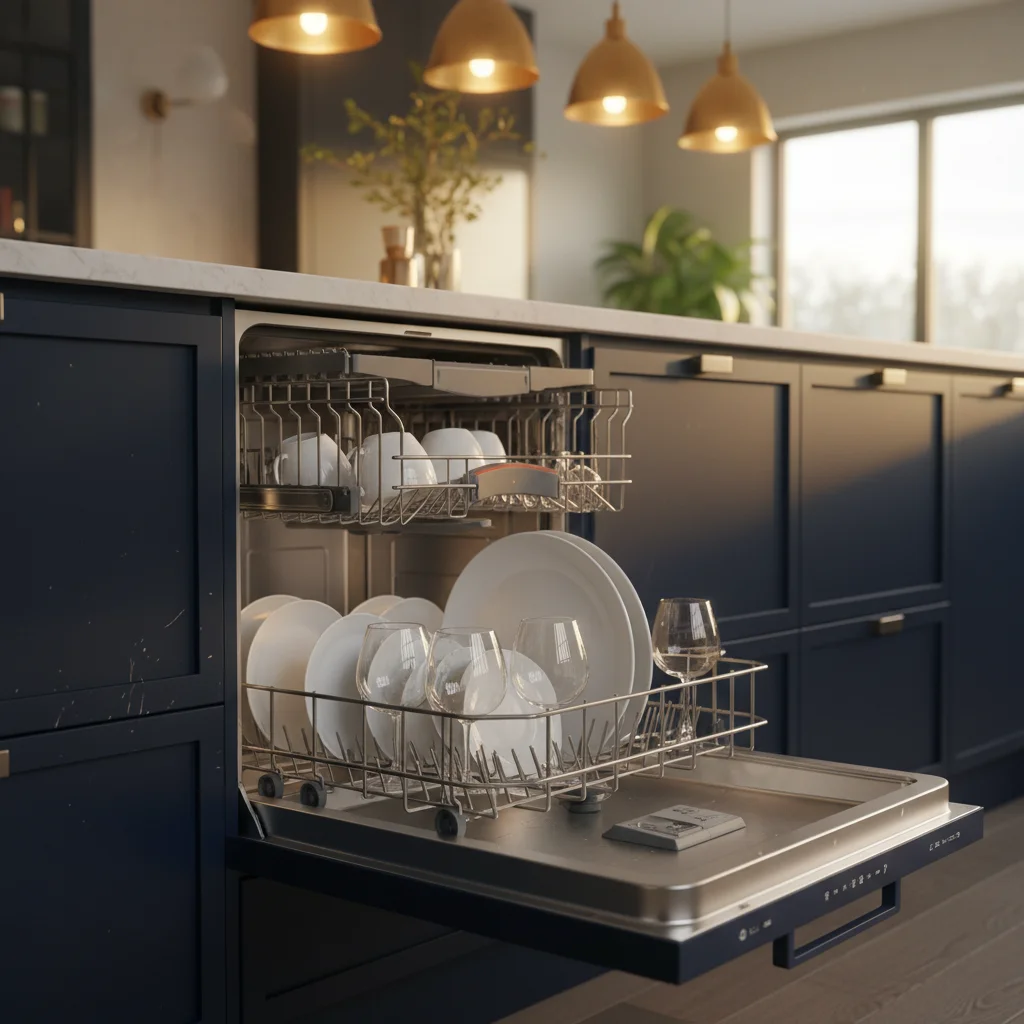
Open the dishwasher in a University Hills ranch and you are usually not looking at a 1950s machine. You are looking at a current built-in that landed during a remodel, slotted into a kitchen footprint laid out when the house went up near DU and the Highline Canal. The cabinets are mid-century; the dishwasher is not. That mismatch is the whole story of a repair here.
A generic call assumes a freestanding unit you can roll out and turn around. Here the machine is integrated or panel-ready, framed flush into a cabinet run that was either original and adapted or custom-milled for the remodel. The drain ties into older plumbing, the supply often runs off a valve from a different decade, and the unit sits in a tight bay over finished flooring. So the repair is two jobs at once: find the true fault, and reach it without marking millwork and floors that cannot simply be swapped.
Symptoms and causes
Every complaint narrows to a short list, and the local water and elevation tilt the odds:
- Gray water left in the tub — a clogged filter, a seized drain pump, or a check valve furred with scale.
- Cloudy, gritty, or still-wet dishes — hard-water film on the spray arms and heating element, often misread as a drying fault.
- A unit that will not start or quits mid-cycle — usually the door latch, control board, or thermal fuse.
- A slow seep onto the floor — a brittle gasket, a cracked fill hose, or a weeping pump seal, all aged early by Denver’s dry air.
- Grinding or a burnt smell on the drain stroke — a failing pump or debris lodged in the impeller.
The retrofit context matters. An old, scaled supply line behind a remodeled cabinet can starve the fill and look exactly like a broken inlet valve while needing a completely different fix.
Why a specialist
A built-in dishwasher is a closed system of pump, valve, heater, and control board that all depend on one another, and pulling one from a tight University Hills cabinet run is not handyman work. Guess at the fault and you risk a second trip through the same cramped bay, past the same finished floor. We read the install as carefully as the machine, plan the access path before condemning a part, and protect the cabinetry on the way in and out.
What a visit looks like
- Read the install first. How the unit is mounted, where the drain ties in, and whether a panel must come off, confirmed before anything is condemned.
- Rule out the plumbing. Filter, drain line, air gap, and that older supply valve get checked before we touch parts.
- Descale rather than replace. We clear scale from the arms, element, and check valve instead of fitting parts that will only scale up again.
- Run a live cycle. Fill, drain, heat, and the door seal are watched under load.
- Quote up front. You get the cause in plain language and a firm price before work begins.
Behind nearly every call sit three Denver realities. The air at 5,280 feet is roughly 15% thinner, so heated-dry cycles strain to hold temperature. The water runs hard, commonly 150 to 250 ppm, scaling spray arms, elements, and inlet screens. And the dry, high-UV climate hardens gasket rubber years early, so seals crack and seep before their time.
Pricing
The diagnostic service call is $89, credited toward the repair once you approve the work. Because freeing a built-in from retrofitted ranch cabinetry can expose a fault the front never showed, the exact repair price comes only after an on-site inspection. You see a firm number before any work starts, and nothing is added at the end. We fit OEM-grade, manufacturer-compatible parts matched to your model so the fix holds the first time.
Questions University Hills homeowners ask
How fast can you get here? We usually offer same-day or next-day appointments across southeast Denver. For water pooling on a finished floor, call right away and we will prioritize it.
Can you work around a custom panel front? Yes. Integrated, panel-ready units are common in remodeled ranches here, and we draw them out only as far as the repair needs while protecting the millwork.
A dishwasher that leaks or under-drains costs little to fix on day one and a great deal once it has soaked a University Hills floor. Repairs run daily, 8:00 AM to 6:00 PM, while the phone is answered 24/7. Call (720) 770-4189 or book online, and that $89 diagnostic goes straight toward the repair once you give the go-ahead.