There is a particular kind of stress that comes with a high-end appliance acting up, and it is mostly about not knowing how bad it is. Is the fridge running warm a thirty-dollar relay or a sealed-system rebuild? Is the range burning a lazy flame because something broke or because something never got dialed in right? That uncertainty is the part we exist to remove. On every Park Hill call our job is to find what actually failed, explain it to you in plain language, and hand you a firm price before a single panel comes off. The diagnostic philosophy is simple and we hold to it: diagnose the real cause, never the surface symptom, and quote up front. The $89 service call pays for that inspection and is credited toward the repair if you decide to go ahead.
Quick orientation: Park Hill and its kitchens
Park Hill is one of Denver’s great walking neighborhoods, a broad northeast district laid out in tree-shaded blocks that run from the green edge of City Park — the Museum of Nature & Science, the zoo, the lake — eastward toward the line of the old Stapleton airport, now the redeveloped Central Park area. The housing tells the story of early-twentieth-century Denver: solid brick Tudors with steep gabled roofs, broad American four-squares, Denver bungalows, and the occasional Mediterranean revival, most built between the 1900s and the 1940s on generous lots under a canopy of mature elms and maples.
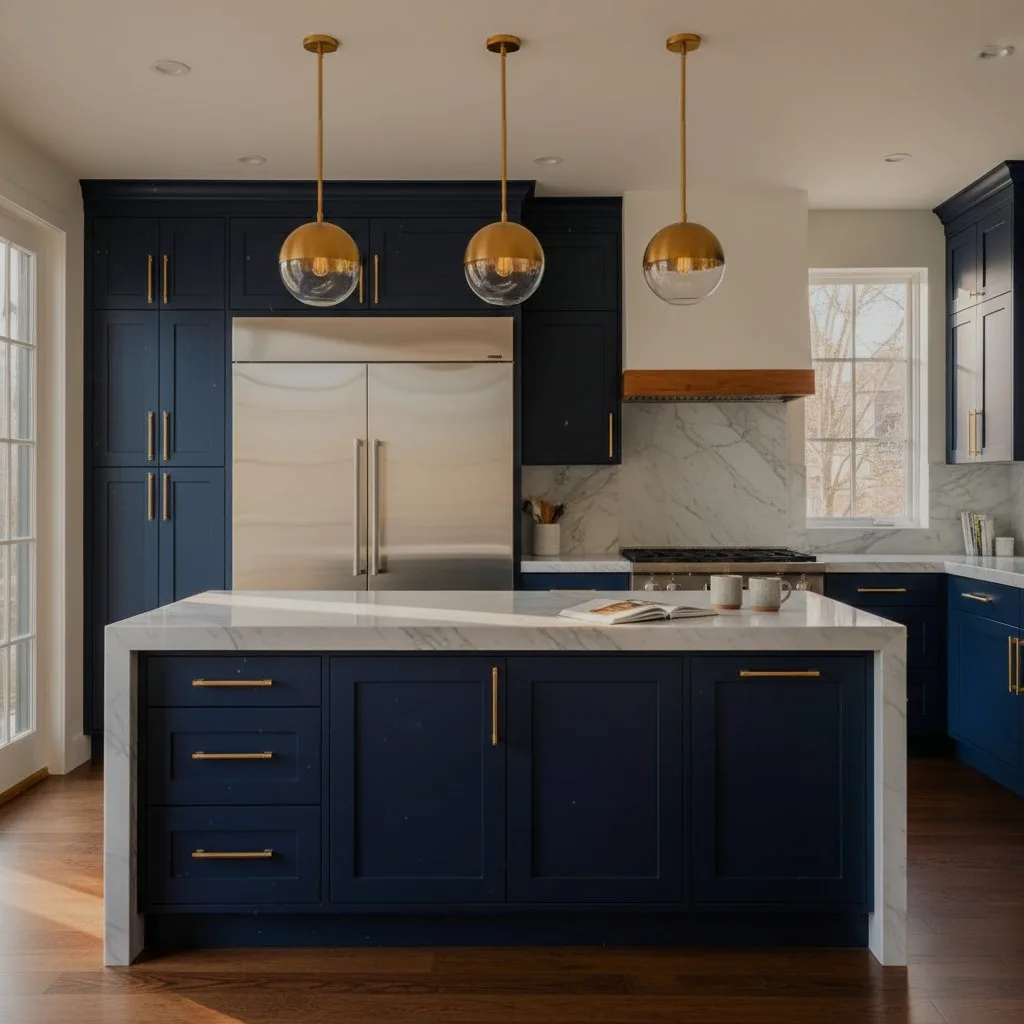
What matters for appliance repair is what has happened inside those homes over the last two decades. Park Hill’s classic kitchens were never built for modern refrigeration, and owners here have been steadily upgrading them — pulling out the original pantry wall, opening up the layout, and dropping in a built-in Sub-Zero column, a panel-ready under-counter unit, or a pro-style range as the centerpiece of the remodel. The result is a neighborhood full of premium appliances installed into footprints a century older than the equipment itself.
That combination is the through-line of nearly every job we do here:
- South Park Hill, the blocks closest to City Park, leans toward larger Tudors and four-squares with ambitious renovated kitchens — full-height built-in columns, separate freezer drawers, sometimes a wine cabinet added during the remodel.
- Central Park Hill, around the 23rd Avenue commercial strip and the historic Park Hill homes, mixes carefully restored period kitchens with newer high-end installs, and we often find a current appliance fitted snugly into preserved original cabinetry.
- North Park Hill and the stretch toward the old airport line has seen newer construction and gut renovations layered in alongside the original stock, which brings flush, integrated, panel-ready refrigeration into the mix.
Across all three, the defining feature is the same: serious built-in equipment living inside vintage architecture. That is precisely the kind of work we are set up for.
Most common faults we see in Park Hill homes
Premium appliances fail in patterns, and after years of working northeast Denver kitchens we recognize most of them on arrival. The list below is what brings people to the phone — but notice that almost every symptom has more than one plausible cause, which is exactly why a careful inspection beats a guess.
- A built-in fridge drifting warm. Butter softens, drinks aren’t cold, the freezer feels marginal. The usual culprits are a dust-blanketed condenser, a failed evaporator or condenser fan, a tired start relay, or — less often but more seriously — a sealed-system refrigerant fault. Four very different repairs, so identifying the right one is the whole job.
- Frost or ice building on the back freezer wall. This almost always points to the defrost circuit: a defrost heater, a defrost sensor, or a control board that has lost the timing of the cycle.
- A compressor that never cycles off, with the cabinet area feeling warm. Commonly a choked condenser, a weakening fan, or a door gasket that no longer seals — and Park Hill’s dry air is hard on gaskets.
- An ice maker slowing, jamming, or turning out cloudy, undersized cubes. Nearly always scale from the hard local water, which we cover further down.
- A gas range or cooktop burning a lazy, yellow-tipped, or uneven flame. Frequently an altitude-and-combustion issue rather than a broken burner — correctable, not replaceable.
- An oven that won’t settle on its set temperature. Usually an igniter, a temperature sensor, or a control-board fault.
- Water pooling under the fridge or seeping from the dishwasher. Typically a blocked defrost drain, a cracked drain pan, or a scaled-up water line.
- A wine or beverage column losing its set temperature, where a remodel added one. Often a sensor, a fan, a cooling stage, or a seal that has stopped sealing.
The reason we list these is not so you can diagnose your own appliance — it is so you can tell us what you are seeing and we can arrive prepared. A warm fridge and a non-stop compressor can share a single root cause or come from three unrelated ones. We sort that out on site.
Parts and longevity: why the component choice matters
A premium built-in appliance is not a box with a motor in it. It is an engineered system — a sealed refrigeration loop tuned to hold a tight temperature, a control board coordinating fans and defrost and sometimes multiple zones, and a set of airflow and water paths that all depend on one another. When you swap a part in that system, the part you choose decides whether the repair holds for years or fails again next season.
That is why we fit OEM-grade and manufacturer-compatible parts from verified suppliers, matched to your specific model and serial number. A generic substitute might fit the bracket and cost less today, but if it is not the component the system was designed around, you can find yourself chasing the same fault within a year. In a Park Hill kitchen that means a second visit, a second careful extraction of a unit wedged into older cabinetry, and a second disruption to a kitchen you would rather not disturb twice. We would rather get the right part in once.
There is a real-world payoff to fixing these appliances properly rather than replacing them. A well-built Sub-Zero column can run for decades, and many of the failures we see — a relay, a fan motor, a defrost component, a gasket — are modest repairs against the cost of a new unit and a remodel to fit it. When a less-common part has to be ordered for an older model, we tell you on the first visit and set a clear expectation for the return rather than leaving you guessing. And when the work is done, you get a straight account of what failed and what was replaced, not a vague line on an invoice.
A note specific to Park Hill’s housing stock: because so many of these kitchens were remodeled inside much older homes, we occasionally find a brand-new appliance feeding off an earlier era’s gas runs or electrical. Part of a thorough diagnosis is confirming that the supply actually suits the equipment — a detail a parts-swapping generalist tends to skip right past.
The altitude and water angle in northeast Denver
Park Hill sits at Denver’s mile-high elevation, and that is not a marketing line — it changes how these appliances physically behave, in ways a sea-level repair playbook tends to miss. At roughly 5,280 feet the air is about 15% thinner than at the coast, and a few consequences follow directly:
- Refrigeration sheds heat into thinner air. Condensers and cooling fans move less-dense air, so a built-in fridge that is even slightly dusty or short on clearance — the standard situation when a column is boxed into older Park Hill cabinetry — struggles here sooner than the identical unit would near sea level. Refrigerant charge and compressor heat rejection are both sensitive to that thin air, which is why a tightly fitted install can run warm without any one part being obviously “broken.”
- Gas combustion shifts. Less oxygen per cubic foot changes how a range, cooktop, or oven burns. Orifice sizing and air-to-fuel mixtures dialed in at sea level can throw lazy, yellow-tipped, or sooty flames at this altitude. A burner that looks like it failed is sometimes a combustion-and-altitude problem we can correct.
- Hard water scales everything it touches. Denver’s supply commonly runs 150 to 250 ppm, and that mineral load is rough on ice makers, dishwasher internals, and the thin water lines feeding built-in fridges and in-door dispensers. It is the leading reason ice production tails off or cubes come out cloudy and small in Park Hill kitchens.
- The dry climate and strong UV age seals fast. Denver’s very dry air hardens and cracks door gaskets earlier than a humid environment would. A gasket that no longer seals lets warm air leak in, the compressor runs longer, and the whole system works harder — so we check seals on every refrigeration diagnosis as a matter of routine.
None of this is exotic. It is simply the set of variables a technician who actually works at altitude builds into the diagnosis from the start, and a sea-level checklist leaves out.
How to book your Park Hill repair
We have kept booking simple and built it around how this neighborhood actually lives — busy households in homes where the kitchen can’t sit broken for long. Here is the sequence:
- Call (720) 770-4189 or book online. The phone is answered 24/7, so you reach a real person whenever the problem surfaces — late night, early morning, weekend, or holiday.
- We confirm a window and the access details. Repairs run daily, 8:00 AM to 6:00 PM. When you book we check the basics: the appliance make and model if you have it, whether it is a panel-ready or integrated install, and anything specific to your home — a tight original kitchen, a basement stair, a tucked-away service panel, or street parking on a busy block.
- The technician diagnoses on site. This is the $89 service call: a full inspection to find the actual fault, test the system, and rule out the things it is not.
- You get an up-front price before any work begins. Once we know what is wrong, we explain it plainly and quote the repair. Approve it and the $89 is credited toward the total.
- We complete the repair and protect the kitchen while we do. Floors covered, surfaces padded, the unit eased out along its tracks rather than dragged — because in a Park Hill four-square with original oak floors and 90-year-old cabinet faces, that care is the difference between a clean repair and a scuff you notice for years.
Nothing on your appliance is touched beyond the diagnosis until you have seen the price and said yes. That is the whole arrangement — no surprise line items, no pressure, no phone quotes on equipment we have not laid eyes on.
We have served the Denver metro since 2012, and Park Hill — with its brick Tudors, its four-squares, and its classic kitchens reworked around premium built-in refrigeration — is exactly the kind of work we are built for. A slow fridge or a temperamental range only gets costlier the longer it waits.
Ready to get a built-in refrigerator, range, oven, cooktop, or wine column back in service? Call (720) 770-4189 or book online today — the line is answered 24/7, repairs run daily from 8:00 AM to 6:00 PM, and same-day and next-day appointments are available throughout Park Hill and northeast Denver.