You reached in for ice and found the cubes fused into one cloudy block, or the carton of ice cream had gone soft in the middle. Nothing alarmed. The door still feels cold against your palm. But a freezer running even a few degrees warm has stopped freezing and started merely chilling — and in a Park Hill kitchen, where that unit is often a built-in column slotted into a remodeled vintage layout, the drift can hide until the contents give it away. On every freezer call here our job is the same: find what actually failed, explain it plainly, and put a firm price in front of you before any panel comes off.
Why Park Hill freezers slip
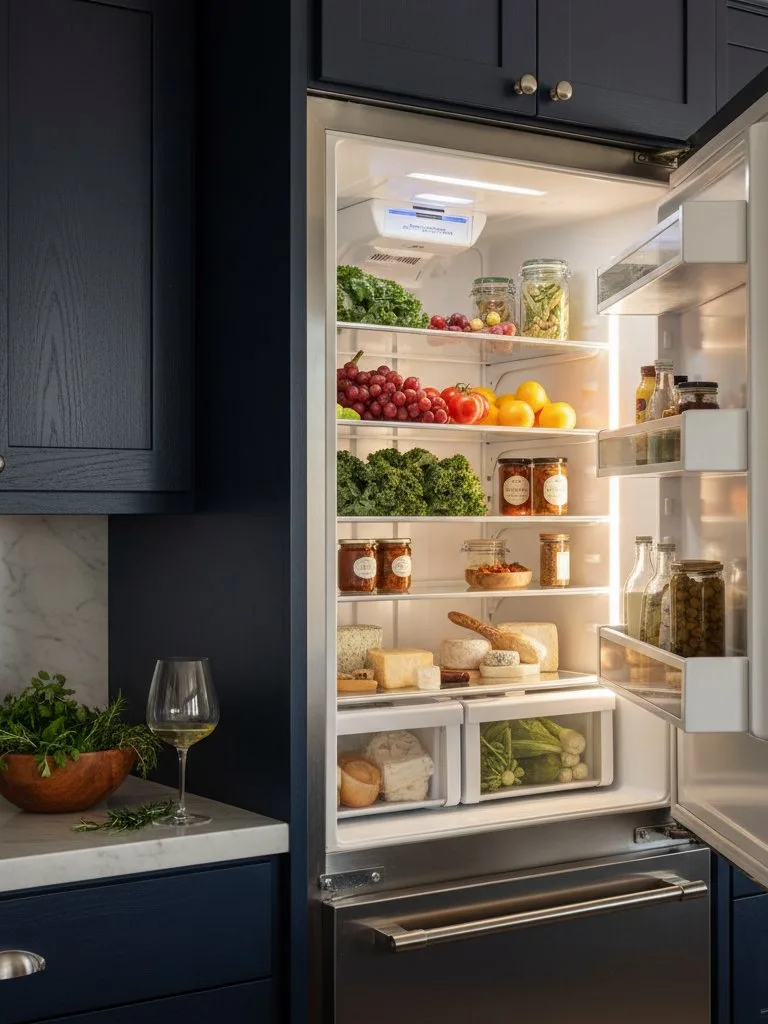
A freezer has almost no temperature margin. A fridge can wander a couple of degrees and your milk survives; a freezer climbing from zero toward twenty is quietly thawing everything inside. Park Hill’s housing makes that slip easy to miss. The tree-lined Tudors, brick four-squares, and bungalows running from the City Park and museum edge out toward the old Stapleton airport line were built with small, closed-off kitchens. When owners rework those rooms around modern built-in refrigeration, the freezer often ends up boxed tight against original cabinetry with little room to breathe. We read the appliance and the alcove it lives in as one problem.
Faults we see most in these kitchens
Most Park Hill freezer calls trace back to a short list:
- Compressor hums, nothing freezes — usually a frosted-over evaporator from a dead defrost heater, sensor, or control board.
- Sheet of ice on the back wall — a stuck defrost cycle, or a Denver-dried gasket letting warm room air seep past the seal.
- Runs nonstop, never cycles off — a condenser choked inside a snug remodeled cabinet, or a tired compressor fighting the thin-air heat penalty.
- Slow, hollow, slushy ice — hard-water scale clogging fill valves, lines, and the mold.
- One zone warm while another stays cold — a failed evaporator fan or damper in a multi-zone built-in.
Inspection and honest pricing
We don’t guess over the phone. A technician confirms the symptom, then studies how the freezer is installed — clearances and condenser access come before we blame any single part. We measure internal temperatures, pull stored fault codes, and test the sealed system, defrost circuit, fans, and gasket together to pin the true failure rather than the obvious one. Then you get one up-front price. Approve it and the $89 diagnostic comes off the total. Parts are OEM-grade or manufacturer-compatible from verified suppliers, matched to your exact model.
The Denver factors behind it
Two local realities shadow every freezer in Park Hill. First, altitude: near City Park you’re sitting at roughly 5,280 feet, where the air is about 15% thinner and a condenser sheds correspondingly less heat. Wedge that condenser into a tight remodeled cabinet from the 1920s and a freezer that was merely borderline tips into failure. Second, water: Denver’s supply runs hard at around 150 to 250 ppm, and that scale slowly strangles ice-maker valves, fill tubes, and molds. Layer on the very dry climate that hardens door gaskets early, and you have the recipe behind most icing and warm-running complaints we field here.
Related repairs we handle
Freezer faults rarely travel alone. The same family of parts — evaporators, fans, defrost circuits, control boards — often drives trouble in a paired refrigerator, while hard-water scale that slows your ice can equally clog a wine cooler or dishwasher line. If your remodel put a pro-style range or oven beside the built-in freezer, ask us to look at those too while we’re on site; altitude affects gas combustion and orifice sizing the same way it affects refrigeration.
Book your Park Hill visit
If your freezer is drifting off zero, don’t wait for a full load to thaw — a stocked built-in holds a lot of food. Call (720) 770-4189 any time; the phone is answered 24/7. You can also book online. Repairs run daily from 8:00 AM to 6:00 PM, the on-site diagnostic is $89, and it’s credited toward the repair when you approve the work.