Quick orientation
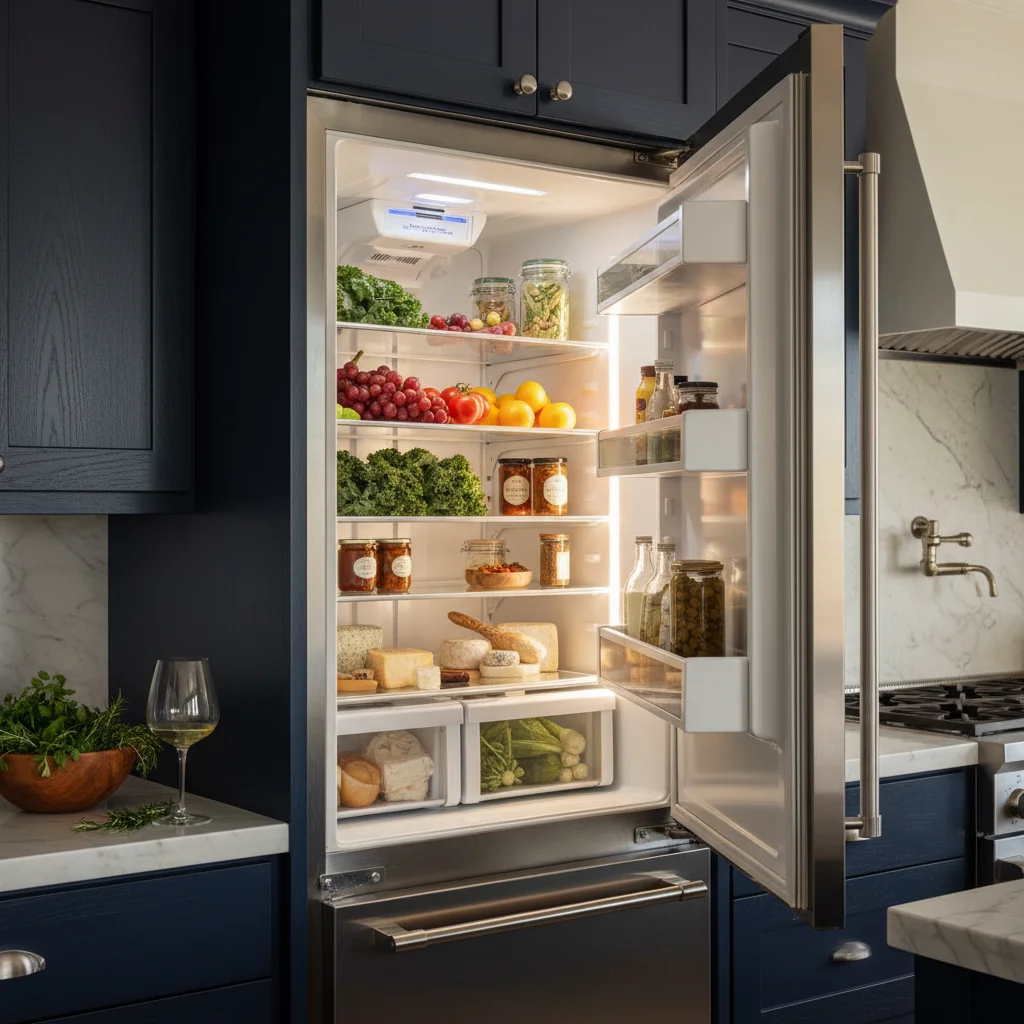
Park Hill is one of Denver’s great walking neighborhoods — shaded streets of brick Tudors, Denver four-squares, and bungalows running east from City Park and the zoo toward where the old airport line once cut through. Most of these houses predate modern refrigeration by decades, so when owners renovate the kitchen, they tend to slide a built-in column or a panel-ready integrated fridge into a footprint far older than the equipment itself. That detail shapes nearly every refrigerator call we take on these blocks.
It matters because the cooling hardware is usually fine to service — it’s the install that complicates the job. A column set flush into preserved cabinetry breathes through a narrow grille, and the original woodwork around it is not something a homeowner wants scuffed. So a good repair here is two tasks at once: pin down the fault, and reach it without leaving a mark.
Most common faults we chase here
The same symptom reads differently in a tight built-in than in a roll-out freestanding fridge. These are the calls that come up most across Park Hill:
- Fresh-food side warm, freezer still cold — cold is being made but not moved upstairs; usually the evaporator fan or a stalled defrost cycle.
- The whole cabinet creeping warm — a dust-blanketed condenser, a failed condenser fan, a tired start relay, or a slow sealed-system fault.
- Frost sheeting the back freezer wall — a defrost heater, a sensor, or a control board that has lost the cycle’s timing.
- A compressor that never shuts off — heat trapped behind a flush panel, a weak fan, or a gasket no longer sealing.
- Small, cloudy ice or a sluggish dispenser — hard-water scale packed into the fill tube and inlet valve.
- Water pooling underneath — a blocked defrost drain, a cracked pan, or a mineral-scaled line.
Parts and longevity
A repair is only as good as the part you put in and how well the system around it was read. We match every component to your model and serial, and we lean on OEM-grade or manufacturer-compatible parts from verified suppliers — especially for the pieces that decide how long the fix lasts: compressors, fan motors, control boards, valves, and door gaskets. A generic relay might run a column for a season; the part the unit was engineered around tends to run for years.
Longevity in Park Hill also comes down to airflow. Many of these remodeled kitchens run more than one cooling unit — a fridge column, a freezer column, sometimes a wine or beverage unit — each with its own compressor and board. We diagnose each on its own merits and, where we can, clear coils and confirm clearances in the same visit so a freshly repaired unit isn’t fighting the same heat that wore the last part out.
The altitude and water angle
Three local forces work on every refrigerator on this side of town. At roughly 5,280 feet the air is about 15% thinner than at sea level, so a condenser and its fan move less-dense air and shed less heat — a column with a little dust or short clearance, common where a modern unit meets older Park Hill cabinetry, struggles here before the same fridge would near the coast. Hard water at 150 to 250 ppm scales ice makers and the thin lines feeding dispensers. And the dry, high-UV Front Range climate hardens door gaskets early, so a seal starts leaking cold and the compressor overworks to keep up. We factor all three into the diagnosis instead of treating your fridge like it lives at sea level.
How to book
Repairs run daily, 8:00 AM to 6:00 PM, while the phone is answered 24/7 — so you can call the moment the milk comes out warm. A drifting refrigerator only gets more expensive the longer it sits, and a stocked column is a lot of food to lose. Call (720) 770-4189 or book online. The $89 diagnostic brings a technician to your Park Hill door, names the real cause, and goes straight toward the repair once you approve it.