The repair, explained
A range is not one appliance — it’s a cooktop and one or two ovens sharing a single steel frame, and either half can fail on its own while the other keeps working. That’s what separates this job from fixing a plain freestanding stove. In an Englewood kitchen, the range almost always carries extra context: it was either the workhorse of an original 1950s ranch galley south of Hampden, or the centerpiece of a remodel near Old Englewood that pulled down a wall and rebuilt the room around it. We sort out which half is broken, what specifically broke, and how to reach it without scuffing cabinetry someone paid real money for. The $89 diagnostic covers that inspection and comes off the repair if you go ahead.
Symptoms & causes
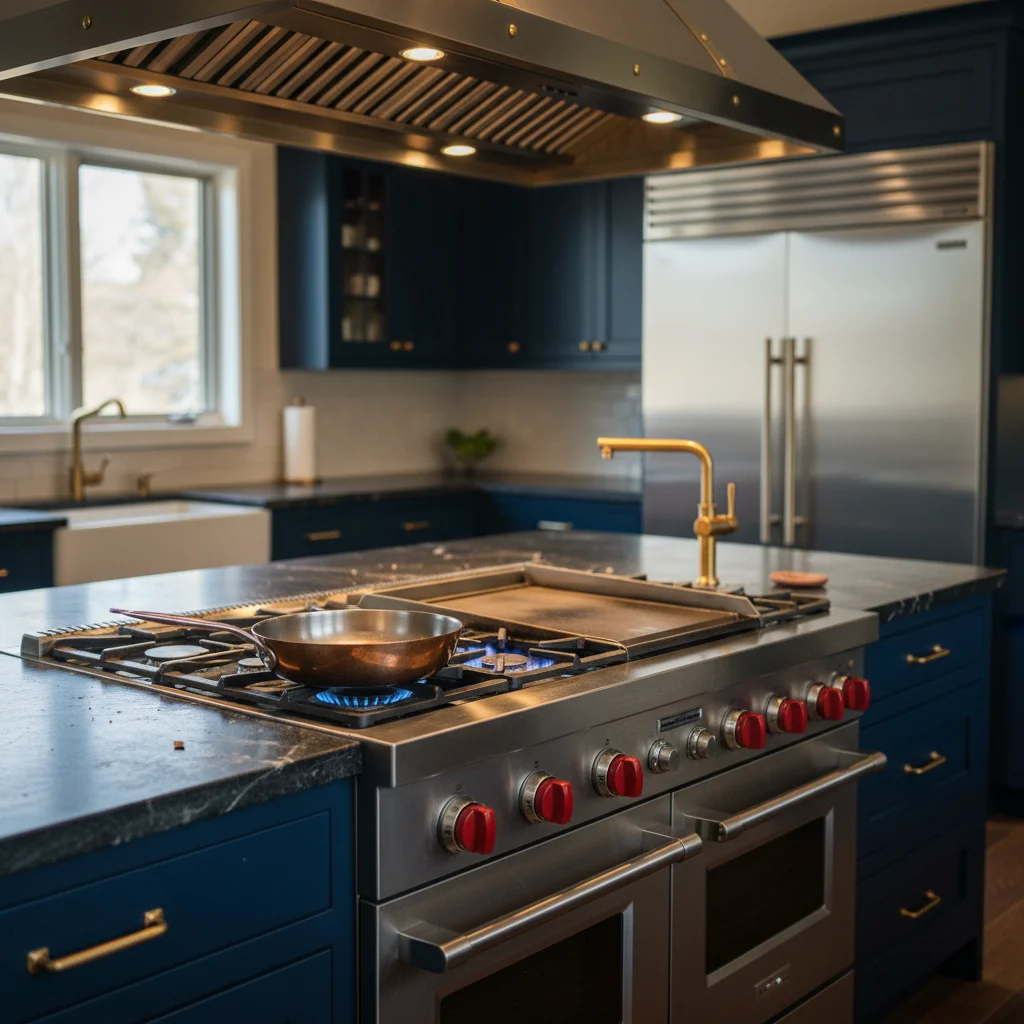
Englewood’s housing stock is genuinely split — drive a block south of Hampden and you’ll pass untouched brick ranches with their original galley kitchens, then a gut-rebuilt home up toward the Broadway corridor running a 36- or 48-inch pro range. Both setups send us the same handful of faults:
- Sealed gas burners — clogged ports, worn electrodes, or a valve that won’t settle into a steady low simmer.
- Spark and ignition — a dead spark module, or a harness knocked loose when a heavy range was wrestled back into its alcove during the remodel.
- Oven heating — tired bake igniters, drifting temperature sensors, and burned-out bake, broil, or convection elements.
- Electric and induction — failed elements or coils, worn infinite switches, or a power module that’s lost its display.
- Control boards — the electronics timing the oven, often baking inside a tighter retrofitted surround than the factory intended.
Why a specialist
There are two Englewood-specific reasons a wide pro range rewards someone who knows these units. First, the retrofit. A post-war ranch was plumbed for a modest freestanding stove, so when a remodel drops in a high-BTU range, the gas run is often longer and the side clearances tighter than the equipment expects — which starves burners and traps heat around the board. Second, the elevation. At a mile high the air carries roughly 15% less oxygen, so a burner tuned at sea level runs rich here, throwing yellow flame and sooting pans, and a marginal igniter loses the firing margin it needs. A national service manual doesn’t account for either, but both shape how we read your stove.
What a visit looks like
- Confirm the install. We check how the range sits in its cabinet run — clearances, venting, and any gas line the remodel added — and map the pull so your millwork and floors stay unmarked.
- Watch the real fault. We run the cooktop and oven, testing electrodes, valves, flame quality, igniter draw, and sensor resistance, and pull stored fault codes where the model keeps them.
- Quote one firm price. You get the cause in plain language and a single number before any tool comes out.
Pricing
The diagnostic is a flat $89, credited toward the repair once you approve it. Because a retrofitted Englewood range can hide a fault a freestanding stove never would, the repair price is set only after an in-person inspection — never over the phone, with nothing added afterward. You’ll see OEM-grade parts and up-front pricing every time.
A few quick answers
Can you also look at the built-in fridge while you’re here? Yes — many remodeled Englewood kitchens pair the range with a built-in Sub-Zero, a wine column, or an integrated dishwasher, and we can diagnose several on one visit so you skip a second trip.
How fast can you come out? Same-day or next-day appointments are common across the south metro. If the oven died mid-dinner-party prep, call and we’ll move you up the schedule.
Get it fixed
Call (720) 770-4189 any hour — the phone is answered 24/7 — or book online. On-site repairs run daily 8:00 AM to 6:00 PM, the diagnostic is a flat $89 credited toward the repair, and you always have an up-front price before we begin. Independent and serving the Denver metro since 2012.