When the milk goes warm overnight
You open the door for breakfast, and the carton on the top shelf is room temperature while the freezer below still feels fine. That uneven cooling is the most common refrigerator call we get in Englewood — and it rarely means a dead compressor. More often the heat is the symptom and the airflow is the cause.
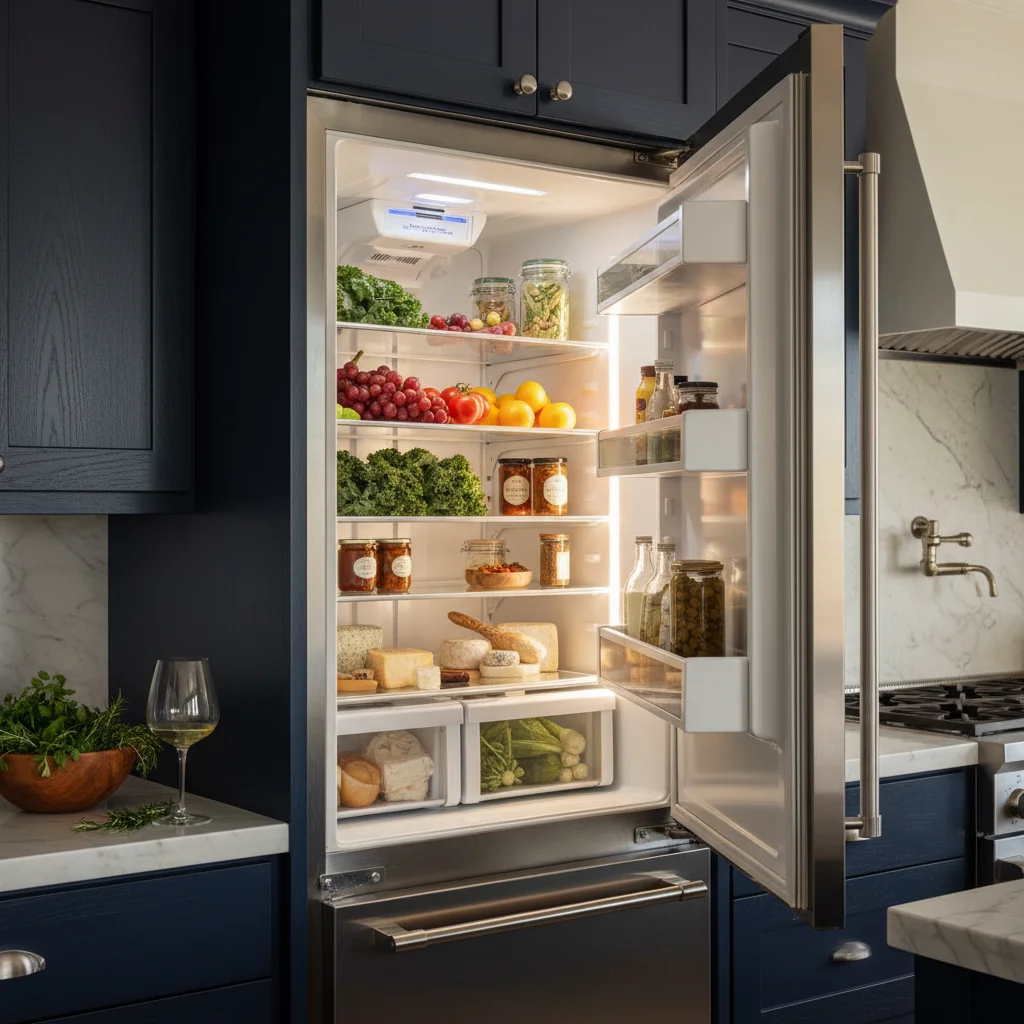
Englewood is a town of two kitchens. Roll down a block south of Hampden and you pass untouched 1950s brick ranches with a freestanding fridge that has hummed in the same corner for decades, then a house taken to the studs and rebuilt around a built-in column near the Old Englewood corridor. Same lot lines, very different appliances. We read the install before we read the part.
What usually breaks, and what it points to
Refrigeration here fails in recognizable patterns. The symptom you notice usually narrows the diagnosis:
- Fresh-food side warms, freezer stays cold — a stalled evaporator fan, a blocked vent between compartments, or a defrost cycle that no longer clears the coil.
- Frost stacking on the freezer’s back wall — a failed defrost heater, a drifting defrost thermostat, or a control board mistiming the cycle.
- Compressor runs nonstop and the cabinet feels warm — a clogged condenser, a tired condenser fan, or a worn start relay before any sealed-system suspicion.
- Cloudy, undersized, or missing ice — hard-water scale in the fill valve, line, or mold, often a supply problem upstream of the appliance.
- A door that no longer seals — a gasket gone stiff and cracked, which the dry Colorado air accelerates.
How we run the diagnosis
Guesswork on a sealed system is how a one-visit fix comes back in a month, so we work in order:
- Confirm the exact model and serial — easy to miss on a built-in retrofitted into older ranch cabinetry.
- Measure real fresh-food and freezer temperatures, then test fan operation, defrost behavior, and the vent path between compartments.
- Inspect how the unit sits in the cabinetry — clearances and the condenser exhaust path first, especially in a remodel.
- Where the readings point that way, trace the sealed refrigeration loop and check the water and electrical supply.
- Explain the fault in plain language and quote a firm price before any work begins.
What the mile-high climate does to a fridge
National repair advice is written for sea level, and it misreads Denver. Our air sits about 15 percent thinner at 5,280 feet, and refrigeration depends on moving air to shed heat. A condenser that is even slightly dusty or boxed into a tight retrofit — the situation in many remodeled Englewood ranches — rejects heat more slowly here, so a borderline unit drifts warm sooner than the same fridge would near the coast. Refrigerant charge and compressor load both read differently at altitude.
Two more local factors shape the work. Hard water in the 150–250 ppm range scales ice makers, fill valves, and the slim lines feeding built-in dispensers — the leading reason ice production drops off. And the dry, high-UV climate cracks door gaskets faster than a humid region would, which is why we check seals on every refrigeration visit.
Brands and related repairs
We service freestanding, built-in, integrated, and drawer-style refrigerators and freezers across premium and standard brands. Since Englewood remodels so often pair a refrigerator with a gas or pro range, we handle altitude-affected cooking equipment on the same call — useful when a single kitchen has both. If your symptom is not listed above, it still belongs on the phone with us; these are the common patterns, not the limits of what we fix.
Book a technician in Englewood
Serving the Denver metro since 2012, we know Englewood’s mix of original ranches and upscale remodels — and we quote up front, after we actually look. The diagnostic service call is $89, credited toward the repair if you proceed. Call (720) 770-4189 — answered 24/7 — or book online, and a technician will be at your door, often same-day or next-day, to find the real cause and price it before the work starts.