The repair, explained
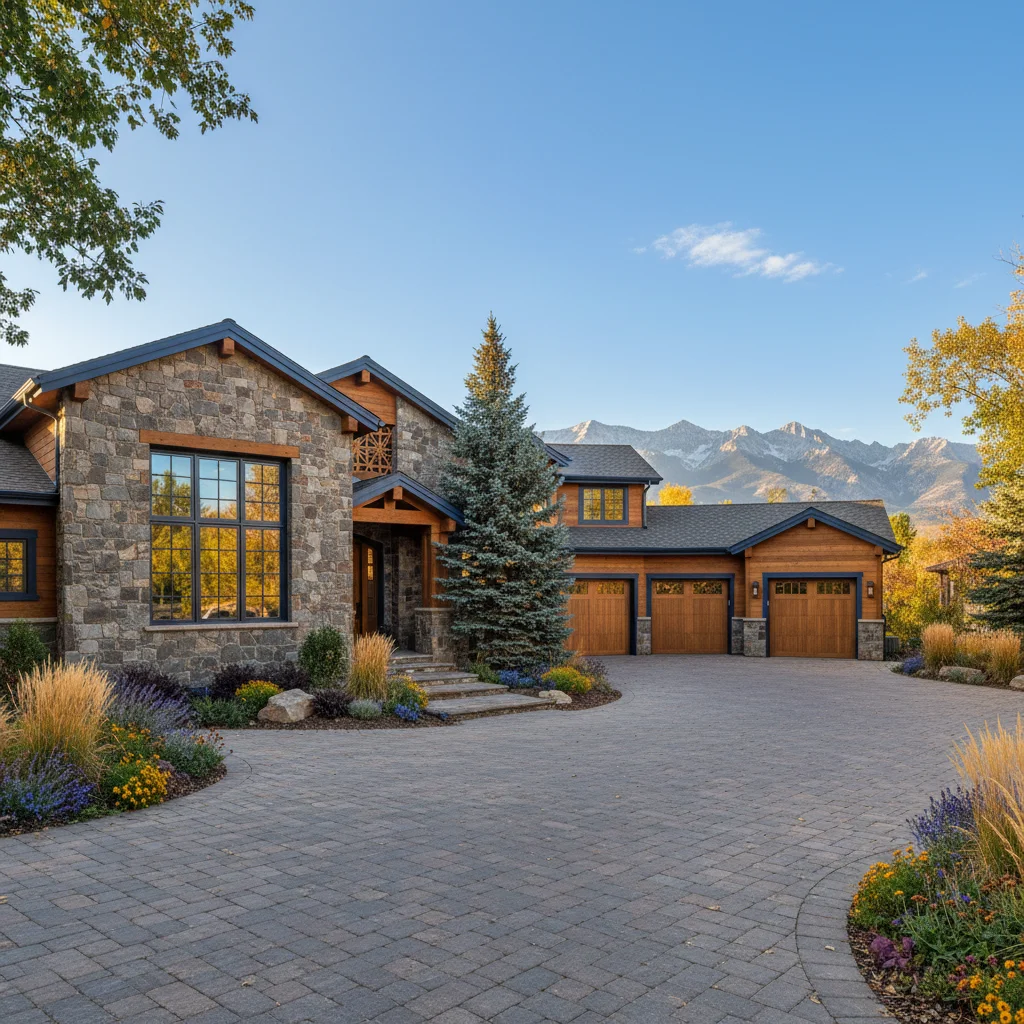
Englewood is one of the harder neighborhoods in the south metro to size up from the curb, and that is precisely what makes the appliance work here distinct. Roll down a single street south of Hampden and you can pass three untouched 1950s brick ranches — original casement windows, original galley kitchen, a freestanding fridge humming where it has hummed for sixty years — and then a fourth house that has been taken down to the studs and rebuilt around a built-in Sub-Zero column, a 36-inch professional gas range, and a panel-ready dishwasher hidden in the cabinetry. The lot lines are the same. What lives in the kitchen could not be more different.
That split personality runs through the whole city. The blocks near the Old Englewood corridor along South Broadway have drawn a steady stream of buyers who want the bones of a solid post-war home but the kitchen of a much newer one, and the remodels they commission tend to lean premium. The result is a town full of older houses quietly carrying current, expensive refrigeration and cooking equipment — equipment the original floor plan never anticipated.
A repair on a built-in Sub-Zero or a pro range in that setting is simply not the same job as fixing a standard freestanding appliance from a big-box store. A generic fridge is engineered to be rolled out, opened up, and serviced from the back in twenty minutes. A built-in is sealed into a system: a refrigeration loop tied to a control board, an airflow path designed around specific clearances, and a custom cabinet enclosure that has to come apart in the right order. Get the diagnosis wrong, or get the access wrong, and you can spend more time undoing damage than fixing the fault. So the first move on any Englewood call is the same — figure out what actually broke and how to reach it without disturbing a kitchen someone spent real money building. The $89 diagnostic service call covers that inspection and is credited toward the repair if you proceed.
Symptoms and causes: reading the fault behind the complaint
Most service calls start with a symptom the homeowner can describe in one sentence — “it’s warm,” “it won’t make ice,” “the oven runs hot.” The work is connecting that plain symptom to the actual mechanical cause, because a single complaint usually has several possible roots, each with a different fix and a different price.
Here is how that mapping tends to play out on the appliances we see most in Englewood:
- A built-in fridge that slowly warms. This is rarely a dead compressor. More often it is a stalled condenser fan, a condenser packed with dust because a retrofit boxed it into tight cabinetry, a tired start relay, or — less commonly — a sealed-system refrigerant issue. Four causes, four very different repairs.
- Frost building up inside the freezer. A failed defrost heater, a faulty defrost thermostat, or a door gasket that no longer seals can all produce the same wall of ice. The dry Colorado air is hard on gaskets, so a cracked seal letting humid room air in is a frequent culprit here.
- Ice maker that jams, slows, or makes cloudy, undersized cubes. Englewood’s hard water leaves mineral scale in fill valves, lines, and molds. What looks like a broken ice maker is often a water-supply problem upstream of the appliance entirely.
- A gas range or cooktop burning with weak, yellow-tipped, or sooty flames. At Denver’s altitude this is frequently a combustion-and-air-mixture issue rather than a failed burner — an orifice or air shutter that was set for thicker air than we have at 5,280 feet.
- An oven that overshoots or never reaches its set temperature. Usually a drifting temperature sensor, a failing bake or broil element, or a control board that has lost calibration.
The discipline is to never quote off the symptom alone. We separate the complaint you noticed from the failure underneath it, then test until the cause is confirmed. That is what keeps a one-visit fix from turning into a recurring headache.
Why a specialist, not a general handyman
There are two reasons Englewood rewards a premium-appliance specialist, and they both come back to the gap between the houses and the equipment inside them.
The first is the retrofit problem. When a modern built-in gets fitted into a cabinet run that began life around a freestanding 1950s unit — exactly the scenario in many remodeled Englewood ranches — the clearances are often improvised. Post-war kitchens were not deep, and squeezing a built-in column into that footprint can leave the condenser with less breathing room than the manufacturer specifies. Less airflow means the system runs warmer and ages faster, and the service access that would be obvious in a clean factory install ends up boxed in by added cabinetry. A technician who has only worked on roll-out appliances will struggle to even reach the fault, let alone protect the millwork around it.
The second reason is altitude, and it is the part most online repair advice gets wrong because that advice is written for sea level.
Thin air at a mile high. Denver’s air is roughly 15 percent less dense than air at the coast, and refrigeration depends on moving air to shed heat. Condensers and cooling fans push thinner air, so a built-in fridge that is even slightly dusty or slightly short on clearance — the retrofit situation in so many Englewood kitchens — struggles to reject heat sooner than the same unit would near an ocean. Refrigerant charge and compressor heat rejection are both sensitive to that thinner atmosphere, which is why a national service manual written for a humid, sea-level state can steer a technician in the wrong direction here.
Combustion shifts on gas appliances. Thinner air also means less oxygen per cubic foot, and that changes how a gas range, cooktop, or oven burns. Orifice sizing and the air-to-fuel mixture dialed in at sea level can produce lazy, yellow, or sooty flames at Denver elevation. When a pro range in a remodeled Englewood home suddenly burns unevenly, the cause is often altitude-and-combustion rather than a failed burner — and that is something a specialist can actually correct.
Hard water and very dry air. Denver’s water commonly runs hard, in the 150 to 250 ppm range, and that mineral load is rough on ice makers, dishwasher internals, and the thin water lines feeding built-in refrigerators. It is the leading reason ice production drops off or cubes come out cloudy here. On top of that, Colorado’s very dry climate and strong UV harden and crack door gaskets faster than a humid region would, which is why we check seals on every refrigeration call. A sea-level playbook simply does not account for any of this — but it is built into how we approach every appliance in Englewood.
What a visit looks like, step by step
A good diagnosis is methodical, not a guessing game. Guesswork on a sealed system or a calibrated gas burner is how a fix that should have lasted comes back in a month, so we work in a deliberate order:
- Confirm the model and serial. Every diagnosis starts by identifying your exact unit. The right parts, the right specs, and the right service procedure all flow from this — especially on retrofitted built-ins where the model badge is not obvious at a glance.
- Read the symptom against the system. We separate what you noticed from the failure underneath it. “It’s warm” is a symptom; a stalled fan, a clogged condenser, a worn relay, or a sealed-system leak are causes, and each points to a different repair.
- Inspect the install and the access. In an Englewood retrofit, where the condenser sits and how the unit is boxed into cabinetry shapes the whole job. We map the pull and plan how to protect the surrounding millwork and flooring before anything moves.
- Test airflow, temperatures, and the sealed circuit. We check actual temperatures, fan operation, defrost behavior, and — where the symptoms point that way — the sealed refrigeration loop, reading the numbers the way they behave at altitude rather than at sea level.
- Check the supply side. Water lines, gas pressure, and electrical feeds get a look, because in an older house with a newer kitchen the real problem is sometimes upstream of the appliance entirely.
- Explain the fault and quote it up front. Once we know the true cause, you get a plain-language explanation and a clear price before any work begins — nothing added at the end.
Appliances and components we service in Englewood
Across Englewood’s original ranches and remodeled kitchens, here is what we regularly handle:
- Built-in and integrated refrigerators — columns, under-counter drawers, and panel-ready units, including the retrofitted installs common in older ranch kitchens.
- Freezers and ice makers — fill valves, lines, molds, and the scale-driven failures the hard local water causes.
- Pro ranges, cooktops, and rangetops — gas and dual-fuel, with attention to altitude-affected combustion, igniters, and orifices.
- Wall ovens and built-in ovens — bake and broil elements, igniters, temperature sensors, and control boards that drift off their set point.
- Dishwashers — drain pumps, sumps, spray arms, and the scale buildup hard water leaves behind.
- Wine and beverage columns — thermoelectric modules, compressors, fans, and gaskets gone brittle in the dry air.
If your symptom is not on this list, it still belongs on the phone with us. These are the common patterns, not the boundaries of what we fix.
Pricing: up front, after we actually look
We keep pricing simple and honest, because guessing at a number over the phone helps no one. The diagnostic service call is $89. That covers a full on-site inspection — confirming the model, tracing the symptom to its cause, checking the install and the supply side — and it is credited toward the repair if you decide to go ahead.
We do not quote a repair price before a technician has seen the appliance. Englewood kitchens vary too widely for that to be fair: an original ranch with a standard fridge and a gut-remodeled home with an integrated Sub-Zero are different jobs even when the symptom sounds identical. Once we have diagnosed the real fault, you get a clear, complete price up front, and the work does not start until you approve it. There is nothing added on at the end, and no pressure to proceed.
For parts, we use OEM-grade and manufacturer-compatible components from verified suppliers, matched to your specific model and serial. That matters more in Englewood than most places, because pulling a built-in for a second visit means navigating the same retrofitted cabinetry and tight clearances all over again. Getting the correct part in on the first trip is not only about reliability — in a rebuilt ranch kitchen it is about not disturbing the remodel twice.
A few questions Englewood homeowners ask
Do you only work on Sub-Zero, or other premium brands too? We specialize in built-in and professional refrigeration and cooking equipment across premium brands. The same altitude-aware, install-aware approach applies whether your kitchen has a Sub-Zero column, a pro gas range, or a panel-ready dishwasher.
My house is an original ranch with a standard fridge — is that too basic for you? Not at all. Plenty of Englewood is still original, and we service standard freestanding appliances right alongside the high-end built-ins. The $89 diagnostic and the up-front pricing work exactly the same way.
When can the work actually be done? Our phone is answered 24/7, so you can reach a real person whenever a problem surfaces — late at night, early morning, or over a weekend. Repairs themselves are performed daily, 8:00 AM to 6:00 PM, and we usually offer same-day or next-day appointments across the south metro.
What if a part has to be ordered? If your model needs a less common component, we tell you on the first visit and set a clear expectation for the return, rather than leaving you guessing.
We have served the Denver metro since 2012, and Englewood — with its real mix of untouched ranches and premium remodels near Old Englewood — is exactly the kind of work we are built for. When the technician finishes, you get a straight account of what failed, what was replaced, and why.
Ready to get a built-in fridge, pro range, or cooktop back in service? Call (720) 770-4189 or book online today — same-day and next-day appointments are available throughout Englewood and the south Denver metro, with a $89 diagnostic that goes toward your repair.