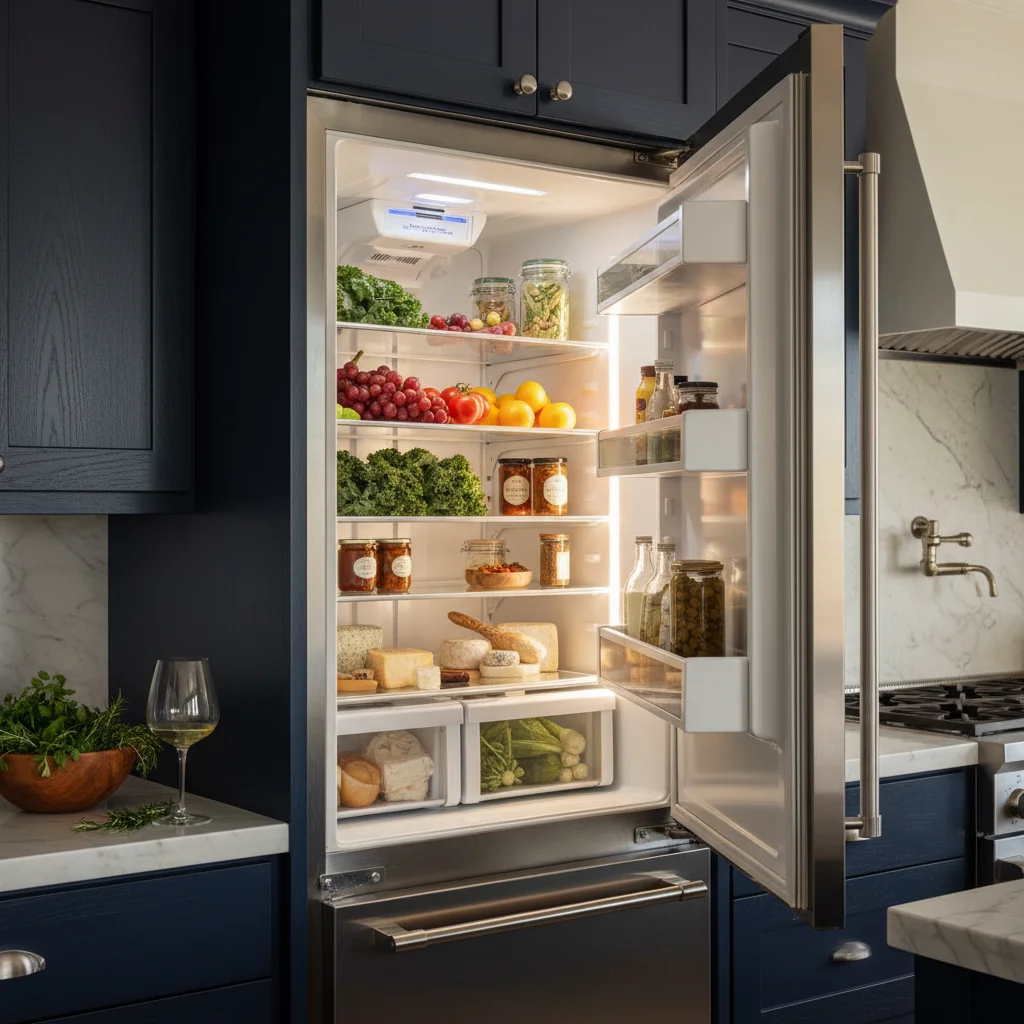
If the refrigerator in your Wash Park kitchen is creeping warm, the goal of the first visit is simple: find the actual cause before anyone reaches for a part. A built-in column that drifts from 37°F into the low 40s can be a failing fan, a clogged water line, a heat-trapped install, or a tired gasket — each a different fix. We diagnose the whole system, explain what failed in plain language, and quote an honest price up front. The $89 service call covers that inspection and goes toward the repair.
Quick orientation
Washington Park’s housing tells you a lot before we open the door. The neighborhood wraps around the park itself — block after block of brick Denver Squares, those boxy foursquare two-stories with deep porches, and 1920s bungalows, most of them gut-renovated over the last two decades. When owners redo a Wash Park kitchen, they rarely do it halfway: the signature pairing we see is a Sub-Zero built-in or column refrigerator beside a Wolf range, a matched suite dropped into a footprint originally framed for an icebox. That mismatch — modern refrigeration inside a century-old shell — is exactly why these repairs reward a specialist. We’ve worked Denver metro kitchens since 2012 and reach the right cause without tearing up a renovation.
Most common faults we see here
- Heat-trapped condensers. A column boxed into custom millwork with an inch of clearance can’t shed heat — the compressor runs long and hot and the cabinet slowly warms. This is the most frequent pattern in remodeled Wash Park homes.
- Sealed-system leaks and restrictions. Thin mile-high air gives a marginal refrigerant charge no cushion, so slow leaks and capillary restrictions surface sooner than they would at sea level.
- Ice-maker and water-line clogs. Hard Denver water scales fill tubes, inlet valves, and filters, producing hollow ice, a dribbling dispenser, or a unit that jams every few weeks.
- Door gaskets hardened by dry air. A seal that no longer grips lets warm air leak in, frosts the evaporator, and forces the compressor to overwork — common on built-ins with magnetic seals.
- Defrost and fan failures. Bad defrost heaters, sensors, or fan motors leave back-wall frost and a warm fresh-food section while the freezer still looks fine.
Parts and longevity
We don’t guess and swap. Each visit follows a deliberate order: confirm the symptom and the install, measure actual cabinet temperatures, pull any stored fault codes, then trace the condenser, evaporator, compressor, fans, and defrost parts as one connected system. On ice and dispenser models we check the inlet valve, fill tube, filter, and lines for scale, and on every unit we inspect the door seal and the cabinet’s heat environment.
When we replace something, we fit OEM-grade and manufacturer-compatible parts matched to your model — compressors, fan motors, control boards, thermistors, valves, and gaskets. And when the real problem is a too-tight alcove choking the condenser, we’ll say so. Fixing a fan motor that will fail again in the same heat-trapped nook isn’t a repair; it’s a return visit.
The altitude and water angle
Three Denver forces shape how these refrigerators fail. At 5,280 feet the air is roughly 15% thinner, so condensers and fans move less dense air and shed less heat — invisible in a wide suburban kitchen, decisive in a built-in wedged into Wash Park cabinetry. Hard water at 150–250 ppm scales up the whole water path, which is why ice and dispenser faults are so common here. And the very dry climate hardens door gaskets faster than a humid city would, breaking the seal and compounding the altitude penalty. We weigh all three instead of treating your fridge like it lives at sea level.
How to book
Our technicians perform repairs daily from 8:00 AM to 6:00 PM, and the phone is answered 24/7, so you can call the moment you notice food is at risk. In a finished Wash Park kitchen there’s rarely a spare fridge to fall back on, and a warming unit only gets more expensive the longer it waits.
If your refrigerator has stopped holding temperature, is frosting over, or is running nonstop, call (720) 770-4189 or book online any time. The $89 diagnostic gets a technician to your door, finds the real cause, and applies to the repair once you approve it.