Range Repair in Washington Park, Denver

In Wash Park's gut-renovated bungalows and brick Denver Squares, a Wolf range is usually the centerpiece of a kitchen that cost real money. When a burner stalls or the oven drifts, we find the true fault first and hand you an up-front price before any part comes out of the truck.

Range Repair in Washington Park, Denver

Quick Answers

Who repairs Wolf and gas ranges in Washington Park, Denver?
Denver Sub-Zero Repair is an independent appliance service covering all of Washington Park, from the bungalow rows ringing the park to the Denver Squares along Marion and Gilpin. We handle gas, dual-fuel, electric, and induction ranges, with particular focus on the pro-style Wolf units common in Wash Park remodels. Call (720) 770-4189 — the line is answered 24/7, and on-site work runs daily 8 AM to 6 PM.
Why does my Wolf range burn with a lazy yellow flame in Washington Park?
At Wash Park's 5,280-foot elevation the air holds roughly 15% less oxygen, so a burner whose orifices and air shutters were tuned for sea level runs rich here — yellow, lazy tips and sooty pan bottoms. It usually isn't a broken burner. On a professional range we can correct the air-fuel mix and orifice sizing for altitude rather than swapping parts.
How much does range repair cost in Washington Park?
The on-site diagnostic is a flat $89, credited toward the repair if you go ahead. Because a flush-set Wolf range inside a custom millwork surround can hide a different fault than a freestanding unit, the exact repair price comes only after a technician inspects it in your kitchen — never a blind quote by phone.

Start with the air, because in Washington Park the air is part of the diagnosis. Wash Park sits at Denver’s mile-high mark, where each cubic foot carries about 15% less oxygen than at sea level. On a gas range — and here that usually means a Wolf — that thinner air rewrites the fuel-to-air mixture every burner depends on. A range that ignited cleanly in a coastal showroom can run rich the moment it lands in a Marion Street kitchen, so we read the appliance the way it behaves at 5,280 feet before condemning a component.

Why ranges fail here

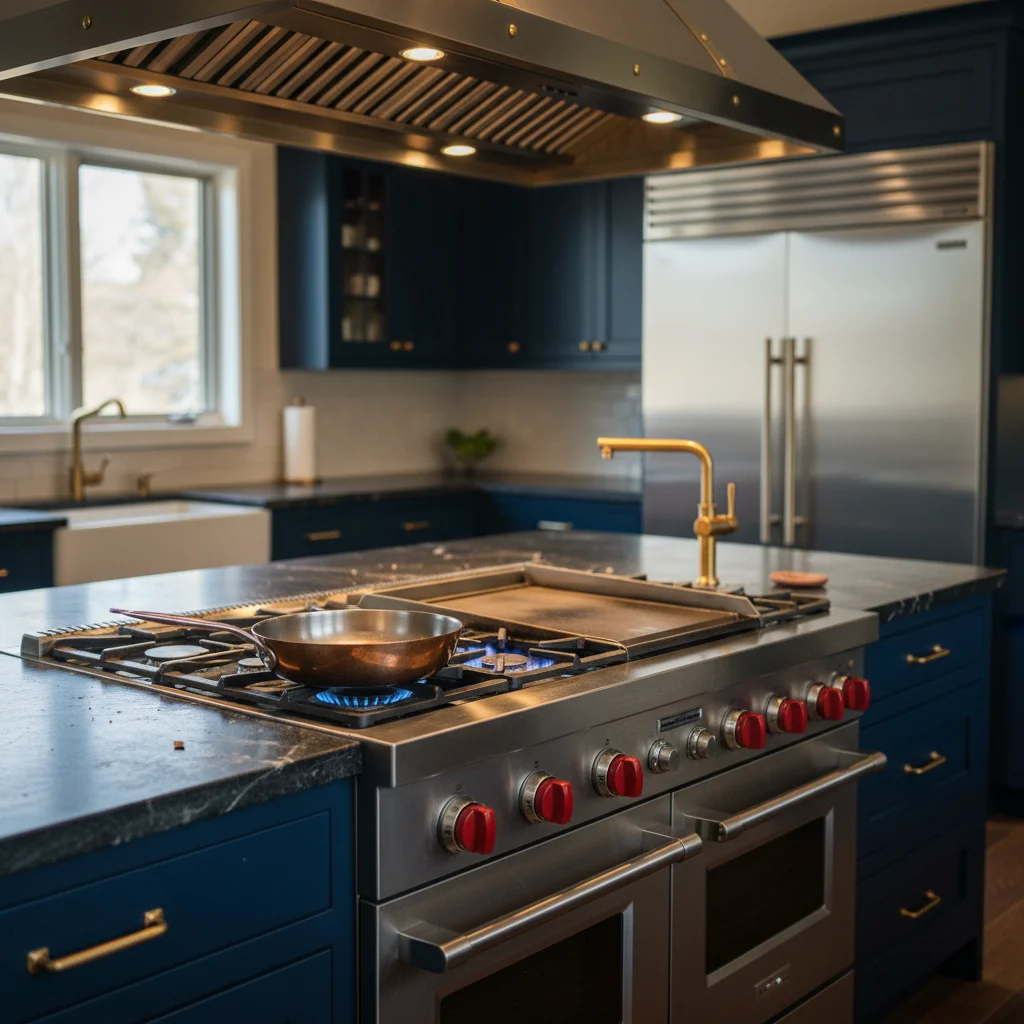
Washington Park’s housing tells you what kind of range you’re dealing with. The neighborhood is built from brick Denver Squares — boxy foursquares with deep porches — and 1920s bungalows, and over the last two decades a huge share have been gut-renovated. Those remodels rarely go halfway. The signature Wash Park kitchen pairs a Sub-Zero column with a Wolf range, dropped into a footprint once framed for a coal stove — a modern professional range inside a century-old shell, which is where faults hide.

A range is two appliances sharing one frame: a cooktop on top, an oven below. Either half can drift out of spec without the other showing a symptom, so we diagnose the whole unit, not just the burner you called about. In a flush install we also check clearance and venting up front, because trapped heat ages igniters and boards before the metal looks worn.

Denver factors first

Three local forces shape nearly every range repair here, and we weigh all three before any part:

  • Thin air shifts combustion. Orifice sizing and air-shutter settings tuned at sea level run rich here — lazy yellow flames, soot, and harder ignition. Often the fix is altitude tuning, not a replacement burner.
  • Hard water scales anything plumbed. Denver’s 150–250 ppm supply attacks valves and lines on steam ovens, plumbed griddles, and pot-filler setups, and Wash Park’s older service lines add sediment.
  • Dry air and strong UV harden seals. Low humidity and intense Colorado sun stiffen oven door gaskets early, letting heat leak and the oven cycle harder.

How we diagnose

  1. Tell us the brand and symptom. Say whether it’s the Wolf or another range, the cooktop or the oven, and roughly where you are — that lets us load the right common parts.
  2. We inspect on-site and read the system. The technician confirms the symptom, pulls any fault codes, and works the combustion, electrical, and control paths in order.
  3. We test the flame, not just the igniter. On a gas burner we judge the actual flame quality against Denver’s altitude before assuming a failed part.
  4. We trace the fault to its cause. An igniter that failed because heat was trapped in a tight surround means the new one is just the next to go, so we follow the chain back.
  5. You get a plain diagnosis and an up-front price before any wrench turns, the $89 credited toward the repair.

Components we service

  • Surface burners — clogged ports, worn electrodes, cracked insulators, and failed spark modules.
  • Gas valves and simmer control — gummed valves that won’t hold a low flame, and caps seated slightly off.
  • Bake and broil igniters — the weak glow that leaves the oven cycling cool at altitude.
  • Oven sensors and control boards — drift, miscalibration, and dropped relays.
  • Electric and induction surfaces — burned-out elements, failed infinite switches, overheating coils, and pans the top won’t sense.

We fit OEM-grade and manufacturer-compatible parts from verified suppliers, matched to your model and serial — no generic substitutes on the igniters, valves, and boards that decide how long a repair lasts.

Same-day scheduling

Washington Park sits in south-central Denver, easy to reach, and we typically offer same-day or next-day appointments. Call (720) 770-4189 any hour — the phone is answered 24/7 — or book online. On-site repairs run daily 8 AM to 6 PM, the diagnostic is a flat $89 applied to the repair, and you’ll have an up-front price before we begin. Independent, serving the Denver metro since 2012.

Frequently Asked Questions

Do you service the flush-set Wolf ranges built into Wash Park remodels?

Yes, constantly. Most serious Washington Park renovations drop a 30, 36, or 48-inch Wolf range into a custom surround with tight side clearances, often paired with a matched Sub-Zero column. Those installs have their own venting and access quirks, which is exactly where a specialist earns the visit. We service gas, dual-fuel, and rangetop configurations.

My gas burner clicks but won't light — what should I do?

A burner that keeps sparking is leaking unburned gas until it catches, so stop running it. Turn the knob off, let the kitchen air out, and dry any moisture around the electrode. If it keeps clicking on its own or you smell gas, shut the range down and call (720) 770-4189 so we can clear the port, electrode, or spark module behind it.

Why won't my oven hold its set temperature?

Usually a fatigued bake igniter that no longer glows hot enough to open the gas valve, a drifting oven sensor, or a control board misreading the cavity. Denver's thin air already makes a gas oven burn leaner, so an igniter that barely coped at sea level can leave the cavity cycling cool here. We test igniter draw and sensor resistance together before replacing anything.

Can you reach a range in a renovated bungalow with a basement kitchen layout?

Routinely. Many Wash Park bungalows route gas, water, and electrical down through the basement directly under the kitchen, which changes how a fault shows up. We plan the access before we start and protect the finished floors and cabinetry, since these kitchens are renovations someone is proud of, not utility rooms.

Does Denver's hard water affect a range?

It does on any range with a water feature — steam-assist ovens, plumbed griddles, or pot-filler-fed setups. Denver's 150–250 ppm water scales those valves and supply lines, and in older Wash Park homes the aging plumbing adds sediment on top. We descale or replace the affected part rather than just resetting the appliance.

Is the $89 service call really applied to the repair?

Yes. The $89 covers a full on-site diagnosis of both the cooktop and the oven, and it's credited toward the repair if you approve the work. You get a firm price up front before anything is taken apart, with nothing added afterward.

Your Sub-Zero Deserves Better

Denver's experienced independent repair specialists are standing by. Same-day appointments available throughout the metro area.