Oven Repair in LoDo, Denver

Most LoDo oven calls come from a wall oven or pro range wedged into reclaimed-timber millwork beside an integrated fridge column. We trace the actual fault, account for mile-high air and Denver hard water, and price the job before a panel ever comes loose.

Oven Repair in LoDo, Denver

Quick Answers

Where in LoDo do you repair ovens?
Denver Sub-Zero Repair is an independent shop covering all of Lower Downtown — the loft conversions off Wynkoop and Wazee, the brick blocks along Blake and Market, and the newer towers ringing Union Station. We work on built-in wall ovens, stacked double-oven towers, and gas or dual-fuel pro ranges set flush into loft cabinetry. Call (720) 770-4189, picked up 24/7, for a same-day or next-day slot.
My LoDo loft oven won't hold temperature on convection — why?
On a built-in oven crammed into tight warehouse millwork, wandering convection heat usually comes down to a tired fan motor, a drifting cavity sensor, or gas combustion that was never re-tuned for 5,280 feet. The thin mile-high air throws off sea-level burner orifices, so the cavity chases its setpoint. We confirm the real culprit by testing each one rather than guessing from the symptom.
What does oven repair cost in a LoDo loft?
Every visit starts with an $89 on-site diagnostic, and that fee rolls into the repair the moment you approve it. A LoDo fault might be a $30 igniter or a model-specific control board, so we only commit to a firm number after a technician opens and tests the unit in person. No blind phone quotes, no surprises added later.

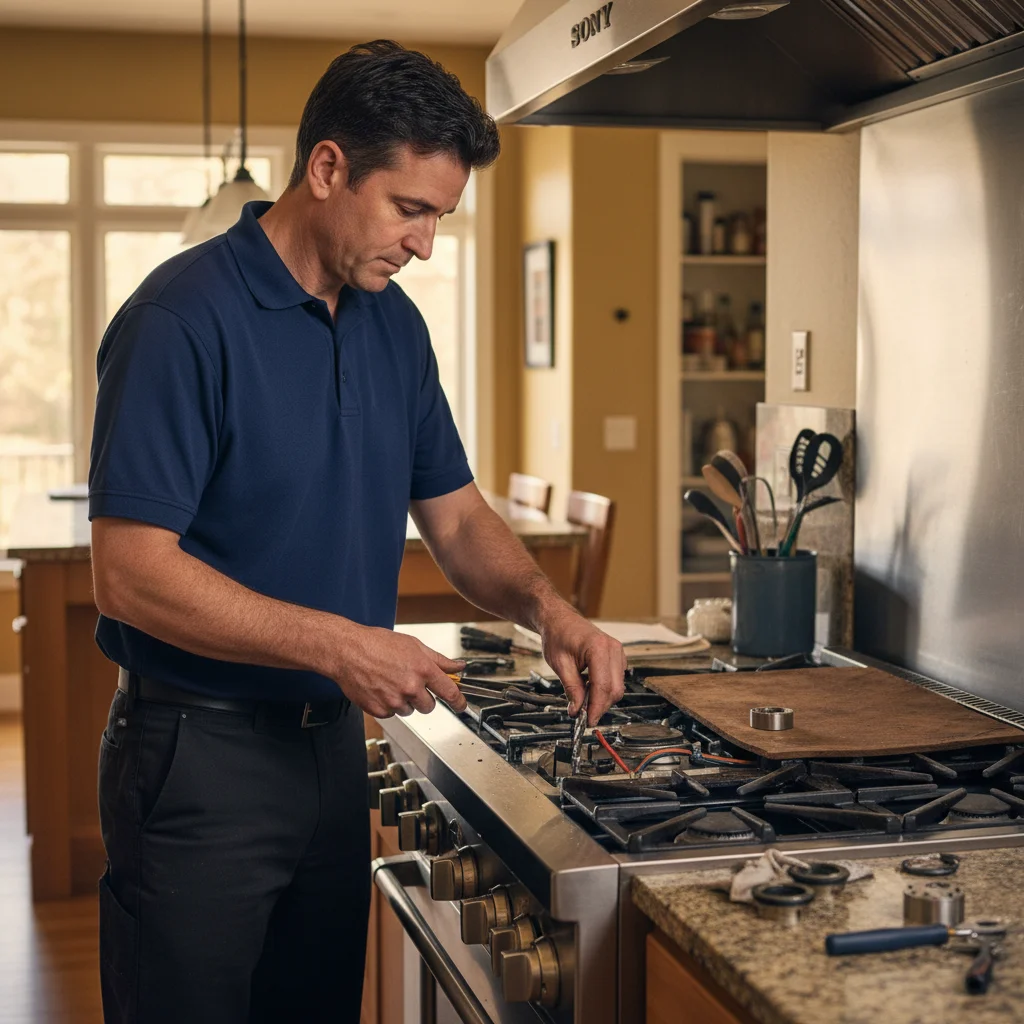
When a LoDo homeowner calls about an oven, the job almost always means working around an integrated kitchen, not just a broken appliance. We arrive, confirm the symptom on the spot, pull any stored fault codes, and figure out whether the trouble is the heat source, the sensing, or the way the oven was installed into the loft. Then we quote a firm price before loosening a single screw.

Lofts that hide their ovens

The kitchens tucked behind LoDo’s old brick-and-timber facades near Union Station are built for show, which makes them awkward to service. A century-old warehouse conversion off Wazee might hide a built-in wall oven inside reclaimed-wood cabinetry, with a panel-ready refrigeration column on one side and a run of undercounter drawers on the other — every face flush, every gap measured to the millimeter. Stacked double-oven towers get threaded into galley walls; high-BTU pro ranges anchor open islands under exposed ductwork. There is rarely room to roll anything out, so a generic appliance tech who plans on yanking the unit free usually stops at the first obstacle.

What tends to break in here

Built-in ovens in these tight, design-forward loft kitchens fail along a few familiar lines:

  • A delayed light with a faint gas odor. A bake igniter losing strength fires slowly and lets raw gas pool before it catches.
  • Convection that browns unevenly. A worn fan motor, a sensor reading a few degrees off, or untuned combustion will leave one tray pale and the next scorched.
  • A cavity that runs hot. A door gasket dried brittle by the climate bleeds heat until the thermostat overcompensates.
  • Self-clean that locks and stalls. Trapped heat in a flush, brick-backed install overworks the latch and thermal fuse.
  • A blinking fault code on a stacked tower. Those stored codes flag a developing problem long before the oven dies outright.

Diagnosis first, then an honest number

We diagnose in a fixed order so nothing gets swapped on a hunch: reproduce the fault, read the codes, test the heat source — igniter draw and combustion on gas units, element resistance on electric — then verify the sensor against a reference and inspect the door seal, since a leaking gasket fakes a calibration problem. Only then do you get a price. The $89 service call covers that inspection and is credited straight toward the repair once you approve it. We don’t quote blind over the phone, and we don’t pad the invoice afterward.

The mile-high details others miss

LoDo sits dead center at 5,280 feet, and that elevation genuinely reshapes how an oven behaves. With about 15% less oxygen in the air, a sealed burner tuned at sea level burns rich and throws heat that wanders in ways easily mistaken for a failed part. On dual-fuel ranges the electric cavity then leans harder on its sensor and fan to keep up. We retune for altitude before replacing anything.

Two more local forces pile on. The dry, high-UV climate cracks door gaskets early, and an oven venting into a sealed cabinet against brick runs hotter than its designers planned, which cooks the control board over time. Hard water — roughly 150–250 ppm — scales the steam reservoirs on the higher-end ovens common in these lofts. We weigh all three before naming a cause.

Other repairs we handle on the same visit

Because so much of a LoDo kitchen is integrated, we cover the neighbors too. If your range cooktop is acting up, the integrated refrigerator is warm, or a wine cooler or dishwasher needs attention, mention it when you book and we’ll bring parts for all of it in one trip.

Get the oven working again

Lower Downtown is central and quick for us to reach, so most appointments land same-day or next-day. Repairs run daily 8:00 AM to 6:00 PM, and the phone is answered 24/7 — handy when the oven dies the night before a dinner in a Blake Street loft. Call (720) 770-4189 or book online today. We’ll find the real fault, quote it honestly, and put your $89 service call toward the fix.

Frequently Asked Questions

Can you reach an oven built flush into millwork beside an integrated refrigerator column?

Yes, and that side-by-side layout is the rule in LoDo's warehouse conversions, not the exception. The oven typically sits inches from a panel-ready fridge column and a stack of undercounter drawers, framed by reclaimed wood over a polished-concrete slab. We mask the surrounding finishes, plan a clean extraction path, and slide the oven only as far as the test requires.

How does the freight elevator and fob entry in my loft building work for a service call?

Smoothly, as long as we know the routine ahead of time. Loading docks, freight elevators, and fob or callbox entry are standard across LoDo, so when you book, tell us how to get in and where to park near Union Station. We stage tools and likely parts for that building so the visit isn't slowed by a second trip to the van.

Does the altitude in LoDo actually change how my oven cooks?

It does, more than most homeowners expect. At a mile high there is roughly 15% less oxygen, so a gas oven set to a sea-level orifice burns rich — lazy yellow flames, soot, and heat that drifts in ways that mimic a dead part. Dual-fuel models then push their electric element and fan harder to compensate. We correct combustion for altitude before condemning any component.

Why does my self-clean cycle quit partway through?

A flush loft install vented against exposed brick traps far more heat than the oven's designers assumed, and self-clean pushes the cavity to its limit. The door latch, the thermal fuse, and sometimes the control relay take that abuse first. We test the latch motor and fuse, check the venting clearance, and replace only what actually failed.

Can Denver's hard water hurt an oven?

On the steam-assist and proofing features built into many upscale LoDo ovens, absolutely — and on the cooktop of a pro range. Denver tap runs about 150–250 ppm, so scale forms in steam reservoirs, around burner caps, and at igniter tips. We descale or swap the scaled part rather than chasing the wrong symptom.

What kind of replacement parts do you install?

OEM-grade and manufacturer-compatible parts from verified suppliers, matched to your exact model and serial number. On the components that decide whether a repair holds — igniters, bake and broil elements, gas valves, sensors, and boards — the right part keeps you from pulling a built-in oven back out of tight loft cabinetry a few months later.

Your Sub-Zero Deserves Better

Denver's experienced independent repair specialists are standing by. Same-day appointments available throughout the metro area.