A wine cooler rarely fails with a bang. The light still glows, the fan still turns, and the cabinet that held a steady 55 for years now reads 60. Left alone, that quiet drift is the whole danger: a fully stocked column in a Highlands Ranch kitchen can dull an entire rack over a few warm weeks, and the slipping part behind it — a fan, a sensor, a gasket — only gets more expensive to fix. The move is simple. Get a technician in front of the unit while the problem is still small, find what changed, and stop the climb.
What you are noticing
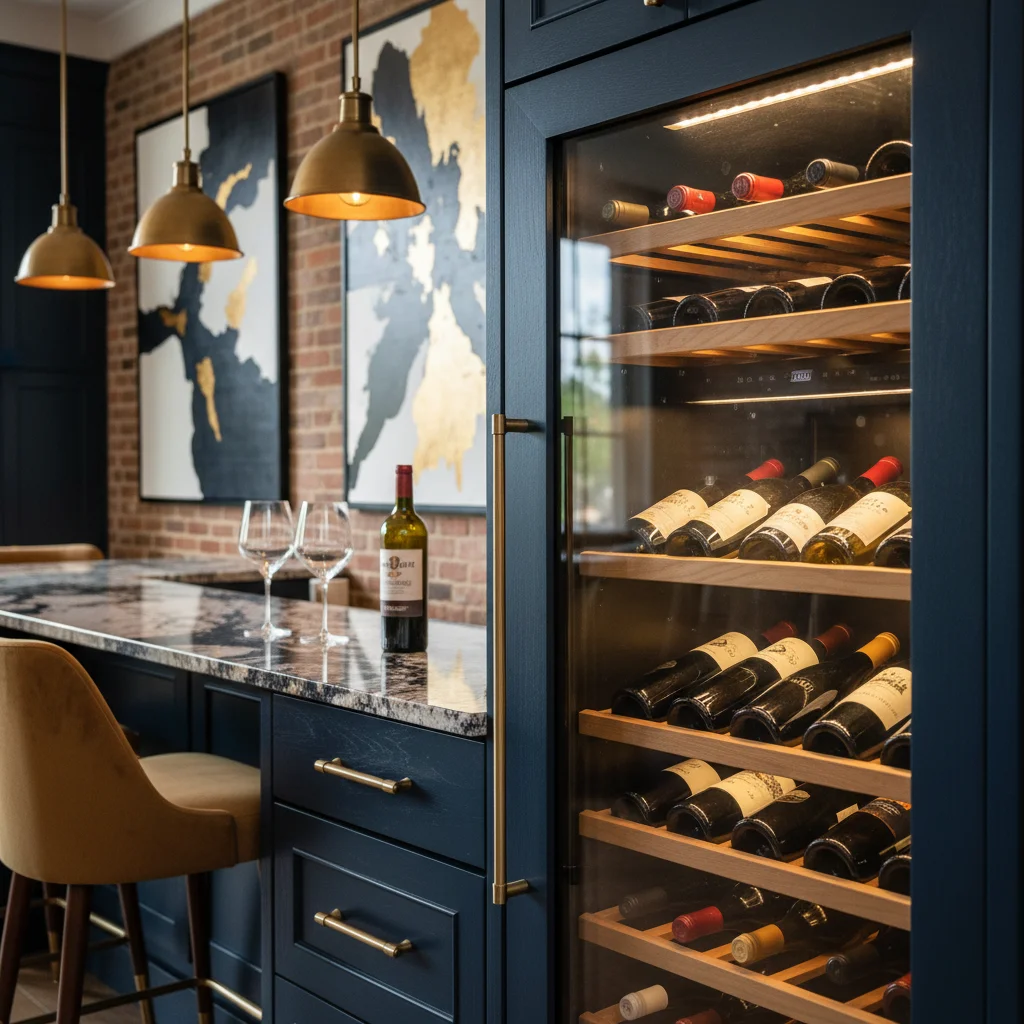
Highlands Ranch is one of the largest master-planned communities in the metro, and its kitchens were drawn that way on purpose. Across the two-story custom and semi-custom homes filling Northridge, Southridge, Eastridge, Westridge, and the newer BackCountry blocks, wine storage was built into the room — set into an island, a bar run, or a column beside the main refrigeration. So the symptoms here tend to read through quiet, finished cabinetry:
- The cabinet won’t hold its set point, or a dual-zone runs warm on one side while the other stays right.
- A new hum, buzz, or rattle telegraphing through custom millwork in an otherwise silent house.
- Frost creeping across the back wall, condensation sweating over the glass, or water pooling at the base.
- Display and lights work normally, but the cooling stage never engages.
- Short-cycling — the compressor clicks on and off without ever pulling the cabinet down.
What it usually points to
Each of those symptoms maps to a specific part, not a mystery. Warm-but-running is often a clogged condenser, a stalled fan, or a thermistor reading the cabinet wrong. Frost and a sweating door trace back to a worn gasket. A column that powers up but never cools may have a control-board or sealed-system fault, while a thermoelectric drawer that hums without chilling points at its cooling module. The install matters as much as the appliance: a unit boxed flush into millwork breathes through one slim grille, so trapped heat can make a borderline part fail years early.
How we work
Diagnose the appliance and the cabinet together
We confirm the unit type first — compressor column versus thermoelectric drawer behave nothing alike — then read the real temperatures and controls and check the cabinet airflow before touching the sealed system. On a flush-set column, the wrong guess just earns a second visit.
Factor in Denver’s altitude and water
At 5,280 feet the air is roughly 15% thinner, so every condenser sheds less heat than its maker assumed — and sealing it into island or bar millwork narrows that margin further. We read that in from the first minute, alongside the dry-climate gasket wear and the hard-water scale that chokes any humidified cabinet.
Quote before we open anything
You get a plain explanation of the fault and a firm price before the repair starts. We draw the unit forward without marking floors or millwork, and nothing gets slipped onto the bill later.
Coverage and parts
We cover all of Highlands Ranch and have served the Denver metro since 2012. We fit OEM-grade and manufacturer-compatible parts from verified suppliers — compressors, fan motors, thermistors, control boards, and door seals — matched to your exact model and serial, not a generic stand-in. As an independent shop, we are not affiliated with any manufacturer; we simply repair these premium built-ins routinely.
Get it fixed
Repairs run daily from 8:00 AM to 6:00 PM, and the phone is answered 24/7, so same-day or next-day slots are usually open. The flat $89 diagnostic brings a technician to your door, pinpoints the real cause, and credits straight toward the repair once you approve it. Call (720) 770-4189 or book online anytime, and we’ll get your wine cooler holding a steady temperature again.