
The repair, explained
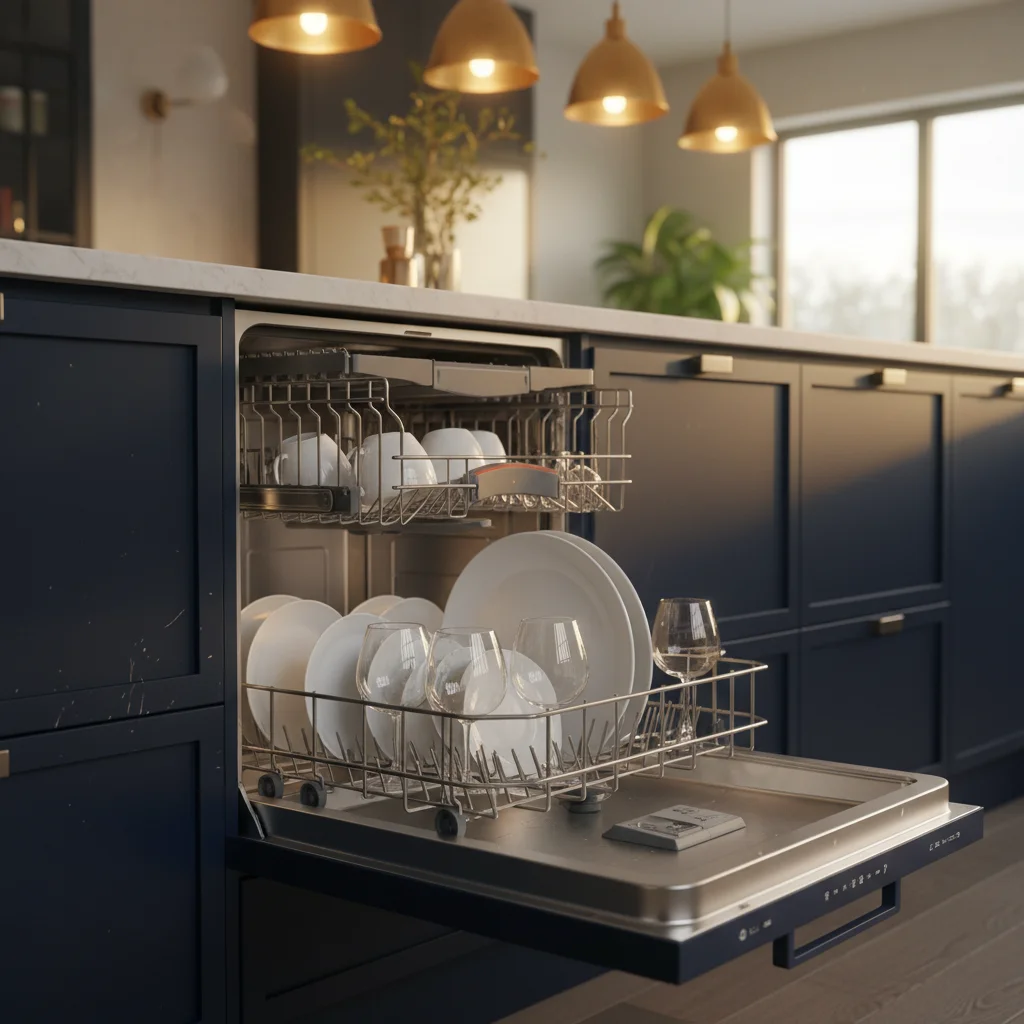
Pull a dishwasher out of a Highlands Ranch kitchen and you’re rarely looking at a starter-home appliance. This is one of the largest master-planned communities in the metro — thousands of substantial two-story homes drawn around built-in refrigeration from the blueprints up. The dishwasher came along with that plan: usually integrated and panel-ready, set flush into the same cabinet run as the column fridge, controls hidden on the top edge of the door. The machine behind the panel is fully serviceable. The custom front and the slab counter overhead are not. A real repair reaches the fault without marking either, and that constraint shapes every call out here.
Symptoms & causes
A complaint is a starting point, not a diagnosis. The local water and elevation tip the odds before we open the door:
- An inch of gray water standing in the tub — a clogged filter, a stalled drain pump, or a check valve furred shut with scale rather than a dead motor.
- Cloudy, gritty, or still-damp glasses — hard-water film on the arms and element, routinely misread as a broken heated-dry stage.
- A cycle that won’t begin or stops halfway — typically the door latch, the control board, or a tripped thermal fuse.
- A slow seep onto the floor — a gasket gone brittle in the dry air, a split fill hose, or a weeping pump seal.
- A grinding or scorched note on the drain stroke — a failing pump or a glass shard lodged in the impeller.
In an older remodeled kitchen near Town Center, a mineral-choked supply line behind the cabinetry can mimic an electrical fault while needing a different fix entirely.
Why a specialist
A panel-ready dishwasher in a BackCountry or Firelight kitchen isn’t framed to be yanked. It’s locked into custom millwork beside a built-in fridge, often sharing a toe-kick and a leveled cabinet line. Free it carelessly and you’ve damaged a panel that cost real money. A generalist tends to force the access and throw parts at the symptom; we plan the route, protect the surfaces, and trace the fault to its cause. That difference is what keeps a one-visit fix from becoming three.
What a visit looks like
- You call or book online and tell us the brand, the symptom, and which part of Highlands Ranch you’re in — Town Center side, a University Boulevard street, or a newer BackCountry build.
- We identify the exact unit by model and serial, since the correct parts and procedure flow from it.
- The technician inspects on-site, confirms the complaint, reads stored fault codes, and works the water and drain paths methodically — checking the install itself on an integrated unit.
- You get a plain diagnosis and a firm price before a single fastener turns.
Pricing
The diagnostic is a flat $89, credited toward the repair once you approve the work. Because high-end models vary so widely and a panel-ready unit can hide its real fault until it’s drawn out, we quote the exact repair price only after the on-site inspection — never guessed over the phone, never padded afterward. We fit OEM-grade, model-matched parts and clear scale from the arms, element, and check valve so a fresh part isn’t dropped into the same mineral load that killed the last one.
A few quick answers before you call
Three Denver forces sit behind most Highlands Ranch dishwasher calls. The air is roughly 15% thinner well above a mile high, so heated-dry cycles strain to hold temperature and dishes land cooler and damper than at sea level. The water runs hard, commonly 150 to 250 ppm, scaling spray arms, elements, and inlet screens — the same scale clouding the ice maker a few feet away. And the dry, high-UV climate hardens gasket rubber years early, so seals here crack and seep ahead of schedule.
A leaking dishwasher costs almost nothing on day one and a great deal once water reaches a subfloor or finished basement. Repairs run daily, 8:00 AM to 6:00 PM, and the phone is answered 24/7. Reach us at (720) 770-4189 or book online, and the $89 service call goes straight toward your Highlands Ranch repair.