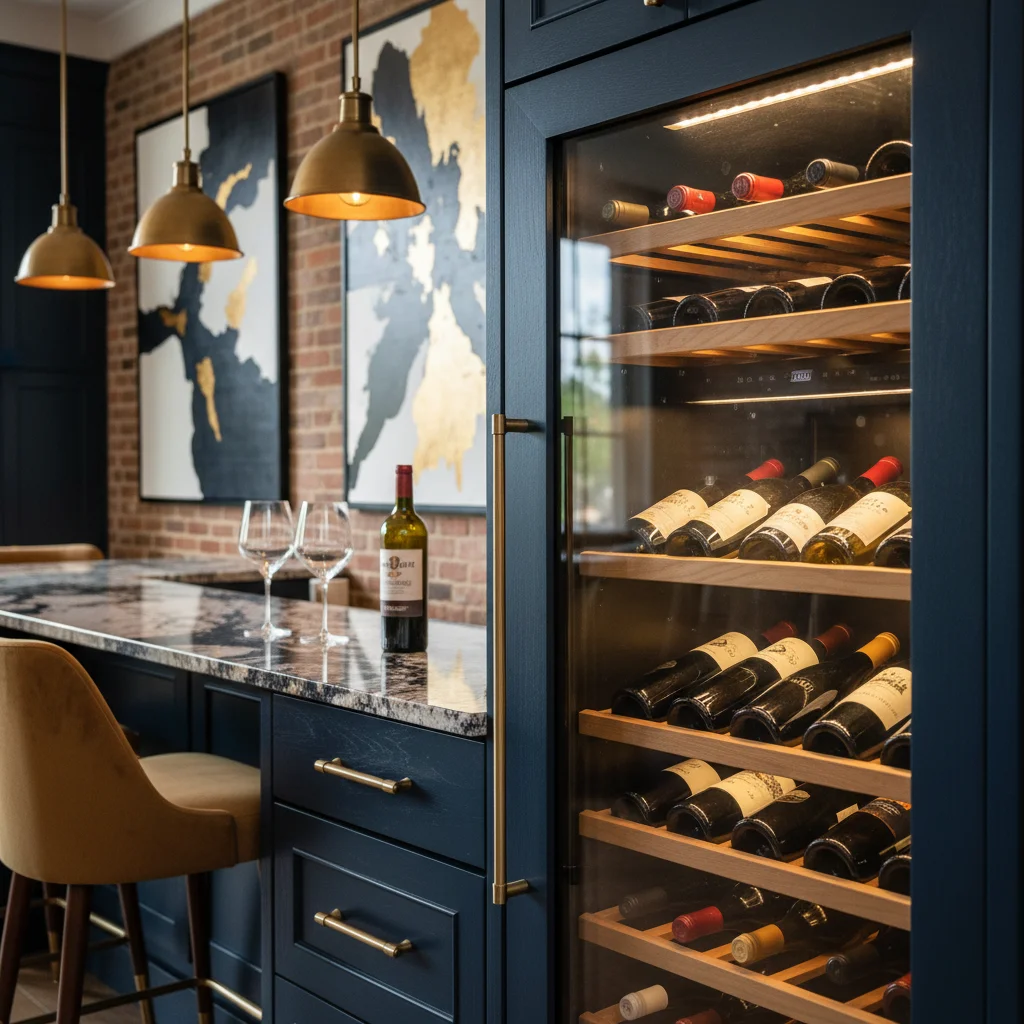
A wine cooler is a precision instrument wearing the shell of an appliance. A kitchen fridge can swing four degrees overnight and nobody notices; a cooler that does the same is slowly cooking the bottles you’ve been laying down. That narrow tolerance is what makes this a specialist repair rather than a generic one — and in Bonnie Brae, where the cooler is usually built into a careful remodel rather than parked against a wall, the install matters as much as the machine.
What the repair really involves
Walk the curving streets that fan out from Bonnie Brae Ice Cream and you’ll pass block after block of tidy 1920s bungalows — modest footprints, ambitious renovations underneath. The wine units we open here are almost never freestanding boxes. They’re integrated columns and under-counter drawers fitted into millwork added decades after the house was framed for an icebox. So a “broken cooler” is really two questions at once: what failed inside the unit, and what the snug bungalow cabinetry is doing to it.
Symptoms and what’s behind them
The complaints from Bonnie Brae bottle storage tend to repeat:
- The cabinet won’t hold its set point, or one side of a dual-zone runs warm while the other stays right.
- A fresh hum, rattle, or vibration ringing through the surrounding millwork.
- Frost on the back wall, condensation across the glass, or water pooling at the base.
- Lights and display alive, but the cooling stage never engaging.
- Short-cycling — clicking on and off without ever pulling the cabinet down.
At 5,280 feet the air is roughly 15% thinner, so every condenser rejects less heat than its maker assumed at sea level. In an open kitchen that margin hides; in a column boxed into bungalow cabinetry with an inch of clearance, it’s the line between steady storage and a slow climb out of range. Denver’s dry climate stiffens gaskets early, which drives the frost and sweating, and on water-fed beverage centers the hard local supply (around 150–250 ppm) lays down scale worth checking before it chokes the line.
Why this isn’t a handyman job
Anyone can swap a part. The harder skill is telling whether a “failing” cooler is genuinely sick or simply suffocating inside a snug remodel — and reaching the sealed system without scarring cabinetry the owner just paid a finish carpenter to build. We’ve worked Denver metro kitchens since 2012 and plan access around the millwork before a tool comes out.
What a visit looks like
- We read the install first, checking whether a too-tight alcove or a blocked grille is starving the condenser before we blame a board.
- We test it running: real zone temperatures, stored fault codes, then the compressor, condenser and evaporator fans, thermostat, thermistors, and control board under load. For thermoelectric drawers, we test the Peltier stack instead.
- We trace the sealed system and the door seal, since refrigerant leaks surface faster in thin air and a dry-climate gasket is the most overlooked cause of a warm cooler.
- We explain the cause in plain language and quote a firm price before any work begins.
Straightforward pricing
The on-site diagnostic is $89, and it’s credited toward the repair if you go ahead. We quote the exact repair only after inspecting the unit — no numbers invented over the phone, no extras added after the quote.
A few things owners ask
Will you mar my new kitchen? No. We protect cabinetry and floors and route service through the openings already built into the install.
Can you handle the matching Sub-Zero or Wolf while you’re here? Usually yes — in these remodels the cooler is rarely the only built-in, and we service the rest of the suite too.
How fast can you come? Repairs run daily 8:00 AM–6:00 PM and the phone is answered 24/7, so same-day or next-day slots are usually open.
Call (720) 770-4189 or book online anytime. The $89 diagnostic brings a technician to your Bonnie Brae door, finds the real cause, and goes straight toward the repair the moment you approve it.