When a warm fridge starts costing you
A refrigerator that drifts warm in a Bonnie Brae kitchen is easy to shrug off for a day. It shouldn’t be. Once the fresh-food side climbs past 40°F, a full week’s groceries are on borrowed time, and a unit that limps along instead of failing outright tends to run its compressor harder — which is exactly the part you don’t want to lose. On the quiet, curving blocks around Bonnie Brae Ice Cream, where a fridge is often slotted neatly into a remodeled bungalow kitchen, a slow leak of cold can also work on the cabinetry around it. The fix is almost always smaller and cheaper than the wait. Call (720) 770-4189, answered 24/7, and we will get to the cause.
What you’re noticing
Bonnie Brae’s housing stock is its own thing — tidy 1920s and ’30s bungalows on streets that bend with the old streetcar plats, most of them carefully remodeled over the years. That means the symptoms we see here often come from a modern fridge living inside an older footprint:
- The fresh-food compartment feels warmer than it should, even though the freezer seems fine.
- Frost is stacking up on the back wall of the freezer.
- The unit runs constantly and never settles into a quiet cycle.
- Ice cubes come out cloudy, hollow, or small, or the dispenser slows to a trickle.
- Water is pooling under a crisper or beading along the door.
What it usually means
The same complaint can point in different directions depending on the install. A warm fresh-food side is often a dust-choked condenser, a failed evaporator fan, a tired start relay, or a sealed-system fault — and in a flush-fit remodel, restricted airflow is the first thing we rule out. Freezer frost typically traces to a defrost heater, defrost sensor, or a control board mistiming the cycle. A compressor that never rests usually means trapped heat, a weak fan, or a gasket gone stiff. Cloudy ice is almost always hard-water scale.
How we work it
Diagnose before we quote
We measure real fresh-food and freezer temperatures, check clearances and airflow inside the cabinetry, read any stored fault codes, then trace the sealed system and electrical parts under load. You get the cause in plain language and a firm price before any panel comes off.
Why Denver’s air and water matter here
At roughly 5,280 feet, Denver’s air is about 15% thinner, so condensers and fans shed less heat — a slightly dusty coil in a tight Bonnie Brae cabinet warms up sooner than it would near the coast. Hard water at 150 to 250 ppm scales ice makers and dispenser lines, and the dry, high-UV climate hardens door gaskets early. We weigh all three on every call.
Coverage & brands
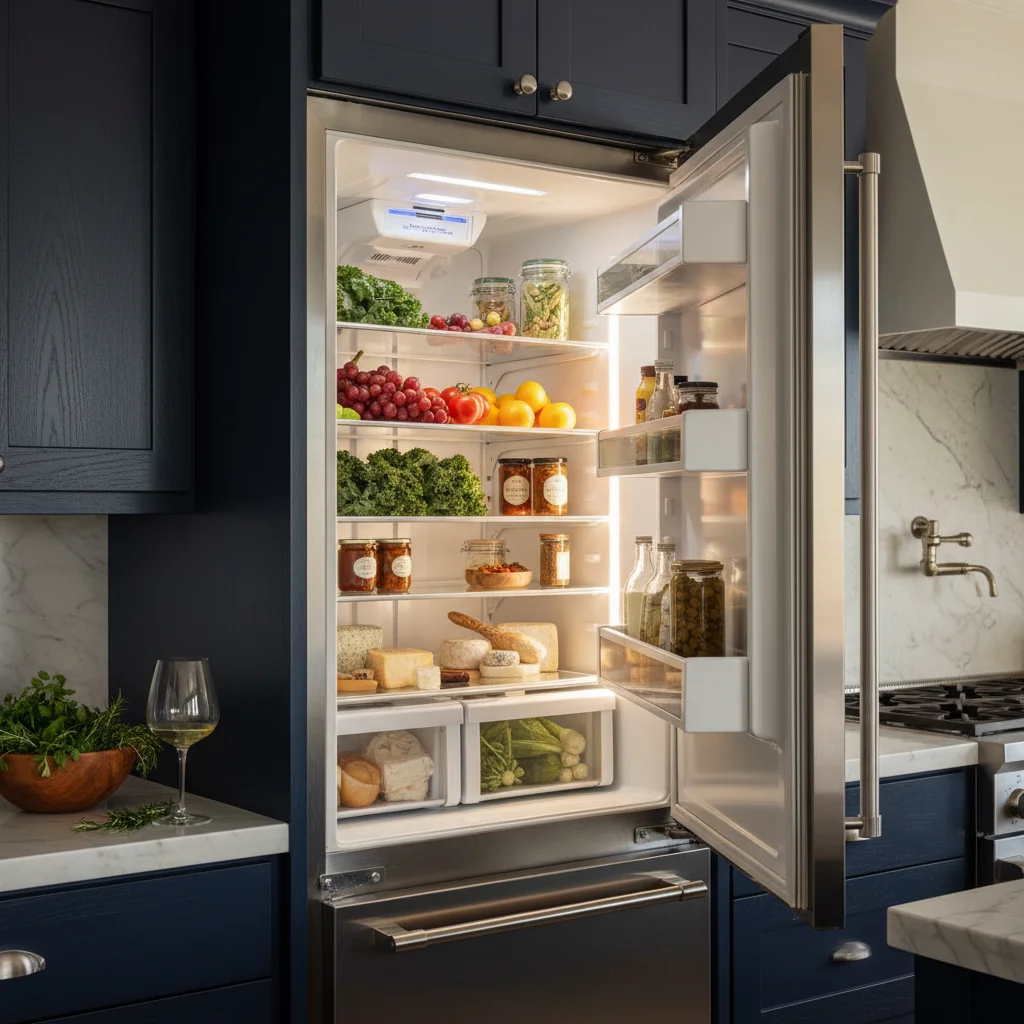
We service freestanding French-door, side-by-side, top- and bottom-freezer refrigerators, plus the integrated panel-ready units and freezer drawers common in Bonnie Brae’s updated kitchens — each diagnosed on its own and fixed in one visit where we can.
Get it fixed
Repairs run daily, 8:00 AM to 6:00 PM, while the phone is answered 24/7 — so you can call the moment your fridge slips, even at midnight. The $89 diagnostic brings a technician to your Bonnie Brae door, finds the real cause, and goes straight toward the repair once you approve it. Call (720) 770-4189 or book online today.