A freezer rarely fails loudly. There is no alarm — it just eases, over a few quiet days, from a hard zero up to something soft, and in a Bonnie Brae kitchen the unit is usually a paneled column folded flush into a cabinet run, so the first real hint is often a pint of ice cream gone slack. On this repair our job is simple: find why the freezer slipped before the food inside pays for it, reach the fault without disturbing the kitchen around it, and put one honest number in front of you first. The $89 diagnostic covers that inspection and is credited toward the repair if you go ahead.
How Bonnie Brae shapes this job
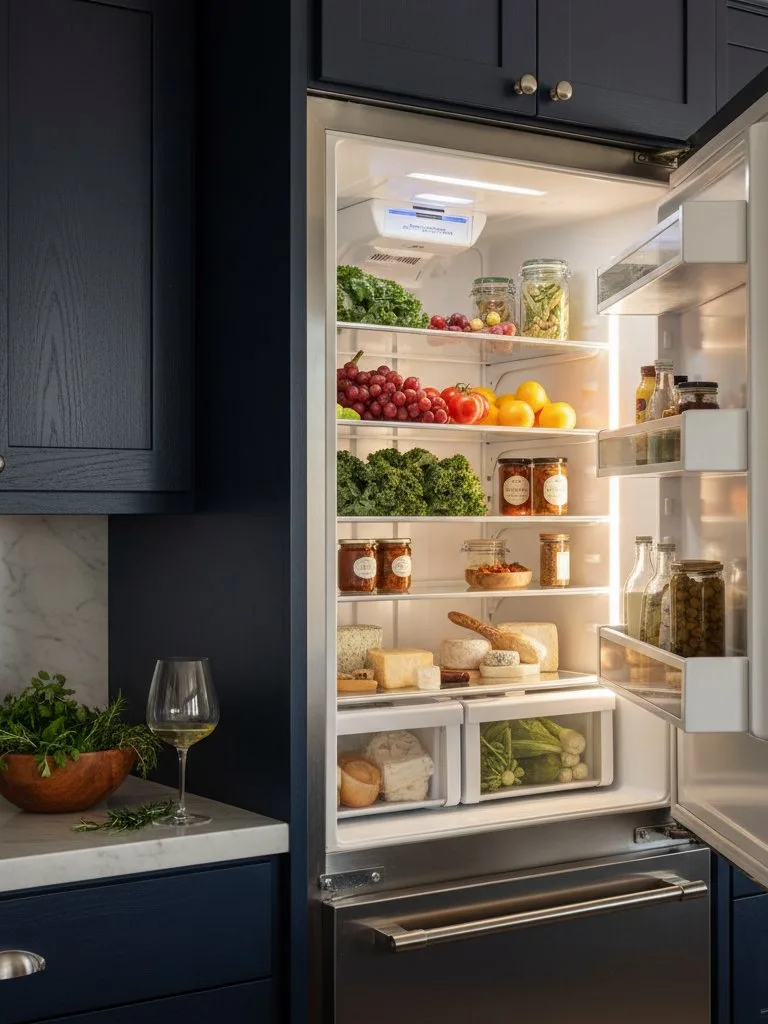
Turn off the Denver grid onto Bonnie Brae’s curving, almost park-like streets and the houses tell you what to expect inside. These are tidy brick bungalows, many remodeled from the studs, and around the ice cream shop at University and Ohio the kitchens lean heavily toward integrated, panel-ready appliances. That means the freezer is rarely a box you yank from a wall. It is a built-in column, a drawer stack in an island, or a freezing zone designed into the millwork — so diagnosis starts with how the unit was engineered to behave, not a guess from the display.
Freezer faults we trace, and what drives them
Across the neighborhood’s restored bungalows and scrape-and-rebuilds, freezer trouble keeps landing on a short list:
- Running but not freezing — usually a frosted-over evaporator behind a failed defrost heater, sensor, or control board.
- A sheet of ice on the back wall — a stuck defrost cycle, or a gasket hardened by Denver’s dry air letting humidity creep in.
- A compressor that never cycles off — a condenser choked with dust in a tight cabinet cavity, or a sealed system straining in thin mountain air.
- One drawer warm while another stays cold — a fan motor or damper fault in a multi-zone column or drawer set.
- Slow, slushy, or hollow ice — hard-water scale clogging the fill valve, supply line, and ice mold.
Inspection first, then an honest price
We do not quote a freezer repair over the phone, because a flush-inset built-in can disguise its real fault. A visit runs in a set order:
- We log the actual compartment temperature and how the unit is cycling, ignoring the door reading.
- We read the sealed system — condenser, compressor, charge — with altitude factored into what “normal” means.
- We test the defrost circuit and evaporator fan whenever frost is the complaint.
- We check the gasket and, on ice-making models, trace the water path for scale.
- We hand you one combined, up-front price and start only with your go-ahead.
When a part needs replacing, we fit OEM-grade or manufacturer-compatible components from verified suppliers, matched to your exact model and serial.
The Denver factors built into every reading
At Bonnie Brae’s 5,280-foot elevation the air is roughly 15% thinner, which changes how a sealed system rejects heat and how much margin a refrigerant charge really has — a freezer that would shrug off a weak charge at sea level can drift warm up here. The dry climate stiffens door gaskets faster than owners expect, and the city’s hard water, around 150 to 250 ppm, quietly scales up ice makers and water lines. We read every freezer against those local conditions, not a generic spec.
Related repairs we handle in the same kitchen
A freezer fault rarely lives alone. If your built-in shares a cabinet run with a refrigerator column, a wine or beverage unit, or a dishwasher, we can look at the lot in one visit — the evaporators, fans, defrost circuits, and water lines often wear in the same pattern. Ask when you book.
Get your Bonnie Brae freezer back to zero
If your freezer is softening, frosting, or running nonstop, call (720) 770-4189 — answered 24/7, with repairs run daily from 8 AM to 6 PM — or book online anytime. The $89 service call gets a technician to your door, a real diagnosis in hand, and one clear price before any work begins.