A quick lay of the land
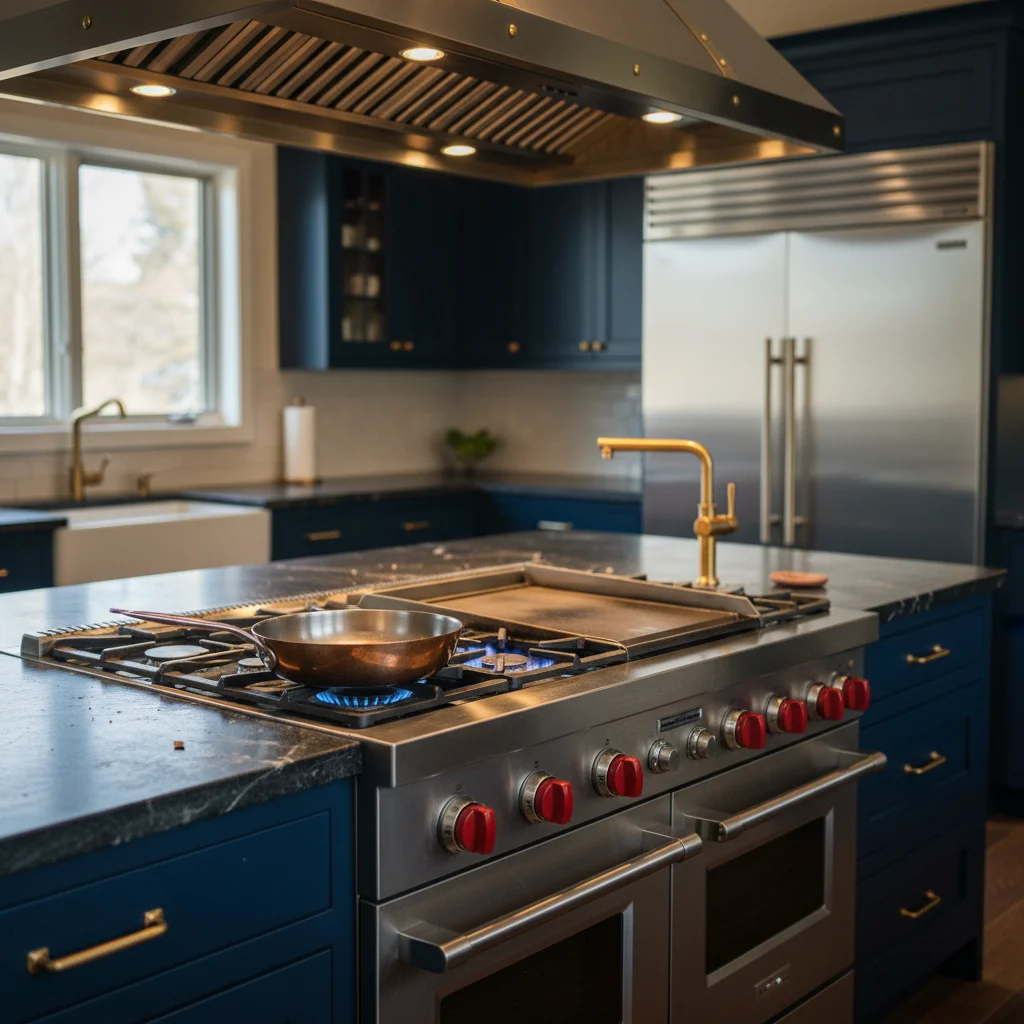
Turn off the surrounding Denver grid and onto Bonnie Brae’s bending, almost park-like streets and the whole feel of the place changes — generous lots, mature trees, brick bungalows set back from the curb, and the little corner institution, Bonnie Brae Ice Cream, anchoring the node at University and Ohio. That same care shows up inside. This is a neighborhood of deliberate remodels, where original 1920s and 1930s bungalows were opened up and rebuilt, and the range almost always became the centerpiece of the new kitchen: a 36- or 48-inch professional gas or dual-fuel unit set flush into cabinetry built around it. These are not appliances you wrestle away from the wall for a quick swap. They are designed into the room, which means the diagnosis has to be right the first time. We start by reading the actual fault and clearance, then explain it plainly and quote up front.
What we most often find
A range is really two appliances on one frame — a cooktop above, one or two ovens below — and on the wide pro models common here, either half can drift while the other looks fine. Across Bonnie Brae’s rebuilt kitchens, the same handful of faults keep coming up:
- Burners that won’t light or won’t simmer — a failed spark module, a worn electrode, or a gas valve that can’t hold a low flame.
- Lazy yellow, sooty flames — usually an air-shutter or orifice running rich for our altitude, not a broken part.
- A bake igniter that’s lost its glow — the single most common oven complaint, leaving the cavity slow and cool.
- Drifting oven temperature — a fatigued sensor or a control board misreading the cavity and short-cycling the heat.
- Dead broil or convection — a burned-out element or the relay on the board that fires it.
- Electric and induction faults — failed elements, a bad infinite switch, a corroded terminal block, or a power module that’s lost its interface.
Parts that last in a tight install
When we replace something, we match it to your exact model and serial with OEM-grade, manufacturer-compatible components from verified suppliers — igniters, valves, sensors, elements, and boards built to original spec. The boxed-in nature of a Bonnie Brae range makes the after matter as much as the part: a unit milled tight into its cabinet run traps heat, and trapped heat is what shortens the life of a fresh board or igniter. So we reseat the range, verify its clearances, and confirm it can breathe before we call the job done.
Where altitude and water come in
Three local forces shape almost every range diagnosis here, and we weigh them before reaching for a replacement:
- Thin air (5,280 ft). About 15% less oxygen means high-output burners can run rich and weak igniters lose their firing margin. The fix is often correct orifice or air-shutter tuning, not a new part.
- A very dry climate. Denver’s dryness hardens oven door gaskets and seals early, letting heat leak so the oven cycles harder to hold temperature — a quiet cause behind “it just doesn’t bake like it used to.”
- Hard water (150–250 ppm). On any steam-assist oven or humidity-injected dual-fuel range, our mineral-heavy water scales the valves and supply lines. We descale or replace and check the source.
Booking a visit
Bonnie Brae’s central location makes it an easy reach, so we usually offer same-day or next-day appointments. Call (720) 770-4189 any hour — the line is answered 24/7 — or book online. On-site repairs run daily 8:00 AM to 6:00 PM, the diagnostic is a flat $89 applied toward the repair, and you’ll always have an up-front price before we begin. Independent and serving the Denver metro since 2012.