The repair, explained
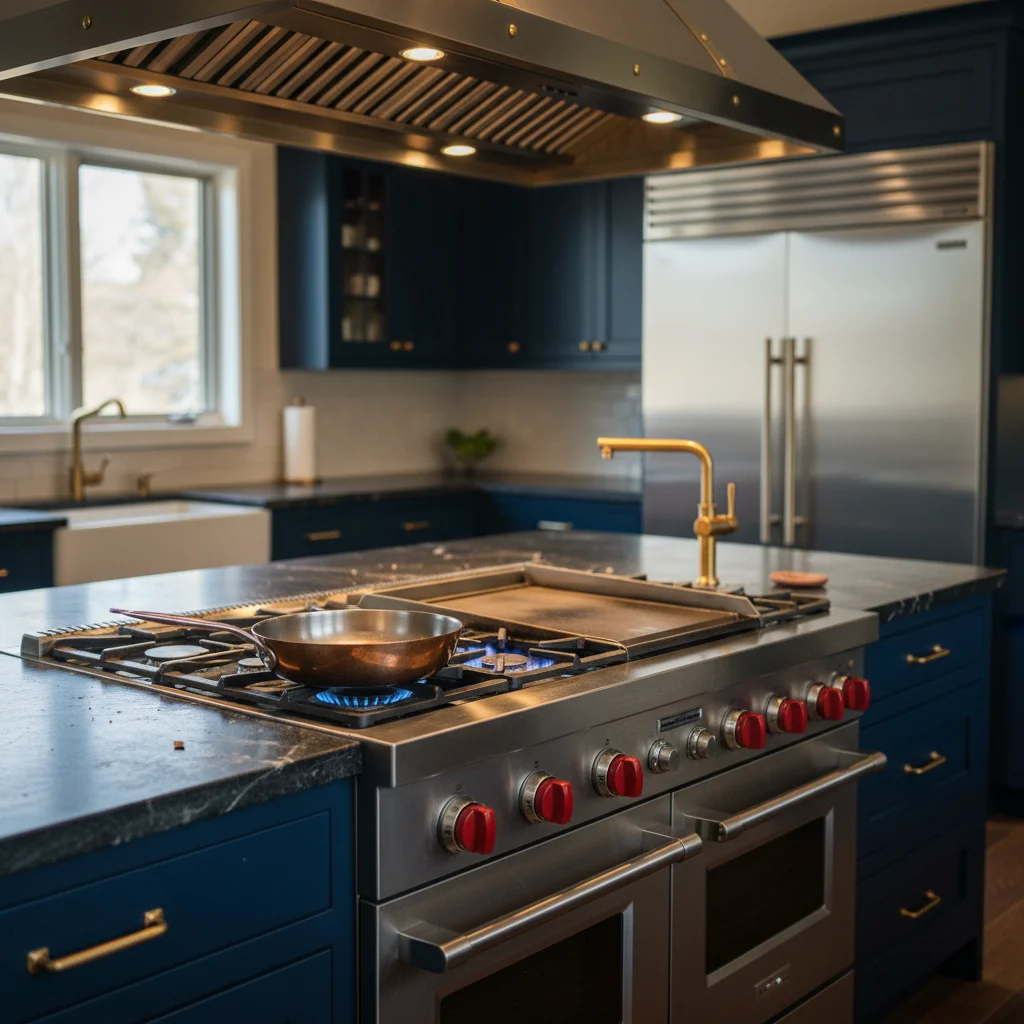
People say “my range broke,” but a range is really two machines sharing a frame and a power feed: a cooktop on top, one or two oven cavities below. They almost never fail together, and they almost never fail for the same reason — so fixing one is nothing like fixing the other. A burner is fast combustion and a spark circuit; an oven is a slow, sealed thermal loop ruled by an igniter or element and a temperature sensor. Chasing the wrong half is how a quick part swap turns into a wasted afternoon. In Arvada, the city itself tilts the odds: thin mile-high air, mineral-heavy water, and a dry Front Range climate all push a healthy range off spec in ways that imitate broken parts.
Symptoms and causes
Tell us where the range lives and what it’s doing, because the address narrows the cause fast.
- Burner sparks endlessly or lights late — in the older homes reworked around Olde Town and along Ralston Road, usually a worn electrode, cracked insulator, or a port packed with boil-over.
- Lazy yellow flame that soots pan bottoms — almost never a bad burner. At 5,280 feet the air holds about 15% less oxygen, so a sea-level burner runs rich until the shutter or orifice is tuned.
- One dead burner, rest fine — its own valve, switch, or electrode, not anything shared.
- Oven never reaches temperature — a tired bake igniter, a drifted sensor, or a worn element; thin air shortens an igniter’s firing margin, so marginal ones quit early up here.
- Phantom clicking or a dead cavity in a built-in — in the show-kitchen ranges out in Candelas, flush-set beside integrated refrigeration in the Gold Line-adjacent build boom, trapped heat cooks the control board over time.
Why a specialist
A pro range boxed into Candelas millwork is a different animal from a freestanding unit in a 1970s Olde Town kitchen, and a generalist who treats them alike misses the real fault. Altitude alone trips up most: a yellow-flame call almost always ends in tuning, not a new burner — but only if the tech checks combustion against a mile-high air supply first. Built-in installs add their own trap, where an oven overheating its own electronics behind a panel-ready front mimics a board failure exactly. We weigh the install, the altitude, and the water against the symptom before anything gets replaced.
What a visit looks like
- Trigger the fault and watch. We run the failing burner or cycle ourselves instead of working from your description alone.
- Read the install. In a boxed-in Candelas kitchen we check clearance and airflow, since a range cooking its own controls looks just like a part failure.
- Measure, don’t assume. We read electrode spark, valve and switch continuity, bake igniter draw, sensor resistance, and elements under power, pulling stored codes where the model keeps them.
- Judge combustion for altitude. On gas and dual-fuel units we assess flame quality and orifice sizing against Arvada’s thin air before blaming a component.
- Quote one firm price — cause in plain language, cabinetry protected, before any work begins.
Pricing
The diagnostic is a flat $89, and it buys a complete on-site inspection of both halves of the range — not a guess. Approve the work and that $89 comes off the repair total. You get the full number up front; the exact repair price is set only after the inspection, and nothing is added later.
Common questions, answered
Still clicking and won’t light? Often a five-minute electrode or igniter job — worth catching before raw gas vents into a sealed kitchen. Yellow flame? Usually altitude, usually tuning. One dead burner? Almost always its own circuit. A built-in acting possessed in a tight Candelas run? Frequently heat and the board, not the burner you’re staring at.
Call (720) 770-4189 any hour — answered 24/7 — or book online. On-site repairs run daily 8:00 AM to 6:00 PM. From an Olde Town remodel to a Candelas built-in, we name the real cause and quote it first, with your $89 service call credited toward the repair.