What sets a freezer call apart
A freezer is the least forgiving appliance in an Arvada kitchen, and that changes how it has to be repaired. A range can limp along on one bad burner; a dishwasher can wait a week. A freezer holding a quarter-side of beef or a summer’s worth of Palisade peaches has no slack — slip from zero into the twenties and the whole load is on a one-to-two-day clock before the center thaws and refreezing ruins it for good. So the goal here is never just “make it cold again.” It is finding the true fault fast, on the first visit, because a second trip costs you the contents.
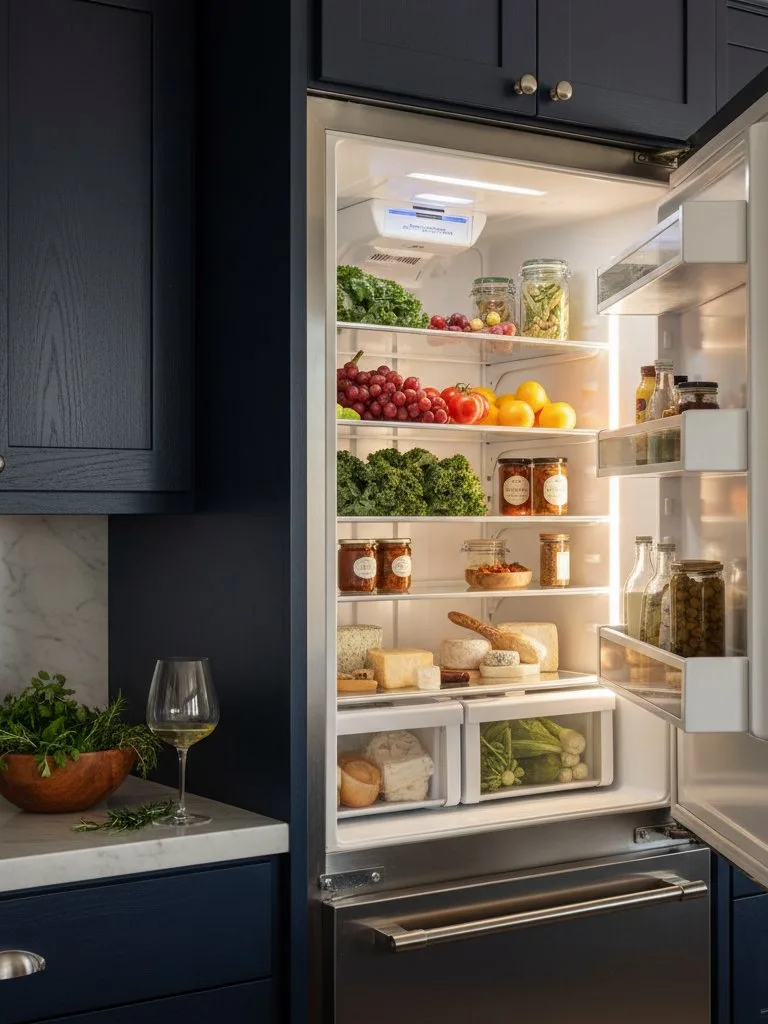
Arvada raises the stakes in its own way. The kitchens we open run the gamut from a 1950s ranch off Ralston Road with a freestanding upright in the garage, to a Gold Line townhome near the Olde Town station, to a Candelas build where the freezer is a sealed column matched to the cabinet doors. Same appliance category, three very different repairs.
Symptoms and what is behind them
Most freezer faults announce themselves quietly. Watch for these:
- Hums but drifts warm. A frosted-over evaporator behind a failed defrost heater, sensor, or board — the compressor runs, the cold just never reaches the box.
- Frost sheeting the back wall. A stalled defrost cycle, often paired with a gasket the dry air has stiffened until it leaks.
- Runs nonstop, never cycles off. A condenser choked by tight cabinetry, or a compressor losing ground to the altitude heat penalty.
- Slow, hollow, cloudy ice. Hard-water scale in the fill valve, line, and mold — the most common Arvada complaint by far.
- One zone cold, a paired zone warm. A dead evaporator fan or a stuck damper in a multi-section built-in.
Why an altitude-aware specialist matters
A generalist swaps the obvious part and leaves. The trouble is that several of these faults imitate each other, and a couple are made worse by where Arvada sits — at 5,280 feet, where the air is roughly 15% thinner.
That thin air is not trivia. A condenser moving less-dense air rejects about 15% less heat, so a borderline freezer boxed into snug Candelas millwork tips over a margin it would hold at sea level. The very dry, high-UV climate cracks door gaskets years early, feeding the frost a generalist scrapes off without fixing. And hard water at 150 to 250 ppm scales every path to the ice maker. We arrive with the parts those patterns predict.
What a visit looks like
- You call (720) 770-4189 or book online. Answered 24/7 — tell us the symptom, the brand, and whether food is at risk.
- We confirm the install. Freestanding, panel-ready, or fully integrated, plus access notes like a tight Olde Town pantry or a finished West Arvada basement bar.
- The technician reads the whole system. Internal temperatures, stored fault codes, and the sealed loop, defrost circuit, fans, dampers, and gasket — tested together.
- You get a plain diagnosis and a firm price, then we finish with parts matched to your model and serial.
Pricing
The on-site diagnostic is $89, and it credits straight toward the repair once you approve the work. The exact repair price comes only after the inspection — a sealed Candelas column hides different faults than a garage upright — so you get one clear number up front with nothing tacked on later. Parts are OEM-grade or manufacturer-compatible from verified suppliers.
Still not holding zero?
Don’t wait for the load to thaw. Call (720) 770-4189 any hour — the phone is answered 24/7 — or book online. Repairs run daily, 8:00 AM to 6:00 PM, with same-day or next-day appointments typical from Olde Town to Candelas. The $89 credits toward the fix, so the price you hear after the inspection is the price you pay.