The repair, explained
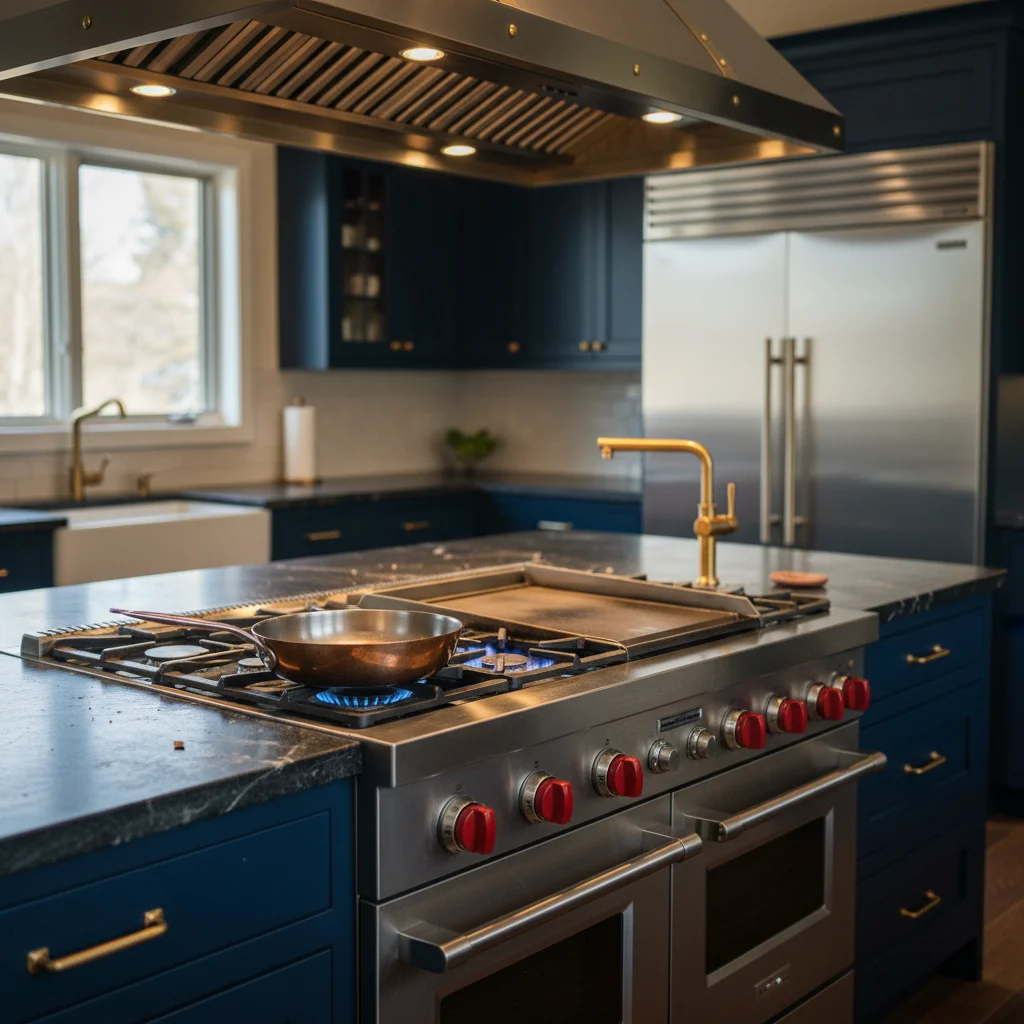
A Viking range is two appliances bolted into one heavy frame, and that is the first thing to understand before anyone touches it. Up top sits a commercial-style gas surface — sealed burners fed by individual orifices, each one capable of a hard sear and, on a good day, a whisper-low simmer. Underneath is a separate beast: a deep convection oven that on a dual-fuel model is fully electric, and on an all-gas model burns its own flame against a safety valve. A complaint that sounds like one problem (“my range is acting up”) can live in either half, and the two halves fail for completely different reasons. So the honest starting point is never a part — it is figuring out which system is actually misbehaving.
That is the core of what we do on a Viking range call. A technician confirms what the range is genuinely doing in front of you, reads whatever the oven control will tell us, and then walks the gas path or the oven circuit in order before putting a name to the fault. You get a plain-language explanation of what failed and a single up-front price, agreed before any wrench moves. The on-site diagnostic is a flat $89, credited toward the repair if you decide to proceed.
We are an independent repair service for the Denver metro and have worked on Viking equipment since 2012. We are not affiliated with, endorsed by, or sponsored by the manufacturer. What we bring is brand-specific familiarity with how these ranges are built — and how they behave a mile above sea level, which is a bigger factor on a gas range than on almost anything else in the kitchen.
How Viking builds the range
A few design choices shape nearly every range repair we do:
- Sealed, high-output surface burners. Each burner is its own sealed unit with a dedicated orifice and air shutter, and spills sit on top of the seal rather than dripping into the burner box. That makes them easy to clean but also means the air-fuel tuning is per-burner — a single lazy flame can be one burner’s orifice or shutter, not the whole range.
- Spark ignition, not standing pilots. A spark electrode at each burner fires off a module to light the gas. No pilot light means no constant flame, but it also means ignition depends on a clean, dry electrode and a healthy module.
- Gas versus dual-fuel ovens. All-gas models run an oven igniter that has to glow hot enough to pull the safety gas valve open; dual-fuel models swap that for electric bake and broil elements with a gas cooktop above. The repair logic for “oven won’t heat” is entirely different between the two.
- Convection as standard. A fan and sometimes a third element move heat around the cavity. When that fan slows or an element weakens, the oven still “works” but bakes unevenly — a subtle fault that hides behind a normal-looking display.
- Heavy mechanical build with electronic control. Welded-feel chassis, robust grates, and porcelain interiors are paired with a control board and temperature sensor that quietly run the oven. The brand is engineered to be repaired and kept for decades, which is exactly why diagnosing the right part matters so much.
Knowing that architecture is half the diagnosis. The other half is knowing how Denver leans on it.
Symptoms and causes
Viking ranges fail in recognizable patterns. These are the ones we see most often across professional gas and dual-fuel models:
- Burner clicks but won’t light. Usually a carbon-fouled or moisture-soaked spark electrode, a burner cap nudged off its locating pins after cleaning, or a spark module that keeps firing on every burner at once. Frequently a correction rather than a major part once it is pinned down.
- Lazy, yellow, or noisy flame. An air-shutter or orifice issue, a partly clogged burner port, or a flame simply running rich because the range was never re-tuned for altitude after a move to Colorado. This is the single most common Denver-specific call we take on Viking ranges.
- Simmer that won’t hold low. The low end of the flame range is the hardest to tune, and at altitude it is the first thing to go. A burner that sears fine but blows out or surges on the lowest setting often points to tuning rather than a broken component.
- Oven won’t ignite or is slow to preheat (gas models). Classically a weak or cracked oven igniter that no longer draws enough current to open the safety valve. The oven may click and smell faintly of gas before catching, or never catch at all.
- Oven won’t heat (dual-fuel models). A failed bake or broil element, a relay on the control board, or a wiring fault — a completely different parts list from the gas oven above, which is why identifying your model first matters.
- Oven drifts hot or cold without a hard code. A temperature sensor reading out of spec, a tired element, or a slowed convection motor. A pro oven running 25 to 40 degrees off setpoint is the textbook version of this.
- Uneven baking or one rack always off. Often the convection fan motor losing speed, or an element heating unevenly. The oven reaches temperature but can’t distribute it.
- Control panel errors or a dark display. Sensor faults, a connector problem, or a control board needing attention. We read the stored code and verify it against the live circuit before condemning a board, because the board is rarely the cheap part on a Viking.
- Oven door not sealing, sagging, or losing heat. Hinge wear or a gasket gone brittle, both of which let heat escape, lengthen preheats, and skew baking. Denver’s dry air ages these seals faster than a humid climate would.
Why these patterns matter
A range that’s a touch off rarely stops you from cooking, which is exactly why it gets ignored. But a burner running rich wastes gas and soots cookware, an oven 30 degrees cold quietly ruins baking, and a hardened door seal makes the oven work harder every single use. On equipment built to last decades, the small fault left alone is the one that turns into a bigger bill — and the one that’s cheapest to catch early.
Why a specialist
A Viking range punishes generic repair more than a mass-market range does, because the gas train and the oven are tuned more tightly and the brand assumes a competent hand. Three Denver realities separate a Viking range diagnosis done right here from a generic one — and they are precisely the things a national dispatch tech tends to skip.
Thinner air at 5,280 feet. This is the big one for a gas range. Denver’s air is roughly 15% less dense than at sea level, so there is less oxygen reaching each burner per breath of air. The factory air-fuel mix skews rich at this elevation unless the orifices and air shutters are sized and tuned for altitude — which is why a Viking that burned crisp blue flame in California can burn lazy, yellow, and noisy after the move. The same thin air affects combustion in an all-gas oven and changes how heat sheds and circulates in any oven, so a marginal convection fan or a slightly drifting sensor produces noticeably worse results here than it would lower down. We build altitude into the analysis from the first measurement instead of treating “it cooked fine before” as proof the range is healthy.
Very dry climate. Denver’s low humidity is quietly hard on rubber and adhesives. A Viking oven’s door gasket and the seals around the cavity dry out, stiffen, and crack sooner here than in a damp region. A hardened seal lets heat leak out around the door, which shows up as longer preheats, uneven baking, and an oven that runs hotter and longer than it should to hold setpoint. A door complaint that looks purely cosmetic is often an early seal failure worth catching before it costs you in energy and ruined dishes.
Hard water — where it applies. Most Front Range tap water runs 150–250 ppm of minerals. A standard range doesn’t plumb in water, so for most Viking ranges the dominant Denver factors are altitude and dryness rather than scale. Where a particular setup includes a steam-assist or any plumbed feature, that mineral load is worth keeping in mind. Either way, a fix that ignores local conditions is the fix that comes back.
Put together, these factors mean an honest Denver diagnosis simply isn’t the same as a generic one. We are trying to fix the range once, not start a cycle of return visits over a flame that was never tuned for this elevation.
What a visit looks like
The visit is deliberate, and you’re part of it. Here is roughly how it goes:
- Confirm the symptom. The technician reproduces what you’re seeing — which burner, which setting, whether it’s the bake or broil cycle, the actual oven temperature versus the display — rather than working from the complaint alone. “The oven is off” and “the broiler is fine but bake runs cold” lead to different parts.
- Read the oven control. Any stored fault code comes off first, along with sensor resistance and, on gas ovens, igniter current draw. This often points straight at the failed component and saves you from paying to chase the wrong one.
- Walk the gas path. On surface and gas-oven faults we check the orifice, air shutter, spark electrode, module, and gas pressure in sequence — and weigh altitude tuning against an actual part failure.
- Check the oven circuit. On dual-fuel ovens we verify the bake and broil elements, the convection motor, and the relays driving them against live measurements.
- Inspect the seal and the door. Gasket condition, hinge wear, and door alignment get checked, because a leaking oven door masquerades as a heating fault more often than people expect.
- Quote one price. You hear the cause, the part, and a single up-front number before any repair starts. The $89 diagnostic is applied to that repair.
Nothing gets replaced on a hunch, and nothing gets opened up before we know which system is at fault.
Pricing
We keep the money side simple and transparent from the first phone call.
- The on-site diagnostic is a flat $89, credited toward the repair if you proceed — so it’s the first part of the job, not an add-on.
- The exact repair price is quoted only after an in-person inspection. Viking range faults run from a quick electrode cleaning or altitude re-tune to oven igniter, sensor, element, or control work, so an honest number needs eyes on the range. We don’t estimate blind over the phone and we don’t add charges after the fact.
- Parts are OEM-grade or manufacturer-compatible, sourced from verified suppliers and matched to your exact model and serial on the components that carry the load — igniters, electrodes and modules, gas valves, sensors, elements, convection motors, and control boards.
- Up-front pricing, agreed before work begins. You approve the cause and the price first; then we fix it.
On a range engineered to outlast the cabinetry around it, the right part installed correctly is what makes the repair hold — which is the whole reason to fix a Viking rather than replace it.
Questions people ask before they call
Is a flame that’s only a little yellow worth a service call? At altitude, yes. A rich flame wastes gas, soots your cookware, and is the most common, most fixable Denver complaint we see on these ranges — often a tuning correction rather than a part.
Can you work on both gas and dual-fuel Viking ranges? Yes. We service professional gas and dual-fuel models across the common 30, 36, 48, and 60-inch widths, and the diagnosis is tailored to whether your oven heats by flame or by element.
Will you read the oven before replacing the control board? Always. Sensors, elements, igniters, and loose connectors impersonate board failures constantly, so we read the stored code and verify the live circuit first, and only condemn a board when the evidence is real.
What if it turns out to be just the gasket or the door? That’s good news — seal and hinge issues are common, fixable, and frequently the real reason behind long preheats and uneven baking in Denver’s dry air.
How soon can you get here? Usually same-day or next-day across the metro, with the phone answered 24/7 and repairs running daily from 8 AM to 6 PM.
If your Viking range won’t light, burns lazy or yellow, drifts off temperature, bakes unevenly, or throws an error, the sooner we look the smaller the fix tends to be. Call (720) 770-4189 any time, or book online, and we’ll get your range searing, simmering, and baking the way Viking built it to — at Denver’s altitude, not someone else’s. The diagnostic is a flat $89, applied straight to the repair.