What we handle on a Viking cooktop call
A Viking cooktop is a deceptively simple-looking appliance with three very different engines living under the same brand. The first job on any visit is figuring out which one is in your kitchen, because “my cooktop isn’t working” means something entirely different on a sealed gas surface than it does on an induction glass top. We confirm the type, reproduce the actual symptom, and measure before we replace anything — no swapping parts on a hunch.
We’re an independent appliance repair company that has worked Denver-metro kitchens since 2012, and high-output cooktops like Viking’s are squarely in our lane. To be clear up front: we are not affiliated with, endorsed by, or sponsored by Viking or Sub-Zero Group, Inc. We’re technicians who understand how these cooktops are built — and how the mile-high climate quietly changes the way they behave.
How Viking builds the cooktop — and why it matters to the fix
Viking made its name on professional-style gas, and the way it engineers a cooktop shapes the entire diagnosis. Knowing your platform tells us where to look first:
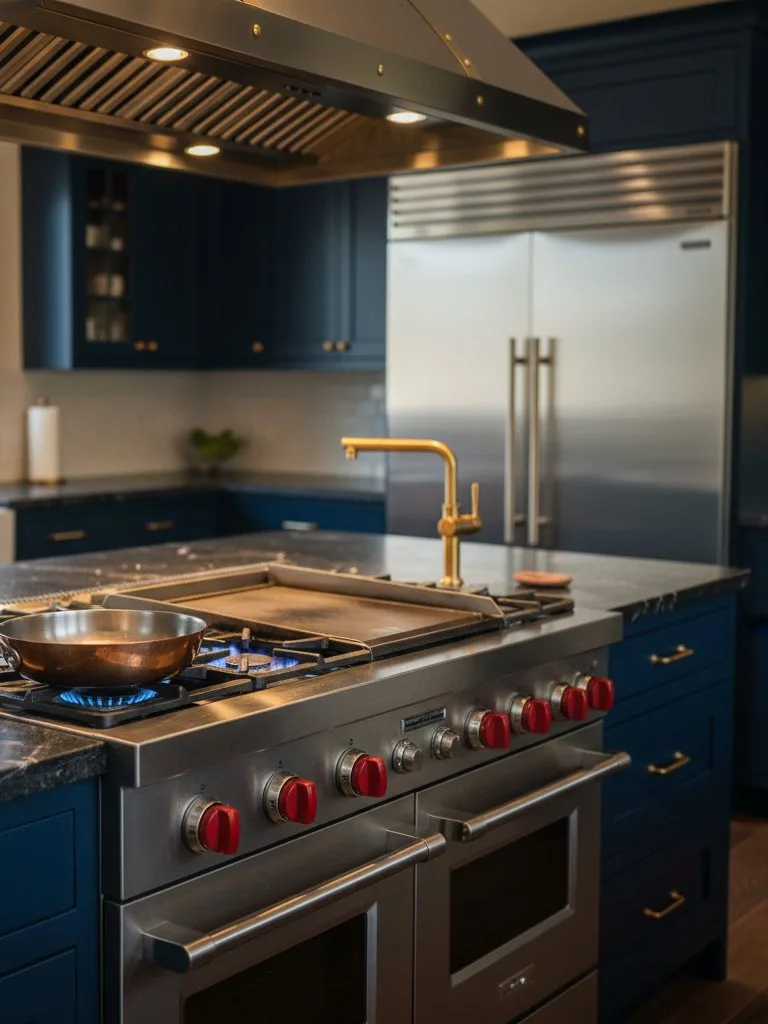
- Sealed-burner gas cooktops are the classic Viking surface — heavy brass or aluminum burners with a continuous spark ignition, built to push serious BTU and still hold a low simmer. Everything sits sealed to the surface so spills wipe up instead of dripping into the burner box, but that same sealed design is exactly why a fouled electrode or a misseated cap shows up as a no-light.
- Induction cooktops swap flame for a magnetic field. There’s no burner, no igniter, and no open heat — instead a coil under the glass induces current directly in the pan. That means the failure points move entirely: cooling fans, power boards, the user-interface touch panel, pan-detection sensors, and error codes replace anything you’d recognize from a gas surface.
- Radiant electric cooktops heat ribbon or coil elements under a ceramic-glass surface, governed by infinite switches or a control board and protected by a surface limiter. Their complaints — an element that won’t heat, cycles oddly, or a cracked glass top — are their own category again.
- Continuous cast grates and heavy burner caps on the gas models let pans slide between zones, but the weight and the precision machining mean a warped cap or a grate that’s been dropped throws off flame geometry in a way you’ll feel immediately.
Because Viking spans all three technologies, the worst thing a technician can do is treat every cooktop the same. We don’t. Every visit starts by confirming the platform and the real complaint, and the $89 diagnostic service call covers that work — credited toward the repair if you proceed.
The faults we see most on Viking cooktops
Across the Viking cooktops in Denver homes, the same patterns turn up again and again. Sorted by platform, here’s what actually walks through the door:
Gas cooktops
- Burner clicks but won’t light. Endless ticking with no flame is the signature gas complaint — usually a spark electrode coated in boil-over, a cracked ceramic insulator, a burner cap knocked out of alignment, or moisture trapped after a spill or a deep clean. Occasionally the shared spark module is firing weakly to every burner at once.
- Lights on high, drops out on simmer. A burner that catches at full flame but dies when you turn it down points to a worn electrode, a partially blocked burner port, or a gas valve that’s drifted out of adjustment — and at altitude that adjustment matters more than the manual assumes.
- Lazy yellow or floppy flames. Viking burners should burn a crisp blue. Yellow, sooty, or lifting flames mean the air-fuel mix is off — a clogged port, a misseated cap, or air-shutter and orifice settings that don’t suit Denver’s thin air.
- A burner that won’t shut off or keeps sparking. A stuck spark switch or a failed valve can leave a burner running or the igniter ticking continuously. That one earns a same-day call.
Induction cooktops
- Zone cuts out mid-cook or won’t power on. Typically overheating from a clogged cooling fan or blocked vents, a power module starting to fail, or a thermal cutoff doing its job because airflow is restricted.
- “No pan detected” with cookware sitting right there. The pan-detection sensor or its board has drifted, or the cookware genuinely isn’t ferrous enough — we confirm which before touching hardware.
- Touch panel unresponsive or flashing an error code. A failed user-interface board, a cracked control glass, or a communication fault between the interface and the power boards.
Electric / radiant cooktops
- An element that won’t heat or stays full-on. A failed infinite switch, an open element, or a control-board relay stuck closed.
- Cracked or chipped ceramic glass. A drop, thermal shock, or a heavy pot can fracture the surface — a safety issue we address before the cooktop goes back into service.
Across all types
- Fault codes and lock-outs logged by the control, pointing toward a sensor, a relay, the touch circuit, or the power stage.
- Dim, dead, or rebooting displays — sometimes a single connection, sometimes the board itself.
A safety note worth repeating on the gas side: if you smell gas, shut the supply off and call before running the cooktop. We’d far rather diagnose a cold appliance than have anyone chase a combustion problem by trial and error.
How we actually run the diagnosis
Swapping parts on a guess is how a modest repair turns into an expensive one, so we work the problem in a deliberate order:
- Confirm the platform and the symptom. Gas, induction, or electric — and is the complaint one zone or all of them?
- Read any stored fault codes. The control keeps a history on induction and electric models. We treat it as a lead, not a verdict.
- Test the ignition or power stage directly. On gas, that means inspecting and gapping each spark electrode, checking cap seating, and watching the module fire. On induction, we measure board and fan temperatures and verify pan detection. On electric, we check switch and element continuity.
- Measure the heat or power path. Gas valve behavior and flame quality on burners; coil and power-board readings on induction; element resistance on radiant tops.
- Check airflow and combustion conditions. Flame color and shape on gas tell us whether combustion suits the altitude; clean, unobstructed cooling vents on induction are the difference between a fix that holds and a repeat cutout.
- Explain it plainly and quote up front. Before any repair begins, you get the cause in plain language and a firm price — quoted only after the inspection, never before.
Inspection and honest pricing
Every Viking cooktop visit opens with the $89 diagnostic service call, and that money isn’t a throwaway fee — it buys a complete, hands-on diagnosis, and it’s applied directly toward the repair if you decide to go ahead.
Here’s the part we want to be clear about: we don’t quote a repair price over the phone, and we’re suspicious of anyone who does. A no-light burner can be a five-minute electrode cleaning or a gas-valve replacement; an induction zone cutting out can be a clogged fan or a failing power board. Those are wildly different repairs, and the only honest way to price them is to see the cooktop first. So you’ll always get a firm, up-front number after the inspection — with nothing tacked on once the work is done. No surprises, no padding, no “while we were in there” charges you didn’t agree to.
The Denver factor: altitude, dry air, and hard water
Most cooktop troubleshooting online was written for sea level. Denver sits a mile up, and that elevation shows up in Viking cooktops in concrete, repeatable ways.
Thin air changes combustion on the gas models. At 5,280 feet the air carries roughly 15% less oxygen per cubic foot than it does at the coast. That leaner mix has real consequences on a sealed-burner cooktop: burners run closer to their air-fuel margin, so a marginal electrode or a slightly fouled port that would still light at sea level can sputter or fail here — usually on the coldest morning of the year. Orifice sizing and air-shutter settings matter more at altitude, too. If a Viking gas cooktop was set up without that in mind, you’ll see lazy yellow flames, soot, or a simmer that never quite settles. We check flame quality on site and tell you what the elevation actually calls for.
Thin air also rejects heat more slowly — and induction feels it. Less-dense air pulls heat away from electronics less efficiently, so an induction cooktop’s cooling fans and power boards run a touch warmer than their sea-level baseline. Over time that extra thermal load nudges fans and boards toward failure a little sooner, and it’s a big reason “my zone keeps shutting off” is a more common call up here than the manuals would predict. Keeping those vents clean genuinely matters at altitude.
Very dry air is hard on seals and components. Denver’s low humidity stiffens rubber and silicone and is rough on the ceramic insulators around spark electrodes. Dry, brittle ceramic cracks more readily, which is one quiet contributor to the intermittent no-light faults we get called about on gas cooktops.
Hard water leaves its mark on the surface. Denver’s supply commonly runs 150–250 ppm. While scale is mostly a story for ice makers and dishwashers, it still touches a cooktop: mineral spotting and scale build up around burner bases, under caps, and in the seams where boil-over and steam collect, gradually fouling electrodes and clogging ports. On a gas cooktop, hard water is a slow, behind-the-scenes contributor to the very ignition faults that bring us out.
None of this is exotic — but it’s the line between a repair that lasts and one that comes back next summer. We diagnose for the conditions your Viking cooktop actually lives in, not for a sea-level manual.
Related repairs we handle in the same kitchen
A cooktop rarely lives alone. If your Viking cooktop sits below a Viking wall oven, or shares the kitchen with other high-end appliances, one visit can often cover more than one problem. Our technicians regularly work:
- Viking wall ovens and ranges — the natural companions to a cooktop, with their own igniter, sensor, and control faults.
- Viking ventilation hoods — fan, light, and control issues over the cooktop itself.
- Sub-Zero and Cove appliances — refrigeration and dishwashers from Viking’s high-end peers, frequently installed in the same room.
- Cooktops and ranges from Thermador, Wolf, Miele, Gaggenau, Dacor, BlueStar, Bertazzoni, Jenn-Air, Bosch, KitchenAid, Monogram, and Fisher & Paykel — so we bring model-specific knowledge instead of treating every cooktop the same.
Tell us everything that’s acting up when you book, and we’ll arrive equipped to look at the whole picture.
Book your Viking cooktop repair
You don’t have to cook around a burner that won’t simmer or an induction zone you can’t trust. Our technicians repair Viking gas, induction, and electric cooktops across Denver and the surrounding suburbs, with same-day or next-day appointments in most cases. Every visit opens with the $89 diagnostic service call, applied toward the repair, and you’ll always have an up-front price before we start — quoted only after we’ve inspected the cooktop in person.
Call (720) 770-4189 anytime; the phone is answered 24/7, and repairs run daily from 8:00 AM to 6:00 PM. Prefer to set it up yourself? Reserve a visit online at nexfield.pro, and let’s get your Viking cooktop back to a clean blue flame — or a steady, reliable induction zone — the way it was built to perform.