The repair, explained
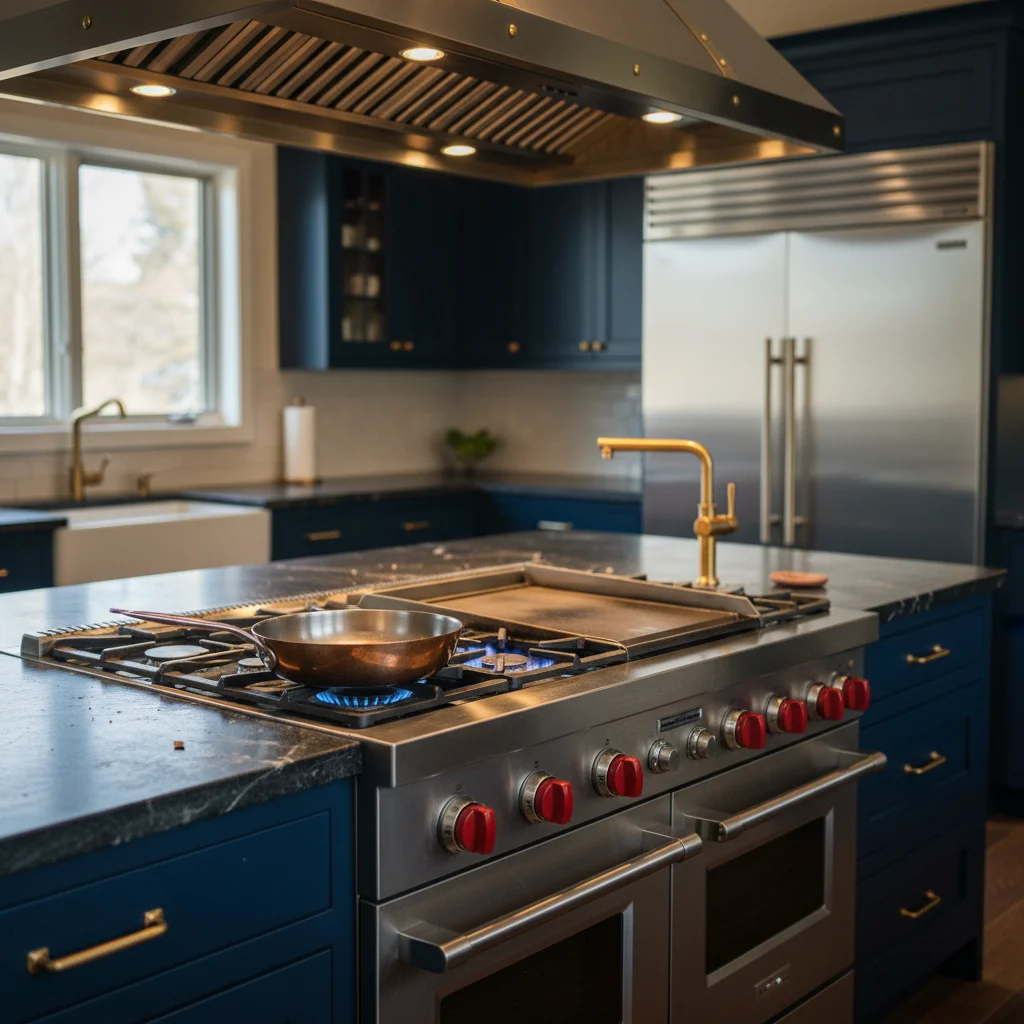
A range in a Thornton subdivision isn’t the plain builder appliance it was a decade ago. As newer construction north of 120th has filled in around the Orchard, Trailside, and North Creek, the kitchen package has crept upward — higher-BTU sealed burners, dual-fuel cavities, convection ovens, and slide-ins set flush into a cabinet run beside a built-in hood. That extra output and tighter packaging mean these ranges fail differently than the entry-level unit your neighbor in an older 88th-and-Washington home still runs. More heat, more electronics, less airflow, and a fault that traces back to a part most generic technicians never test.
Symptoms and causes
The symptom usually points to one part, and in Thornton the likely cause often tracks with which side of the city the range lives on. Match what yours is doing:
- A burner that sparks on and off, lights late, or won’t catch — usually a worn electrode, a cracked ceramic insulator, or a port clogged with boil-over.
- A lazy yellow flame that sooties pan bottoms — almost never a broken burner. At 5,280 feet the air carries about 15% less oxygen, so a burner set for sea level runs rich until the shutter or orifice is corrected.
- An oven that preheats forever and never reaches the dial — a fatigued bake igniter, a drifted sensor, or a tired element, with the thin air narrowing the igniter’s firing margin so units fail early here.
- One dual-fuel cavity dead while the rest cooks fine — often the control board rather than the burner you’re watching.
- An induction zone shedding power or shutting off mid-cook — a cooling-fan or board fault aggravated by a boxed-in install.
In the newer subdivisions, that flush-set slide-in sits in a run with almost no ventilation, so trapped heat and constant cycling wear the electronics faster than the burners.
Why a specialist matters
A higher-output range crammed into custom millwork is two appliances in one frame, and the altitude quietly rewrites the rulebook on every gas component. A general handyman swaps the burner and calls it done; we read the install first, because a boxed-in Thornton cabinet can overheat its own controls and imitate a part failure. Knowing the difference between an altitude-rich burn and a genuine defect is the line between a tuning visit and an unnecessary replacement.
What a visit looks like
- We reproduce the fault, then check how the range breathes inside its cabinetry.
- We test the cooktop straight — spark module, electrodes, valves, and flame quality — watching for that elevation-rich burn before condemning anything.
- We measure the oven instead of guessing: bake igniter draw, sensor resistance, and elements under load, pulling stored fault codes where the model keeps them.
- You get the cause in plain words and one firm price, cabinetry protected, before any work begins.
The $89 diagnostic covers that full inspection and comes off the repair once you approve it.
Common questions, answered
Will you find the same-day appointment? Usually. Thornton sits right off I-25 and the 144th corridor, so it’s an easy run, and we offer same-day or next-day in most cases.
Are your prices fixed up front? Yes — beyond the $89 service call, the exact repair price is quoted only after the on-site inspection, and nothing is added after you approve it.
Do you cover all of Thornton? From the older blocks near 88th and Washington to the newest builds around 144th and the Orchard, end to end.
Get it fixed
Call (720) 770-4189 any hour — the phone is answered 24/7 — or book online. On-site repairs run daily 8:00 AM to 6:00 PM, the diagnostic is a flat $89 applied toward the repair, and you always have an up-front price before we begin. From an established 88th Avenue kitchen to an upgraded slide-in in a new North Creek build, we find the real cause and quote it first.