Quick orientation
Most people don’t notice a freezer is failing until something is already ruined — ice cream gone to soup in the middle, a cloudy block where loose cubes used to be. By that point the box has quietly stopped freezing and is merely chilling, and a full freezer holds almost no margin: once it drifts from zero toward the twenties, a packed load is on a one-to-two-day clock before the core thaws and refreezing wrecks the texture for good.
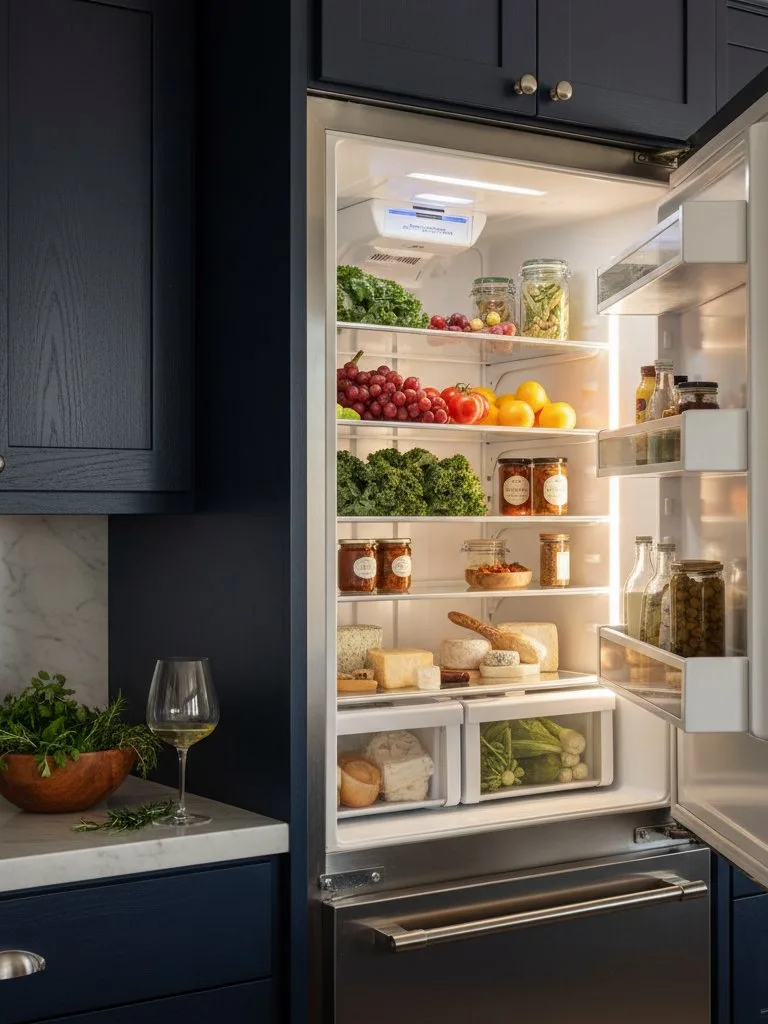
Thornton makes this a built-in problem more than a basic one. This is the north metro’s fastest-growing stretch, and the new subdivisions marching north past 120th and 144th increasingly ship with upgraded kitchen packages — column refrigeration and freezer drawers picked at a builder’s design center rather than the base freestanding box. So a thawing freezer here is often a sealed-in, panel-ready unit, not something you shove aside and replace in an afternoon. Our approach is the same regardless: trace the genuine fault, confirm it, then quote one honest price before a panel comes off.
Most common faults we see in Thornton
Across the city’s two housing eras — the original homes near 88th and Washington and the new builds climbing toward 168th — freezer complaints cluster into a short list:
- Holds zero, then slowly drifts warm. Usually a stalled defrost cycle icing the evaporator, or a tired evaporator fan — not a dead compressor.
- A sheet of frost climbing the back interior wall. A failed defrost heater, a drifting sensor, or a control board mistiming the cycle.
- Runs nonstop and never cycles off. Often a condenser choked with dust inside the snug cabinetry a new-build column is boxed into.
- One zone soft while a paired zone stays cold. A stuck damper or a fan starving a single compartment.
- Ice arriving slow, hollow, or cloudy. Hard-water scale strangling the fill valve, line, and mold.
Each symptom has several possible roots, which is exactly why a phone guess is worthless — the fix and the price ride on which one it actually is.
Parts and how long the repair lasts
A freezer repair is only as durable as the part behind it. We fit OEM-grade or manufacturer-compatible components from verified suppliers, matched to your exact model and serial — defrost heaters and sensors, control boards, evaporator and condenser fans, start relays, dampers, door gaskets, ice makers, fill valves, and the slim water lines the local supply punishes. On the upgraded columns common in newer Thornton kitchens, matching the part the system was engineered around is what separates a fix that holds for years from one that fails again by next winter. We also chase the root: a swapped defrost heater means nothing if a leaking gasket is still feeding the ice.
The altitude and water angle
Thornton sits right around the 5,280-foot mark, and that elevation isn’t trivia on a freezer call — it changes the physics:
- Thinner air sheds less heat. The condenser pushes air roughly 15% less dense than at sea level, so it rejects about 15% less heat. Seal a borderline freezer into a tight new-build cabinet north of 144th and that penalty is enough to tip it from “cold” to “not quite freezing.”
- Dry, high-UV climate. Colorado’s low humidity and strong sun harden and crack door gaskets years ahead of schedule, and a leaky seal is what feeds the frost up the back wall.
- Hard water at 150 to 250 ppm. Every path feeding the ice maker scales up, which is why cubes turn cloudy and output crawls in homes across the north metro.
We arrive with the parts those patterns predict rather than guessing.
How to book
Don’t wait for the load to thaw. Call (720) 770-4189 any hour — the phone is answered 24/7 — or book online. Repairs run daily, 8:00 AM to 6:00 PM, and same-day or next-day appointments are typically available from the 88th-and-Washington core out to the newest subdivisions past 168th. The $89 diagnostic credits straight toward the repair, so the price you hear after the inspection is the price you pay — nothing added later.