What’s happening and what we cover
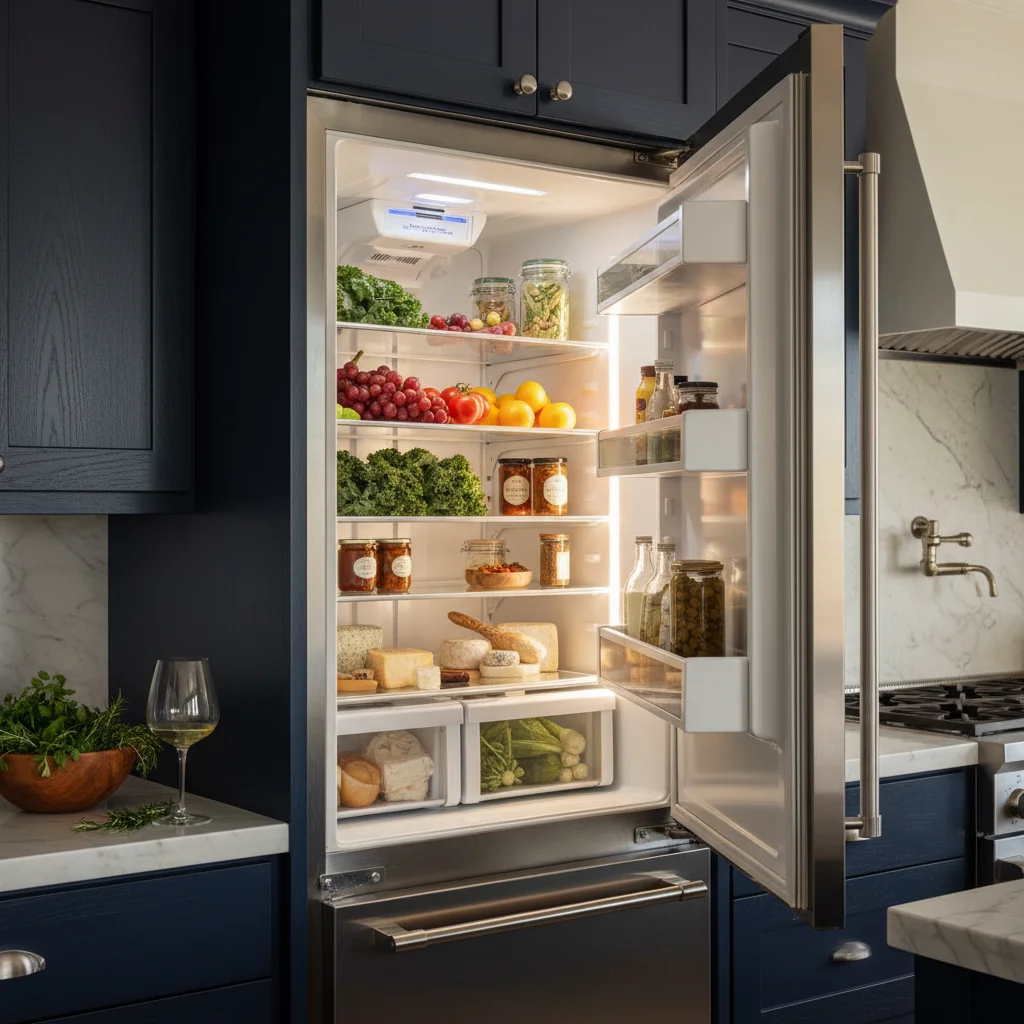
It’s a weeknight in a RiNo loft, you open the fridge for the third time, and the milk feels wrong — the display reads 44°F, the integrated ice maker has gone silent, and the panel-ready door is sweating against its custom front. That’s the call this page is built for. The River North Art District is one of Denver’s youngest housing stocks: converted warehouse bays turned live/work lofts off 38th & Blake, and glassy condo mid-rises lining Blake, Walnut, and Wewatta. Almost all of these kitchens run an integrated, panel-ready refrigerator set flush into cabinetry that was drawn around an open sightline, not around airflow. When one drifts warm, our job is to name the real cause before we name a price.
Faults we see most in these kitchens
The same warm fridge points in different directions depending on how it was installed:
- Fresh-food side warming while the freezer still holds — usually a dust-choked condenser, a failed evaporator fan, a tired start relay, or a sealed-system leak. In a flush RiNo built-in, restricted airflow is the first thing we rule out.
- A compressor that never cycles off — trapped heat in a tight cabinet, a weak condenser fan, or a gasket gone stiff and leaky.
- Frost stacking on the freezer’s back wall — a defrost heater, defrost sensor, or control board mistiming the cycle.
- Cloudy, hollow ice or a slow dispenser — hard-water scale in the line and inlet valve.
- Water pooling under a crisper or behind the panel — a clogged defrost drain, which in a loft can quietly reach the subfloor.
How we diagnose it
- You call (720) 770-4189 and tell us the building, floor, and what the fridge is doing so we can plan access.
- A technician arrives — repairs run daily, 8:00 AM to 6:00 PM — measures real fresh-food and freezer temperatures, and reads how the unit sits in its cabinet.
- We trace the actual fault, then quote a firm price in plain language before a single panel comes off.
The $89 service call covers that full inspection and credits toward the repair if you go ahead, so the diagnosis is never money lost.
The altitude and water angle
Three local factors shape these failures. At 5,280 feet the air is roughly 15% thinner, so condensers and fans shed heat less efficiently — a lightly dusty coil boxed into a flush RiNo cabinet warms up sooner than it would at sea level, and it changes how a sealed system should be charged. Denver’s hard water, commonly 150 to 250 ppm, scales the thin lines feeding ice makers and dispensers. And the dry, high-UV climate hardens door gaskets early, which lets cold leak and forces longer compressor runs in a unit already short on breathing room. We weigh all three on every RiNo visit.
Brands and related work
We service panel-ready and integrated refrigeration along with French-door, side-by-side, bottom-freezer, and drawer units across the premium and mainstream brands common in RiNo’s new builds. If your matched suite includes a range, dishwasher, or wine column showing trouble too, mention it when you book — the same scale and altitude factors often touch more than the fridge.
Book a repair
Your groceries are on a clock once the fresh-food side climbs past 40°F. The phone is answered 24/7, so call the moment the temperature slips — even late. Call (720) 770-4189 or book online, and we’ll get a technician to your RiNo loft or condo, often the same day, with the price settled up front before any work starts.