You go for ice and find the cubes welded into one cloudy lump, with the cartons behind them gone soft at the corners. No beep, no flashing code — just a compartment that has been quietly drifting above zero for a day or two. In a RiNo kitchen that freezer is almost never a box in the garage; it’s a paneled built-in folded into the cabinetry. Working out why it slipped, before the contents spoil, is the entire point of this visit. The $89 diagnostic covers that inspection and comes off the repair if you decide to proceed.
Quick orientation for a RiNo freezer call
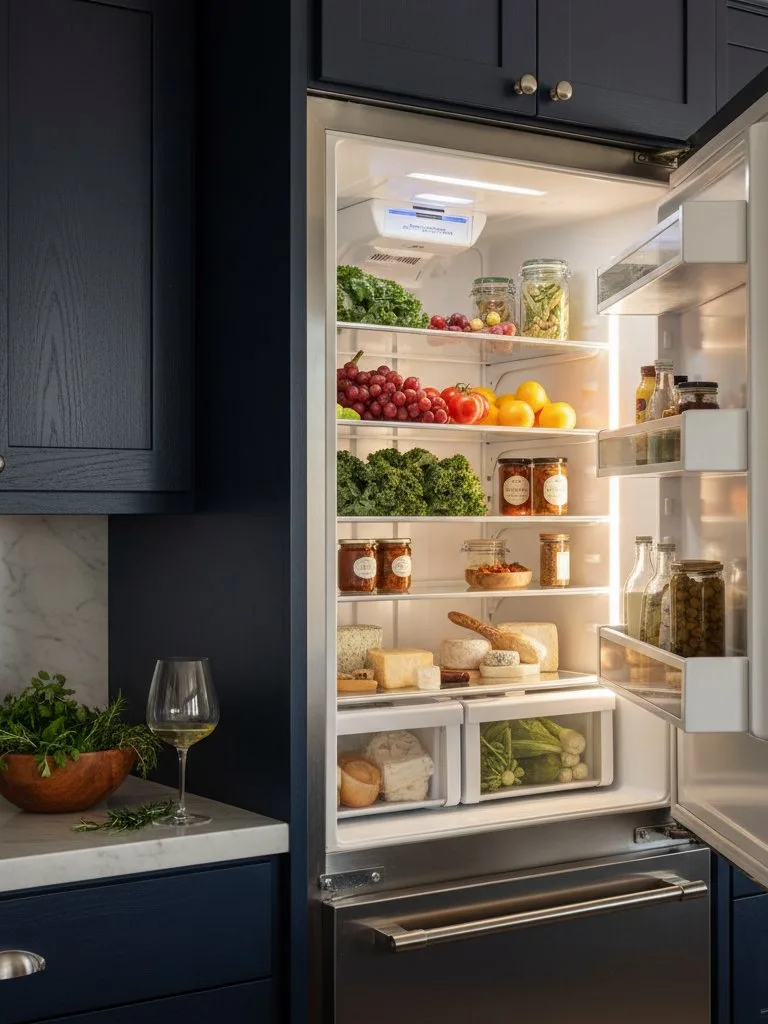
The River North Art District is one of Denver’s youngest stretches of housing — former rail and warehouse land off the South Platte that filled in, over the last fifteen years or so, with live/work lofts and glassy condo towers along Brighton Boulevard, Larimer, Blake, Walnut, and Wewatta, out toward the 38th & Blake station. The freezers in these homes tend to be young and panel-ready: integrated Sub-Zero columns, drawer stacks set into an island, or the freezing half of a built-in side-by-side. They also sit in open-plan footprints designed around a sightline, not around condenser breathing room. That single fact shapes how we read the unit from the first measurement.
Most common faults we trace here
Across the loft conversions and the new builds alike, freezer trouble keeps landing on a short list:
- Running hard but not freezing — a frosted evaporator behind a failed defrost heater, sensor, or control board.
- A solid sheet of ice on the back wall — a stuck defrost cycle, or a gasket dried stiff by Denver’s air letting humidity creep in.
- A compressor that never cycles off — a condenser choked with dust in a sealed cabinet recess, made worse by thin-air heat rejection.
- One drawer warm while its neighbor stays cold — a fan motor or damper fault in a multi-zone column or drawer set.
- Slow, hollow, or slushy ice — hard-water scale clogging the fill valve, supply line, and ice mold.
We never quote a freezer repair over the phone, because a flush-set built-in can disguise its real fault. On site we log the actual compartment temperature and cycling rather than trusting the door display, read the sealed system, test the defrost circuit and evaporator fan when frost is the complaint, and check the gasket and water path before handing you one combined price.
Parts and keeping the unit alive
When a part needs replacing, we fit OEM-grade or manufacturer-compatible components from verified suppliers, matched to your exact model and serial — not a generic substitute that shortens the next service interval. Because RiNo’s appliances are mostly recent, a well-chosen defrost heater, evaporator fan, or fill valve usually returns the freezer to a long, quiet stretch of service rather than buying a few months. Where a gasket or condenser is the weak link, replacing it properly is what keeps the compartment at zero through Denver’s swings.
The altitude and water angle
At RiNo’s 5,280-foot elevation the air is roughly 15% thinner, which blunts how a sealed system sheds heat and trims the margin on a refrigerant charge — a freezer that would shrug off a slightly low charge near sea level can drift warm up here. The dry climate stiffens door gaskets faster than people expect, and the city’s hard water, around 150 to 250 ppm, quietly scales ice makers and water lines. We measure each freezer against those local conditions, not a flat factory spec written for sea level.
How to book
If your freezer is softening, frosting over, or running nonstop, call (720) 770-4189 — answered 24/7, with repairs run daily from 8 AM to 6 PM — or book online anytime. The $89 service call brings a technician to your RiNo loft or condo, a real diagnosis in hand, and one clear price before any work begins.