What you are noticing
A range that falters in a Parker kitchen rarely waits for a convenient moment, and waiting it out almost never saves money. A burner that clicks and clicks before catching dumps raw gas into the room every cycle. An oven that runs cool quietly wrecks dinner after dinner. A cooktop element left arcing can char the custom cabinetry these newer homes are framed around. Sit on it for a week and a quick igniter swap can grow into a damaged valve or a fried control board. The smarter move is to name the fault now and fix the actual problem.
So which of these sounds like your range?
- A burner that sparks over and over, lights late, or won’t light at all
- A flame burning lazy and yellow, leaving soot on the bottoms of pans
- An oven that preheats endlessly and never settles at temperature
- One cavity of a dual-fuel range gone dead while the rest still cooks
- An induction zone that drops power or cuts out partway through
- A surface igniter that ticks on its own with every knob turned off
What it usually means
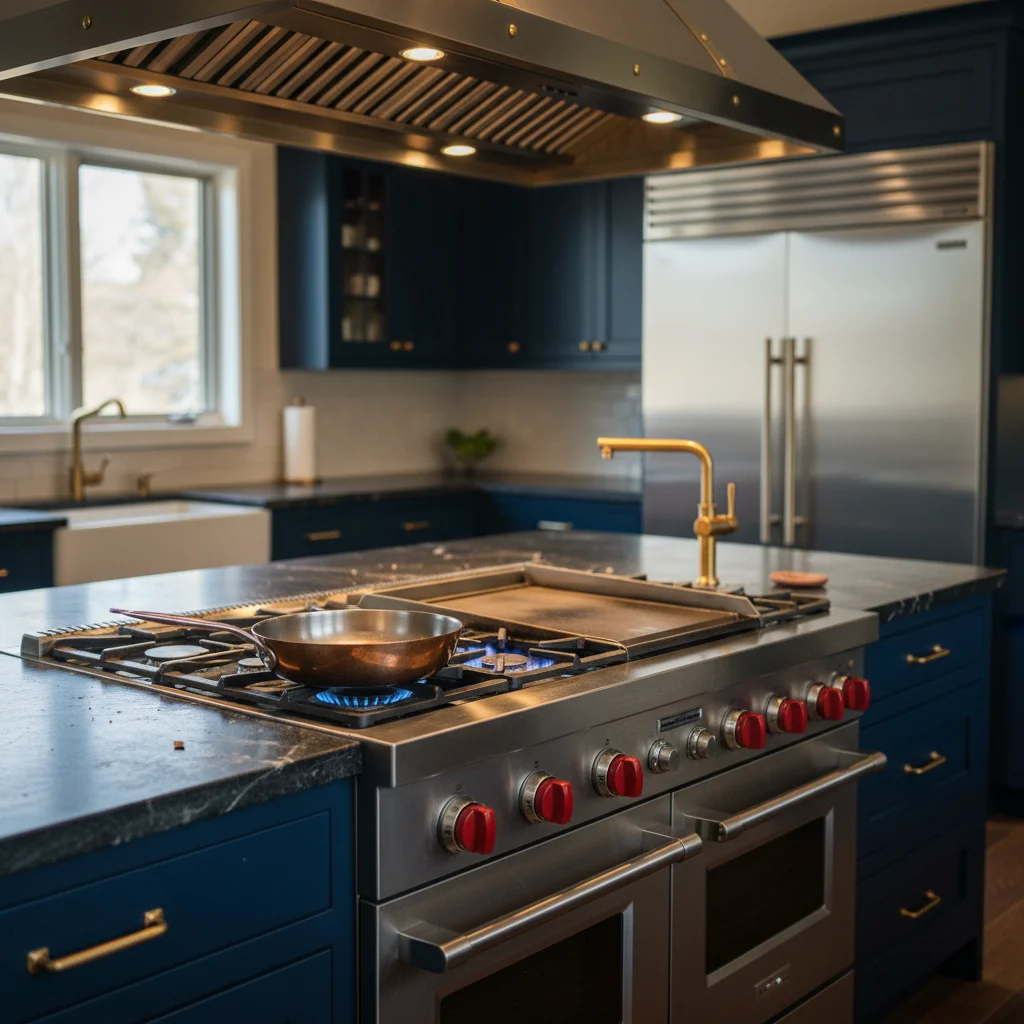
Each of those points at a different part, and in Parker the diagnosis often turns on how new the kitchen is. The town has grown fast across Douglas County, and much of its housing stock is recent, larger builds outfitted with premium gas and dual-fuel ranges from day one. A wide unit like that is really two appliances in one frame, a high-BTU cooktop above and one or two oven cavities below, dropped flush into custom cabinetry that breathes poorly beside a built-in fridge. Trapped heat and constant thermal cycling wear the electronics down, so a dead cavity or a phantom-clicking igniter often traces to the board rather than the burner you’re watching.
The altitude shapes the rest. Parker rides high on the southeast ridge, where the air holds about 15% less oxygen, so a burner jetted at sea level runs rich until the air shutter or orifice is corrected. That same thin air shortens a bake igniter’s firing margin, which is why an oven in a five-year-old Stroh Ranch home can start baking cool before its time. And the dry Colorado climate hardens oven door gaskets early, so heat leaks and the oven cycles harder to hold its setpoint.
How we work it on site
Trigger the fault, then read the install
We reproduce the actual problem first, then check how the range vents inside its cabinetry. A boxed-in Parker install can overheat its own controls and counterfeit a part failure.
Test the cooktop straight
We check the spark module, electrodes, valves, and flame quality, watching for that altitude-rich burn before condemning anything. Most yellow-flame and slow-light calls end in tuning, not a new burner.
Measure the oven instead of guessing
We read bake igniter draw, oven sensor resistance, and the elements under power, pulling stored fault codes on models that keep them, enough to tell a real failure from a bad reading.
You get the cause in plain language and one firm price, millwork protected, before any work begins. The $89 service call covers that inspection and comes off the repair if you approve it.
Coverage and brands
We cover Parker end to end, from Mainstreet and the Parker Road corridor to the newer subdivisions out in Stepping Stone, Trails at Crowfoot, Stroh Ranch, and Pradera. We service freestanding and slide-in ranges, wide dual-fuel units, induction and electric cooktops, and pro-style gas built into custom kitchens. Parts are OEM-grade and manufacturer-compatible from verified suppliers, matched to your model and serial. As an independent shop running since 2012, we are not affiliated with or sponsored by any manufacturer.
Get it fixed
Call (720) 770-4189 any hour, since the phone is answered 24/7, or book online. On-site repairs run daily 8:00 AM to 6:00 PM, the diagnostic is a flat $89 applied toward the repair, and you always have an up-front price before we start. From an older home near Mainstreet to a built-in range out in Crowfoot, we find the real cause and quote it before the work.