Getting oriented
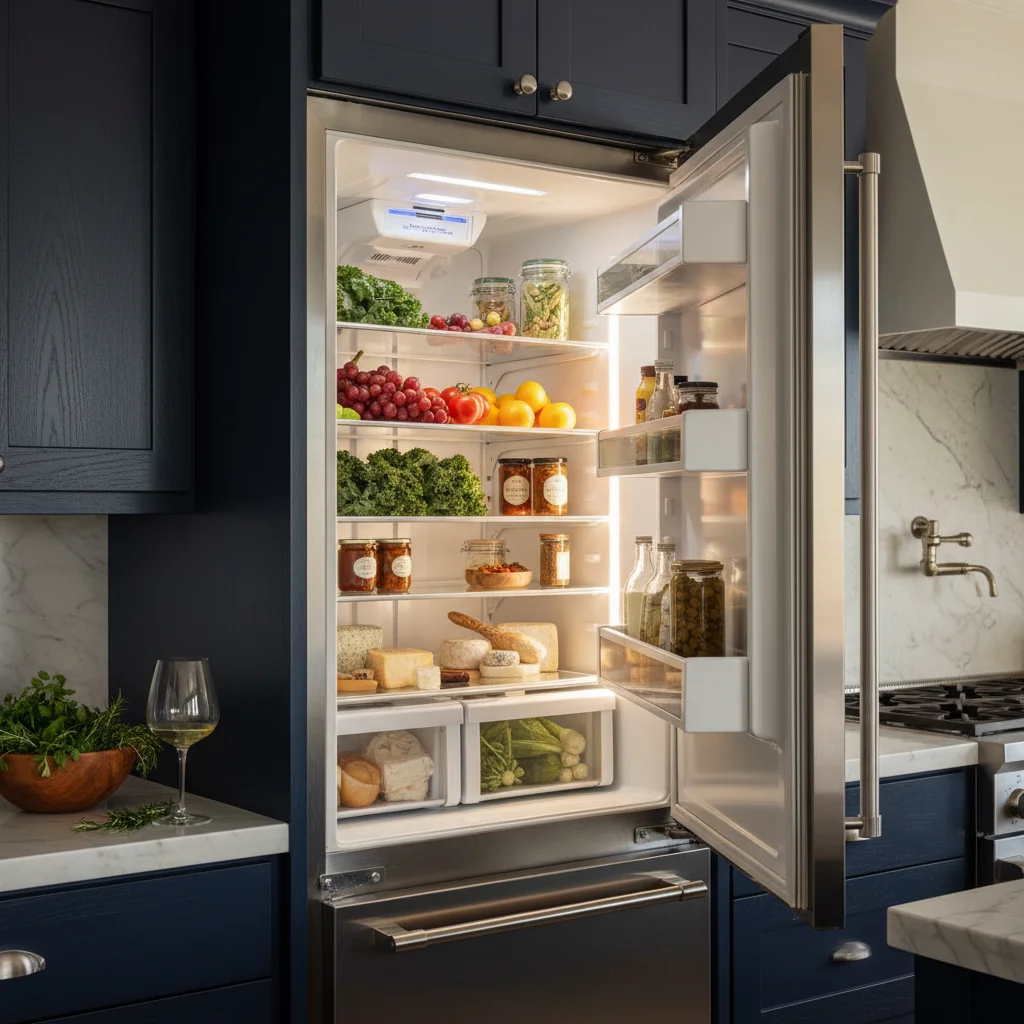
When a refrigerator slips in a Parker kitchen, the first job is finding what actually failed before anything gets pulled out of the cabinet. We measure real temperatures, trace the sealed system and the airflow path as one circuit, read fault codes where the unit reports them, and inspect the parts that fail most in this climate — then quote a firm number. That approach is the same whether you have a freestanding side-by-side in a Stroh Ranch two-story or a six-foot column boxed into the millwork of a custom home out near The Pinery. Parker’s newer construction tends to put the refrigerator front and center, so getting the diagnosis right matters more here, not less.
Faults we see most in Parker
These kitchens fail in recognizable patterns, and the symptom usually narrows things down quickly:
- The fresh-food compartment drifts warm while the freezer still holds cold
- The compressor runs without cycling and the cabinet feels warm to the touch
- Frost sheets across the back wall of the freezer
- Ice arrives cloudy, undersized, or barely at all
- Water pools under a drawer module or beneath the crisper
- A door stops pulling shut tight, or the gasket has gone stiff and brittle
A column drifting warm is most often a clogged condenser, a dead evaporator or condenser fan, a worn start relay, or a sealed-system leak — and in a flush install wedged into deep cabinetry, restricted airflow is the first thing we rule out. Constant running with a warm box points the same way. Frost on the freezer wall usually traces to a defrost heater, a sensor, or a control board mistiming the cycle. Cloudy ice and a weeping line are almost always hard-water scale, and a door that won’t seal is a gasket dried out by the climate.
Parts and how long the fix lasts
Parker’s premium suites were engineered around specific components, so we match parts to your exact model and serial. For the pieces that decide whether a repair holds for years or fails by spring — compressors, fan motors, control boards, inlet valves, and door gaskets — we fit OEM-grade or manufacturer-compatible parts from verified suppliers rather than a generic substitute. A correctly matched gasket or fan is the difference between a repair you forget about and a repeat visit.
The altitude and water angle
Parker sits even higher than Denver’s mile-high line, above 5,800 feet, and that thinner air — roughly 15% less dense — means a condenser releases noticeably less heat. A tall column built into a cabinet in one of these newer kitchens runs warm here sooner than the identical unit would at sea level, which is exactly why we read airflow and the sealed system together. The hard water, commonly 150 to 250 ppm, scales ice makers, dispenser lines, and inlet valves across the corridor. And the dry, high-UV Front Range climate hardens door gaskets faster than the factory manuals assume, so a seal that should last years can crack early and leave the fridge fighting to hold temperature.
How to book
If a refrigerator has started to slip, the early fix is the cheap one. Call (720) 770-4189 — answered 24/7, with repairs run daily 8 AM to 6 PM — or book online, and a technician will be at your Parker door to find the real cause and quote it up front. The $89 diagnostic covers the full inspection and credits toward the repair when you approve it.