When the range goes down in a Lakewood kitchen
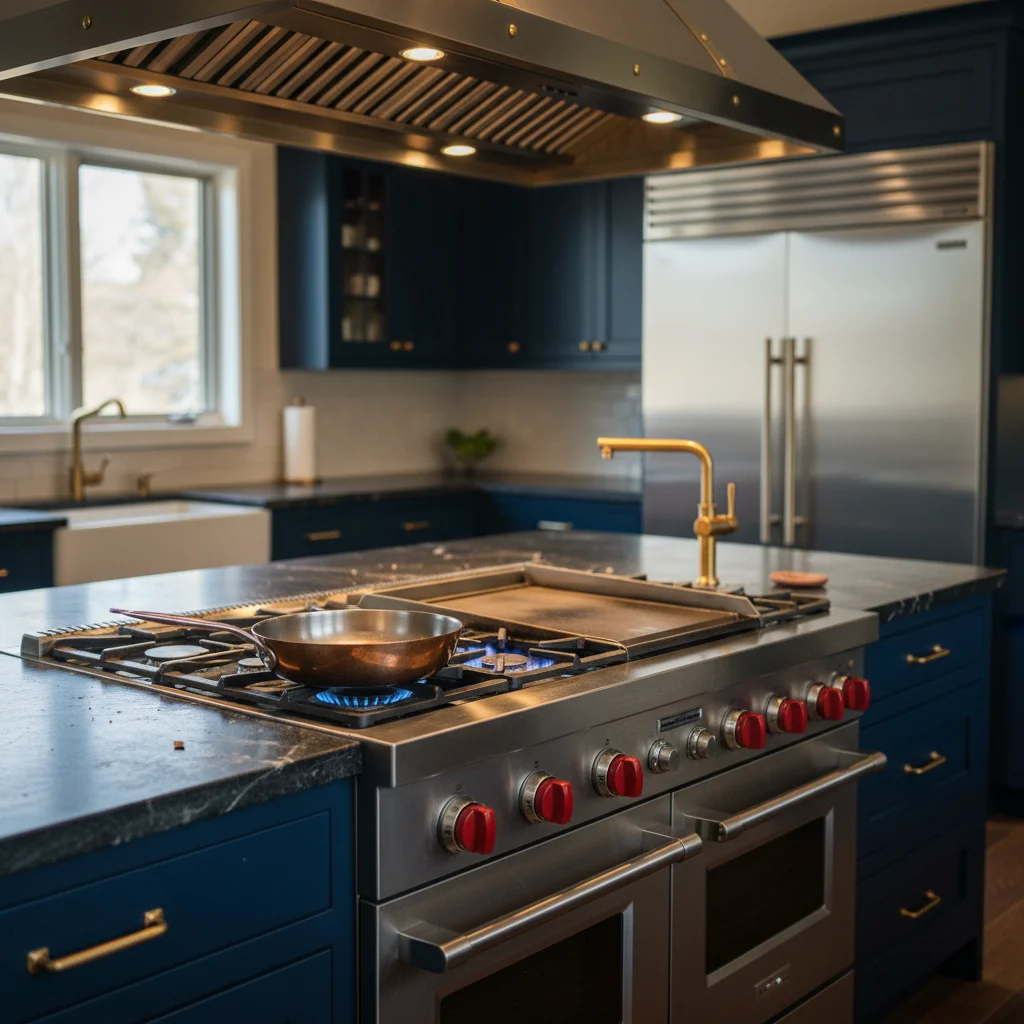
A range is really two appliances bolted into one cabinet — a cooktop and an oven — and either can drift out of spec while the other looks fine. On this visit we read both halves, find the actual fault, and hand you a firm price before anything comes apart. Whether your kitchen is a mid-century ranch off West Colfax with a plain electric cooktop or a remodeled Belmar-area home running a sealed-burner dual-fuel, the diagnosis covers the whole unit, not just the symptom you noticed.
What tends to fail on Lakewood ranges
Around here the symptom usually narrows the cause:
- One gas burner won’t light — a clogged port, worn spark electrode, cracked insulator, or moisture grounding out the igniter switch.
- Every burner clicks but none catch — a failed spark module or a fault feeding the whole cooktop.
- A burner keeps clicking with the knob off — a stuck switch, water under a sealed cap, or a cracked electrode still arcing.
- Lazy, yellow flame — an air-shutter or orifice running rich for the altitude, a partly blocked port, or low supply pressure.
- Won’t hold a low simmer — a worn or sticking gas valve, or a cap seated wrong on a sealed burner.
- Electric element won’t heat — a burned-out element, a failed infinite switch, or a corroded terminal block.
- Oven bakes cool while the top works — a weak glow-bar igniter, a dead bake element, an oven relay, or a sensor reading high.
If your range is misbehaving in some other way, that’s still our work — this is the shape of failure, not the limit of it.
Inspection first, then an honest price
We don’t swap parts on a hunch. On site we confirm exactly which burners and settings are involved, pull any stored fault codes, then test the ignition or heating path under load — checking spark at each electrode, gas pressure at the appliance, and a glow-bar igniter under actual current draw, because it can glow bright and still be too weak to open the safety valve. The $89 service call covers that full diagnosis of both cooktop and oven, and it credits toward the repair once you approve the work. You see the complete price up front, with nothing added afterward.
Why Lakewood’s altitude and water matter
At roughly 5,280 feet the air is about 15% thinner, so a gas burner gets less oxygen per port. Orifice and air-shutter settings dialed in near sea level tend to run rich up here — flames go lazy and yellow, ports soot, and a weakening igniter loses the margin it needs to fire. When we service a Lakewood gas range, we tune to how it should combust at this elevation. The dry, high-UV Front Range climate is harder on the electric and oven side: low humidity bakes door gaskets and inner-glass seals brittle, so the cavity leaks heat and elements cycle harder. And our hard water — commonly 150 to 250 ppm — leaves mineral crust around burner bases and reaches any steam-assist feature, which is why we flag scale before it becomes a no-light call. We’ve factored all of this into every Lakewood diagnosis since 2012.
Related repairs we handle nearby
Many Lakewood kitchens send us back for the matching appliances — built-in and freestanding refrigerators, plus ovens, cooktops, dishwashers, and ice makers across Belmar and Green Mountain. If more than one appliance is acting up, mention it when you book and we’ll plan a single visit.
Book your Lakewood range repair
Repairs run daily, 8:00 AM to 6:00 PM, and the phone is answered 24/7, so you can call the moment a burner quits or the oven runs cold. Call (720) 770-4189 or book online, and a technician will be at your Lakewood door — ranch cooktop or Green Mountain pro-style range — to find the real cause and quote it up front. The $89 service call covers the diagnosis and credits toward the repair.