A pro-style oven is only as good as the air it burns and the water it steams, and in Hilltop both work against it. These estate kitchens near Cranmer Park sit at 5,280 feet, where the air carries about 15% less oxygen than the elevations these ranges were engineered around, and the tap runs hard at roughly 150–250 ppm. That combination quietly reshapes how an oven fails here — and it’s the first thing a guess-and-swap technician misses.
Why a Hilltop oven quits when it does
An oven rarely picks a convenient moment. In Hilltop it tends to fail mid-roast in a renovated brick ranch off Bellaire, or the night before a dinner in a new custom build near Crestmoor. The temptation is to nurse it along — to coax a few more meals from a range that preheats slowly, bakes one edge dark, or flashes a code you’ve taught yourself to ignore. That wait usually costs more than the repair. A bake igniter weak enough to light late is dumping unburned gas into the cavity on every cycle. A blistered electric element can arc and take out the control board mounted right behind it. A door gasket that no longer seals lets heat bleed out, so the oven overheats to compensate and slowly cooks its own thermostat. A $180 fix becomes a board replacement if it’s left alone.
Denver’s air and water come first
Hilltop kitchens lean ambitious — a 48-inch dual-fuel range beside built-in wall ovens is a routine spec here — and the local climate hits each system differently.
- Altitude and gas burners. With 15% thinner air, a factory orifice sized for low elevation runs rich, fouling igniters and burner ports and skewing the flame. Slow ignition and uneven heat show up sooner here than at sea level.
- Hard water and steam features. The high-end steam and combi ovens common in these custom builds scale up fast at 150–250 ppm. Reservoirs, valves, and steam ports crust over, throttling the function the owner paid most for.
- Dry air and door seals. Denver’s arid climate bakes oven gaskets brittle, and a leaking seal overworks the thermostat on every bake — a small part with an outsized effect on temperature accuracy.
How we diagnose it
- Reproduce and read. The technician recreates the symptom you’re seeing and pulls any stored fault codes before assuming anything.
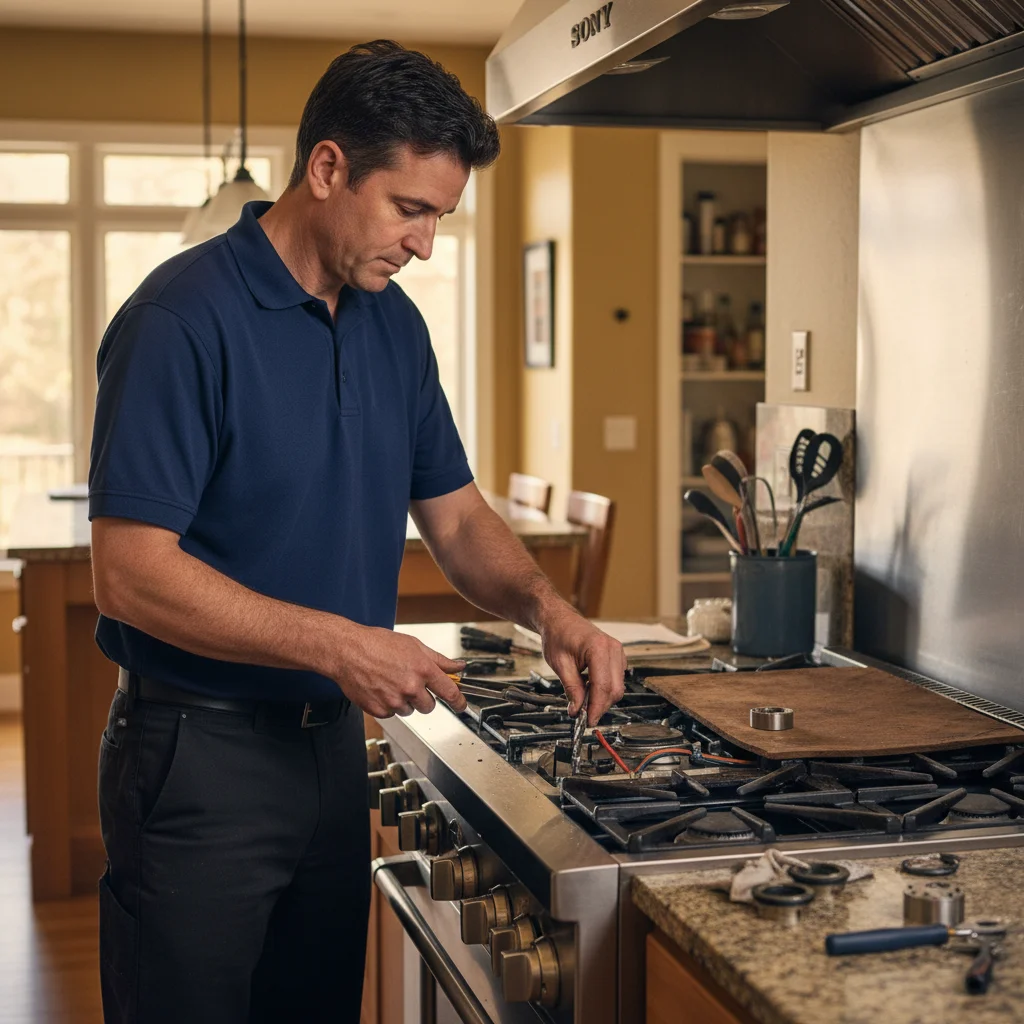
- Work the heat source. On gas and dual-fuel ranges we measure igniter current draw and burner combustion, accounting for the altitude correction; on electric ovens we test the bake and broil elements directly.
- Check sensing and control. We verify the temperature probe against a known reference and inspect the control board for the heat damage that arcing elements cause.
- Inspect the cavity and seals. Hinges, latch, and the dry-climate-worn gasket get checked, since a leak masquerades as a calibration problem.
- Quote up front. You get a firm price before any part comes off, with the $89 service call credited toward the work.
Components we service
We carry and fit the parts that actually decide whether a Hilltop oven repair lasts:
- Bake and broil igniters and elements, altitude-matched where it matters
- Gas safety valves and orifices on pro and dual-fuel ranges
- Temperature sensors, thermostats, and control boards
- Convection motors and fans on built-in wall ovens
- Door gaskets, hinges, and self-clean latches
- Steam-oven reservoirs and valves scaled by hard water
Same-day scheduling in Hilltop
Repairs run daily from 8:00 AM to 6:00 PM, and the phone is answered 24/7, so you can book any hour. Most Hilltop visits — from the streets around Cranmer Park out toward Holly and Colorado Boulevard — land same-day or next-day. Call (720) 770-4189 or book online, and we’ll find the real fault, quote it honestly, and credit your $89 service call toward the fix.