When the column drifts warm and the wine starts to worry you
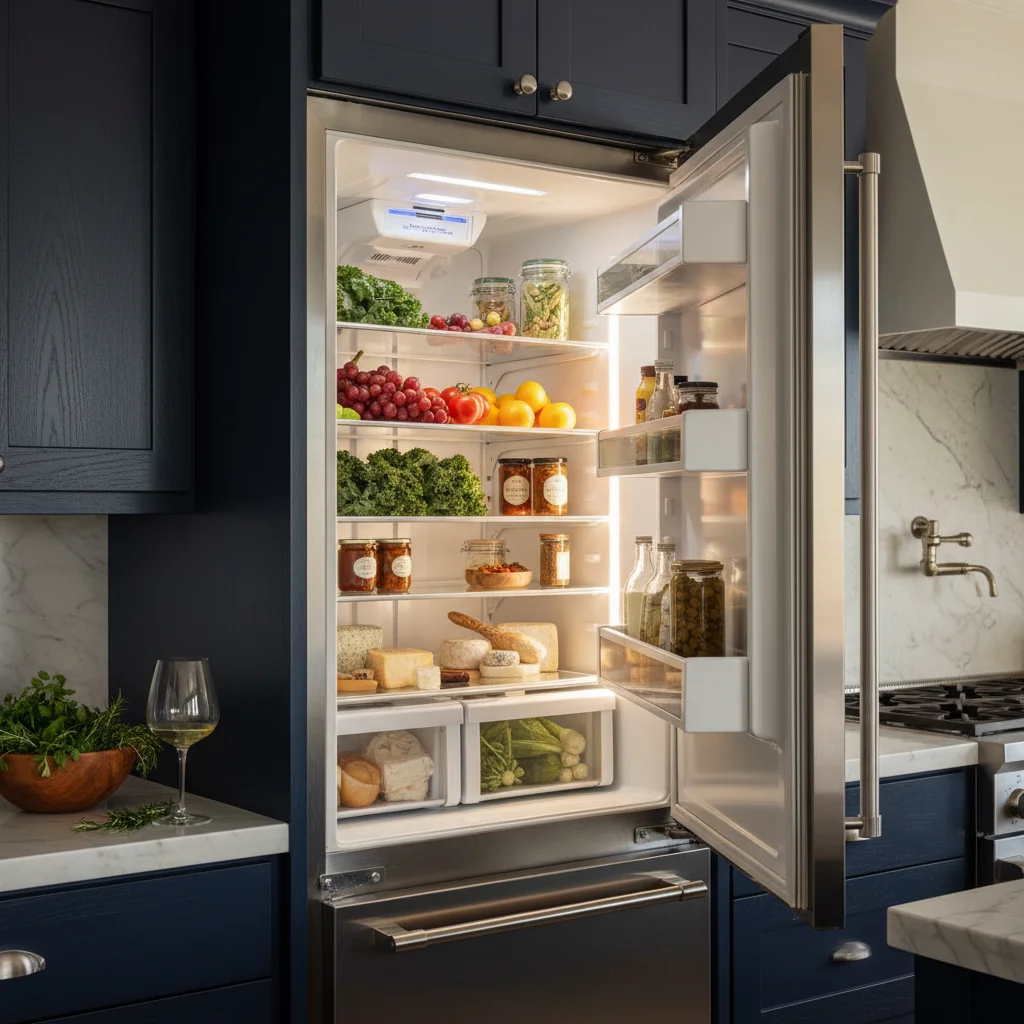
You open the built-in refrigerator before dinner and the milk feels warm, the butter is soft, and the readout shows 44°F when it should hold 37°F. A few rooms over, the wine cabinet’s display is creeping up a degree at a time. In a Hilltop kitchen that’s no minor annoyance — there’s real food and real bottles on the line, and the equipment is too integrated to swap out at a big-box store. It’s the call we get most from the estates around Cranmer Park, and it almost always traces to one component.
Built-in refrigeration is the Hilltop standard
Hilltop wraps around Cranmer Park in east Denver, and its kitchens are ambitious — mid-century brick ranch estates with renovated chef’s kitchens, and new custom builds replacing older ranches. Both share a through-line: dense, high-end, built-in refrigeration.
In a single room you’ll often find a full-height column beside a separate freezer, drawer refrigeration in the island, and a wine cabinet in the butler’s pantry. Each behaves differently from a freestanding fridge, and the flush, panel-ready installs in newer homes hide their condensers behind custom fronts — more places for heat to trap and a fault to hide.
Faults we trace most often here
- A column drifting warm — usually a clogged condenser, a failed evaporator or condenser fan, a worn start relay, or a refrigerant fault. In a tight integrated install, restricted airflow is the first suspect, not the last.
- A wine zone that won’t hold temperature — drift or constant running points to a sensor, a cooling stage, a fan, or a door seal that’s stopped sealing in our dry air.
- Frost stacking on the freezer’s back wall — typically a defrost heater, a defrost sensor, or a control board mistiming the cycle.
- A compressor that never cycles off — often a dust-choked condenser, a weak fan, or a gasket that no longer closes tight.
- Cloudy, undersized ice or a slowing ice maker — nearly always hard-water scale in the fill tube and inlet valve.
How we pin down the real cause
- Confirm the symptom and the install. We measure actual fresh-food and freezer temperatures and check how the unit sits in the cabinetry — clearances and airflow first.
- Read stored fault codes. On units that report them, electronic diagnostics separate a true cooling failure from a sensor reading the wrong number.
- Trace the sealed system and airflow as one path. Condenser, evaporator, compressor, fans, and defrost components are checked together, because at altitude that’s where marginal units give out.
- Test electrical parts under load. Start relay, compressor windings, fan motors, defrost heater and sensor, and control board — checked while the unit runs.
- Inspect the water path and the seals. Inlet valve, fill tube, filter, and lines for scale; gaskets for dry-climate hardening.
- Explain it and quote up front. You get the cause in plain language and a firm price before work begins. The $89 service call covers this diagnosis and is credited toward the repair.
Why Denver’s air and water change the diagnosis
At roughly 5,280 feet, Denver’s air is about 15% thinner than at sea level, so condensers and fans move less-dense air and shed less heat. A built-in column with slight dust or short clearance struggles here sooner than the same unit would near the coast — which is why a tightly integrated Hilltop fridge can run warm with no obvious broken part.
The local water runs hard, commonly 150 to 250 ppm, and that scale is rough on ice makers and the thin lines feeding built-in dispensers. Add the very dry, high-UV climate that hardens door gaskets early, and a failing seal forces the compressor to run longer — doubly so on a wine cabinet, where it shows up as drift first. We’ve built these factors into every diagnosis since 2012.
Units and brands we service
We repair built-in columns, integrated and panel-ready refrigerators, freezer drawers, under-counter and dual-zone wine cabinets, beverage centers, and freestanding units across the major premium and standard brands. As an independent shop, we’re not affiliated with any manufacturer.
Book a Hilltop refrigerator visit
Repairs run daily, 8:00 AM to 6:00 PM, and the phone is answered 24/7, so you can call the moment the temperature slips — a warming fridge only gets more expensive the longer it waits. Call (720) 770-4189 or book online, and a technician will be at your Hilltop door to find the real cause.