When an oven fails in Highland, we do one thing first: figure out why it quit. We reproduce your symptom, read stored fault codes, test the heat source, sensing, and seal with Denver’s altitude in mind, and hand you a firm price before a single panel comes off. No blind phone quotes, no parts thrown at a guess.
Two Highland houses, one built-in oven
Cross the Highland bridge up from the Platte and you land in one of Denver’s most architecturally split neighborhoods — and that split sits right inside the ovens we fix. On the ridge are the scrape-and-build moderns: flat-roofed, steel-and-stucco homes built around open great-rooms with a full built-in suite from day one. The oven is usually a flush wall unit — often a stacked pair — set into a designer surround beside a panel-ready column and a pro range. A few blocks over sit the restored Victorians around Witter-Cofield and Scottish Village, where a modern kitchen gets dropped into a footprint framed in the 1890s for a coal range. Same premium oven, far tighter and older shell.
That contrast is why oven repair here rewards a specialist: both demand care the moment a fix means clearing finished millwork or working over plaster with a basement below.
The faults we trace most in Highland kitchens
- Slow ignition or a faint gas whiff on light. A weakening bake igniter fires late and dumps unburned gas into the cavity.
- A roast scorched on one edge, pale on the other. Uneven bake usually points to a drifting temperature sensor, a tired convection motor, or combustion off-tune for altitude.
- A cavity that sails past its setpoint. A door gasket dried brittle by Denver’s dry air leaks heat, and the thermostat overcorrects until the oven runs hot.
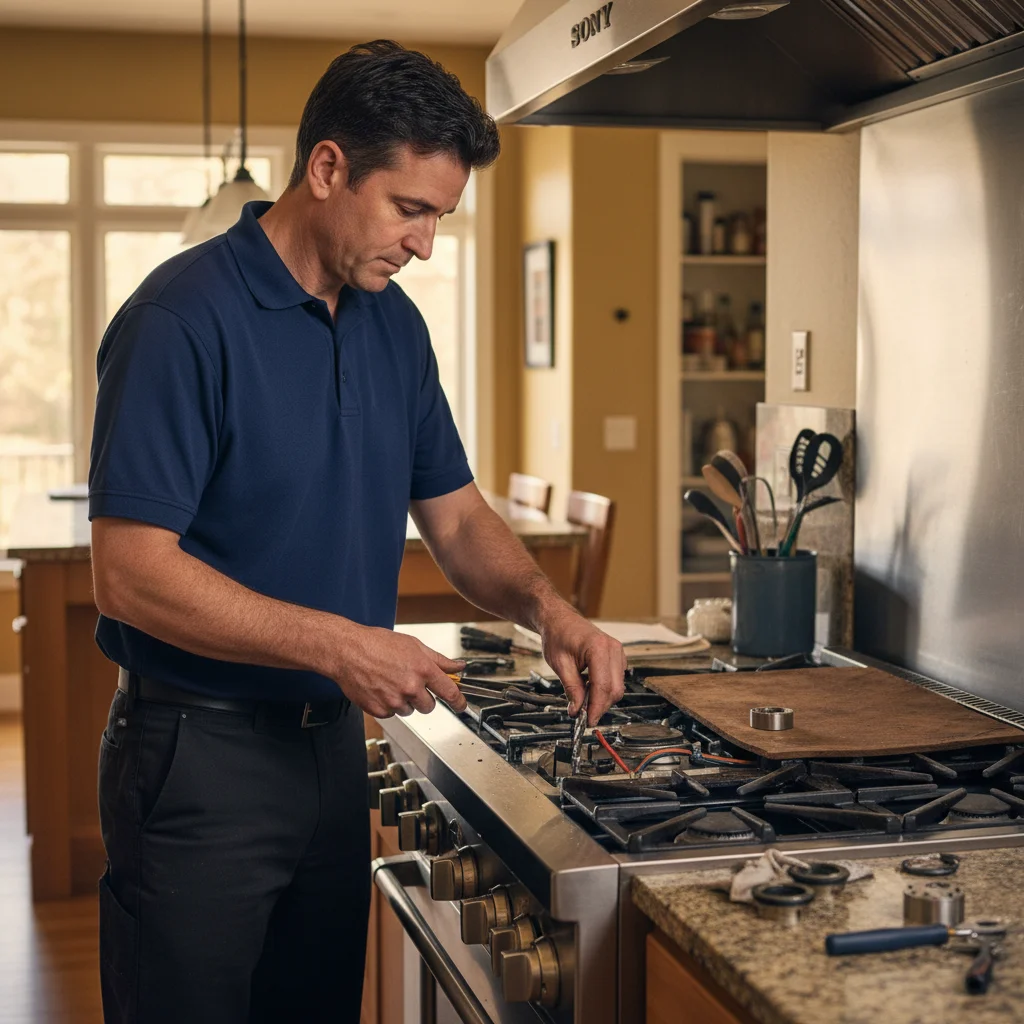
- A burner that clicks but won’t catch under the rangetop — a fouled igniter, a clogged port, or moisture in the spark module.
- A fault code you’ve learned to ignore. Stored faults on a dual-cavity board are early warnings, not noise.
Inspection first, then an honest price
In a tight Highland install, being wrong means a second trip through someone’s finished kitchen — so we’re deliberate. The technician confirms the symptom on-site, pulls fault codes, then measures igniter draw and combustion on gas units (with the altitude correction in mind) or tests bake and broil elements on electric cavities. We check the temperature probe against a reference, inspect the board for heat damage, and look at the climate-worn gasket, since a leak imitates a calibration fault. Only then do you get a plain price — the $89 service call covers the inspection and comes off the repair if you go ahead.
Why Denver’s air and water matter here
Highland sits right at the mile-high mark, and that changes how an oven runs. At 5,280 feet the air carries about 15% less oxygen, so a range oven set with a sea-level orifice burns rich — lazy, yellow-tipped flames that look like a broken part but are really an altitude-and-combustion issue we can dial back in. Add hard local water — roughly 150–250 ppm — that scales the steam systems in higher-end ovens, plus dry air and strong UV that stiffen door gaskets early, and you have three forces a national service manual never accounts for. We weigh all three before naming a cause.
Related repairs we cover in one visit
The oven rarely works alone in a Highland kitchen. Mention anything else that’s off when you book and we’ll cover it in the same trip:
- Pro range and cooktop repair — burners, igniters, and altitude-affected combustion.
- Built-in and panel-ready refrigeration, including the Sub-Zero columns these suites center on.
- Dishwasher repair, where Denver’s hard-water scale usually leads.
- Ice maker and wine column service hit by the same water chemistry.
Get your oven back in service
Repairs run daily 8:00 AM to 6:00 PM, and the phone is answered 24/7 — useful when the oven dies the night before you’re hosting above the bridge. Call (720) 770-4189 or book online today. We’ll find the real fault, quote it honestly, and credit your $89 service call toward the fix. Same-day or next-day appointments are available across Highland and northwest Denver.