Where you are and what we cover
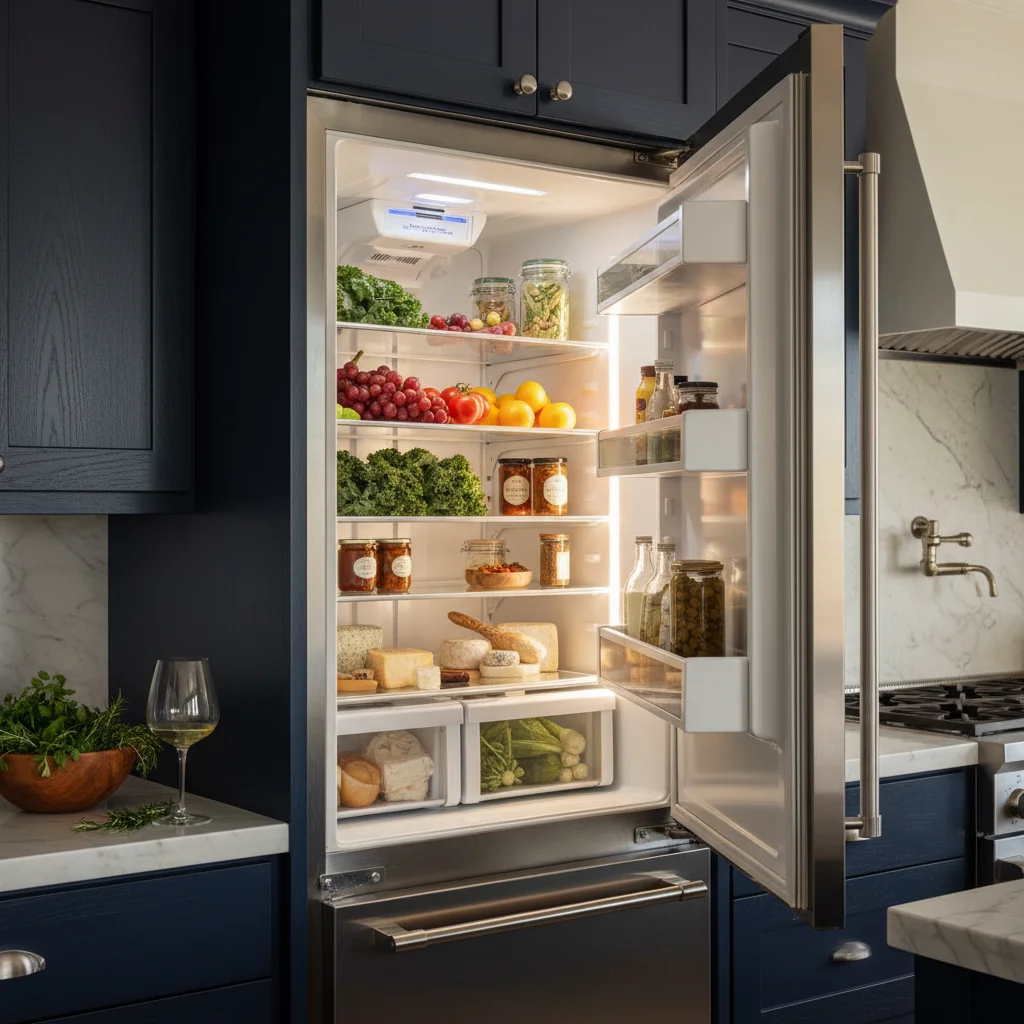
Highland reads as two neighborhoods in one. Climb the ridge above the bridge and you find sharp, scrape-and-build modern homes with open kitchens; drop into the historic blocks around Witter-Cofield and Scottish Village and the same street holds a restored Victorian. What ties them together is the appliance: a serious, built-in refrigerator threaded into custom cabinetry, often part of a matched suite with the range. When one drifts warm, our job is to find the actual cause before we name a price — not to swap parts and hope. The diagnostic settles that question up front, and the $89 comes straight off the repair if you go ahead.
Most common faults we see here
The same complaint points in different directions depending on how the fridge was installed:
- Fresh food warming while the freezer holds — typically a dust-choked condenser, a failed evaporator fan, a tired start relay, or a sealed-system leak. In a flush-fit Highland built-in, restricted airflow is the first thing we rule out.
- Frost stacking on the freezer back wall — usually a defrost heater, defrost sensor, or a control board mistiming the cycle.
- A compressor that never rests — trapped heat, a weak fan, or a gasket gone stiff and leaky.
- Cloudy, hollow ice or a slow dispenser — hard-water scale in the line and valve.
- Water pooling under a crisper or behind a panel-ready column — a clogged defrost drain, which in a restored Victorian can quietly find the subfloor.
Parts and how long the fix lasts
We diagnose each unit on its own, then match parts to your exact model and serial. For the components that determine whether a repair holds for years or months — compressors, fan motors, control boards, inlet valves, and door seals — we use OEM-grade parts the system was designed around. A built-in column in Highland is meant to outlast several kitchens, so cutting corners on the part that decides its lifespan makes no sense.
The altitude and water angle
Three local factors shape these failures. At roughly 5,280 feet the air is about 15% thinner, so condensers and fans shed heat less efficiently — a lightly dusty coil in a tight Highland cabinet warms up sooner than it would at sea level, and it shifts how a sealed system should be charged. Hard water at 150 to 250 ppm scales ice makers and dispenser lines. And Denver’s dry, high-UV climate hardens door gaskets early, which is what lets cold leak and compressors overwork. We weigh all three on every visit.
How to book
Repairs run daily, 8:00 AM to 6:00 PM, while the phone is answered 24/7 — so you can call the moment your fridge slips, even late at night. The $89 diagnostic brings a technician to your Highland door, finds the real cause in plain language, and applies to the repair once you approve it. Call (720) 770-4189 or book online today.