Wine storage is unforgiving in a way a kitchen fridge never is. A cooler that has slipped four degrees won’t beep or leak — it just quietly bakes the bottles you were holding, and the cork is the last thing to tell you. So on this repair we move fast and specific: get a technician in front of the unit, find what actually slipped, and stop the slow climb before a stocked rack pays for it.
What this repair covers
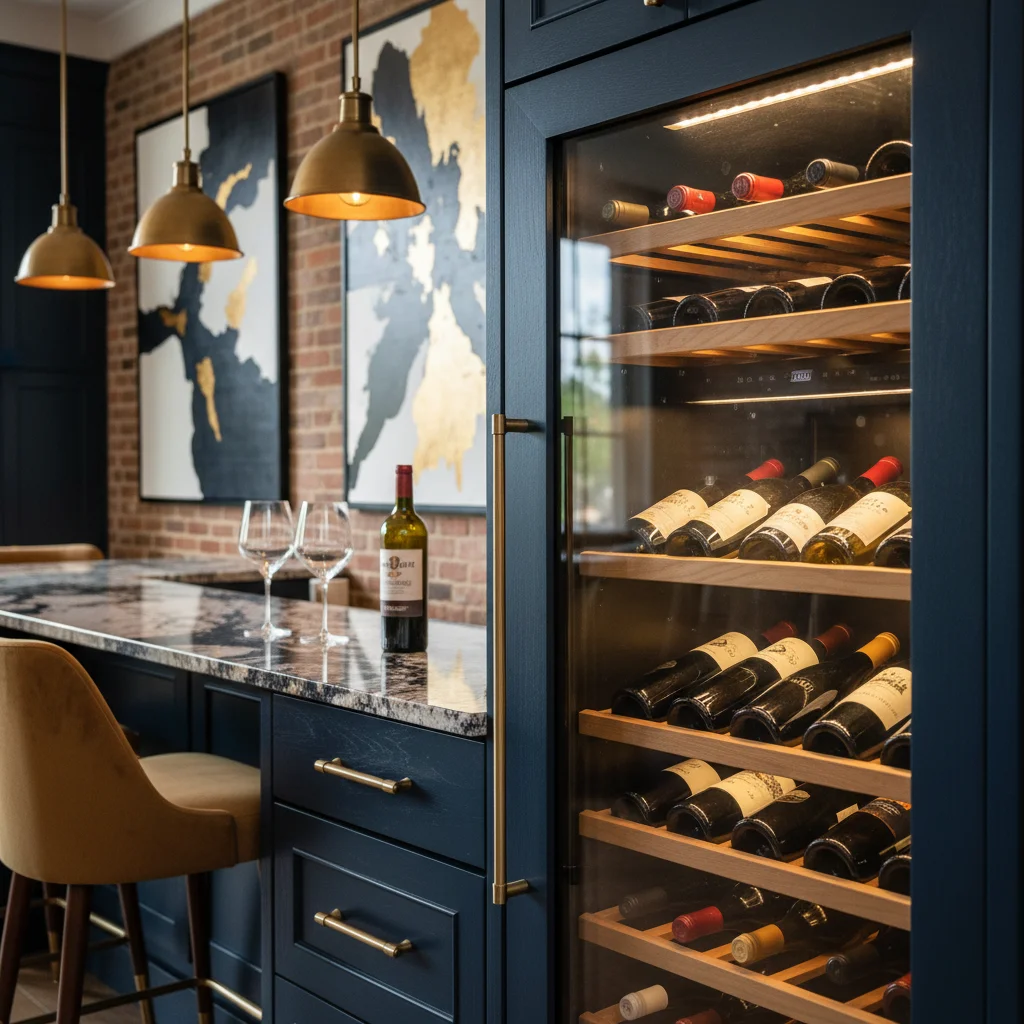
Around Congress Park the wine units we open are rarely freestanding boxes parked in a roomy kitchen. These are brick Tudors and 1920s bungalows steps from the Botanic Gardens, framed for an icebox and a wood range — homes whose original kitchens are small and square by design. Modern refrigeration gets squeezed in wherever it fits: a cooler slid under a reworked counter, tucked into a former pantry, or boxed into a renovation against the original brick. That means a wine-cooler call here is two questions at once — what failed inside the unit, and what the tight install is doing to it.
Symptoms we trace
The complaints from Congress Park bottle storage tend to cluster:
- The cabinet won’t hold its set point, or one zone of a dual-zone runs warm while the other stays right.
- A new hum, rattle, or vibration that resonates through plaster walls and snug cabinetry.
- Frost building on the back wall, condensation sweating on the glass, or water pooling at the base.
- Display and interior lights work, but the cooling stage never engages.
- Short-cycling — the unit clicks on and off without ever pulling the cabinet down to temperature.
Inspection and honest pricing
We read the install before we blame a part. In a cramped Congress Park alcove, a “broken” cooler is often just starved for airflow — a blocked front grille or a too-tight surround choking the condenser long before any board fails. Then we test it running: actual zone temperatures, stored fault codes, and the compressor, condenser and evaporator fans, thermostat, thermistors, and control board working under load. For thermoelectric under-counter units we test the Peltier stack instead, since it fails nothing like a compressor model. We trace the sealed refrigeration loop and the door gasket, then explain the cause in plain words.
The on-site diagnostic is $89, credited toward the repair if you proceed. We quote the exact repair only after inspecting the unit — no figures invented over the phone, no add-ons after the quote.
Why Denver’s air and water matter here
At 5,280 feet the air is roughly 15% thinner, so every condenser sheds less heat than its maker assumed at sea level. In an open kitchen that margin hides; in a cooler wedged into a 1920s Tudor alcove with an inch of breathing room, it’s the gap between steady storage and a slow drift out of range. Denver’s dry climate hardens door gaskets early — usually the culprit behind frost and sweating — and on water-fed beverage models, the hard local supply at roughly 150–250 ppm lays down scale in lines and reservoirs worth checking while we’re in there.
Related repairs nearby
Wine storage rarely sits alone in these renovated kitchens. We also service the integrated refrigerators and freezers next to it, ice makers fighting Congress Park’s hard water, and the Wolf-style ranges and ovens whose gas orifices behave differently in thin mile-high air. If more than one appliance is acting up, we can look at them in a single visit.
Get it scheduled
Repairs run daily 8:00 AM–6:00 PM and the phone is answered 24/7, so same-day or next-day slots are usually open. Call (720) 770-4189 or book online anytime. The $89 diagnostic brings a technician to your Congress Park door, pinpoints the real cause, and goes straight toward the repair once you approve it.