Why a slow warm-up shouldn’t wait
It’s tempting to give a drifting refrigerator a day or two, especially in a Congress Park kitchen where the unit is built in and easy to ignore. Resist it. Once the fresh-food compartment climbs past 40°F, a full week of groceries starts spoiling on a clock you can’t see, and a built-in column that leaks cold keeps working on the surrounding period cabinetry. Worse, a fridge that struggles instead of stopping outright runs its compressor harder every hour — and on these tight original installs near the Botanic Gardens, that’s the most expensive part to lose. The early fix is nearly always the small one. Call (720) 770-4189, answered 24/7, and we’ll get to the cause.
What you’re noticing
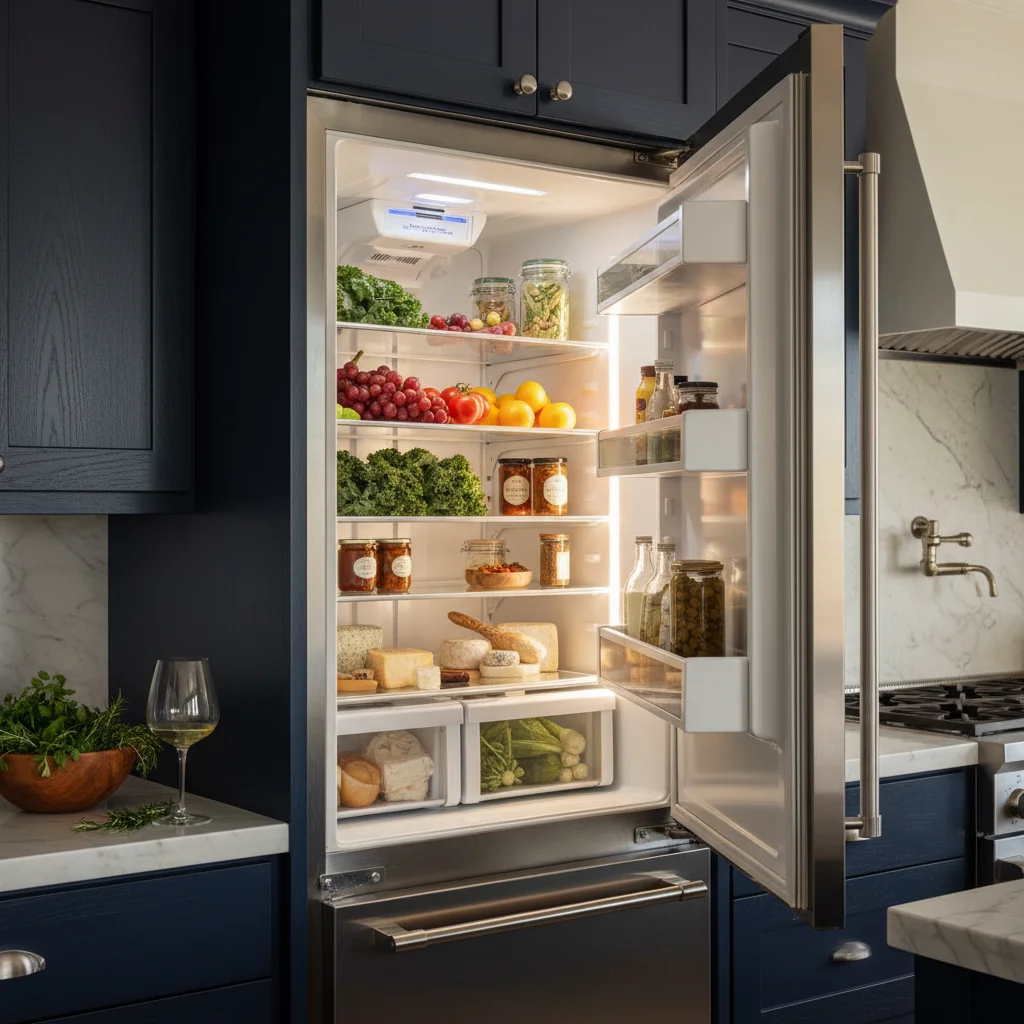
Congress Park’s housing is the giveaway: brick Tudors and 1920s bungalows on leafy blocks east of the gardens, most with refrigerators retrofitted into kitchens that were never sized for them. The complaints we hear reflect that mismatch:
- The fresh-food side feels warm while the freezer still seems cold.
- Frost is building up on the back wall of the freezer compartment.
- The compressor hums on and on and never settles into a quiet cycle.
- Ice comes out cloudy, hollow, or undersized, or the dispenser slows to a dribble.
- Water pools beneath a crisper or beads along the door seal.
What it usually means
The same symptom points different directions depending on how the unit was installed. A warm fresh-food side is often a heat-choked condenser, a failed evaporator fan, a tired start relay, or a sealed-system restriction — and in a flush-fit cabinet, smothered airflow is the first thing we rule out. Freezer frost typically traces to a defrost heater, sensor, or a control board mistiming the cycle. A compressor that never quits usually means trapped heat, a weak fan, or a gasket gone stiff. Cloudy ice is almost always hard-water scale.
How we work it
Diagnose before we name a price
We read actual fresh-food and freezer temperatures, check clearances and airflow inside the cabinetry, pull any stored fault codes, then trace the sealed system and electrical parts under load. You get the cause in plain language and a firm number before a single panel comes off.
Why Denver’s altitude and water matter here
At 5,280 feet the air is roughly 15% thinner, so condensers and fans reject less heat — a lightly dusty coil in a boxed-in Congress Park cabinet warms up far sooner than it would at sea level. Hard water at 150 to 250 ppm scales ice makers and dispenser lines, while the dry, high-UV climate hardens door gaskets early. We weigh all three on every visit instead of swapping the obvious part and hoping.
Clean work around old cabinetry
Pulling a column through tight clearances without scarring century-old millwork is routine for us. We protect floors and surfaces, ease the unit out only as far as the repair needs, and set it back square.
Coverage & brands
We service freestanding French-door, side-by-side, top- and bottom-freezer refrigerators, plus the integrated columns, panel-ready units, and under-counter drawers common in Congress Park’s renovated kitchens. Each is diagnosed on its own and, where parts allow, fixed in a single visit. Parts are OEM-grade or manufacturer-compatible from verified suppliers, matched to your model and serial.
Get it fixed
Repairs run daily, 8:00 AM to 6:00 PM, and the phone is answered 24/7 — so call the moment your fridge slips, even at midnight. The $89 diagnostic brings a technician to your Congress Park door, finds the real cause, and goes straight toward the repair once you approve it. Call (720) 770-4189 or book online today.