
Quick orientation
A dishwasher that drains slow, leaves grit on the glasses, or weeps onto the floor is rarely the disaster it looks like on the first night — provided you catch it early. Our job on every Centennial call is the same: find the cause the symptom is pointing at, not the easiest part to swap, then put a firm number on the fix before any panel comes off.
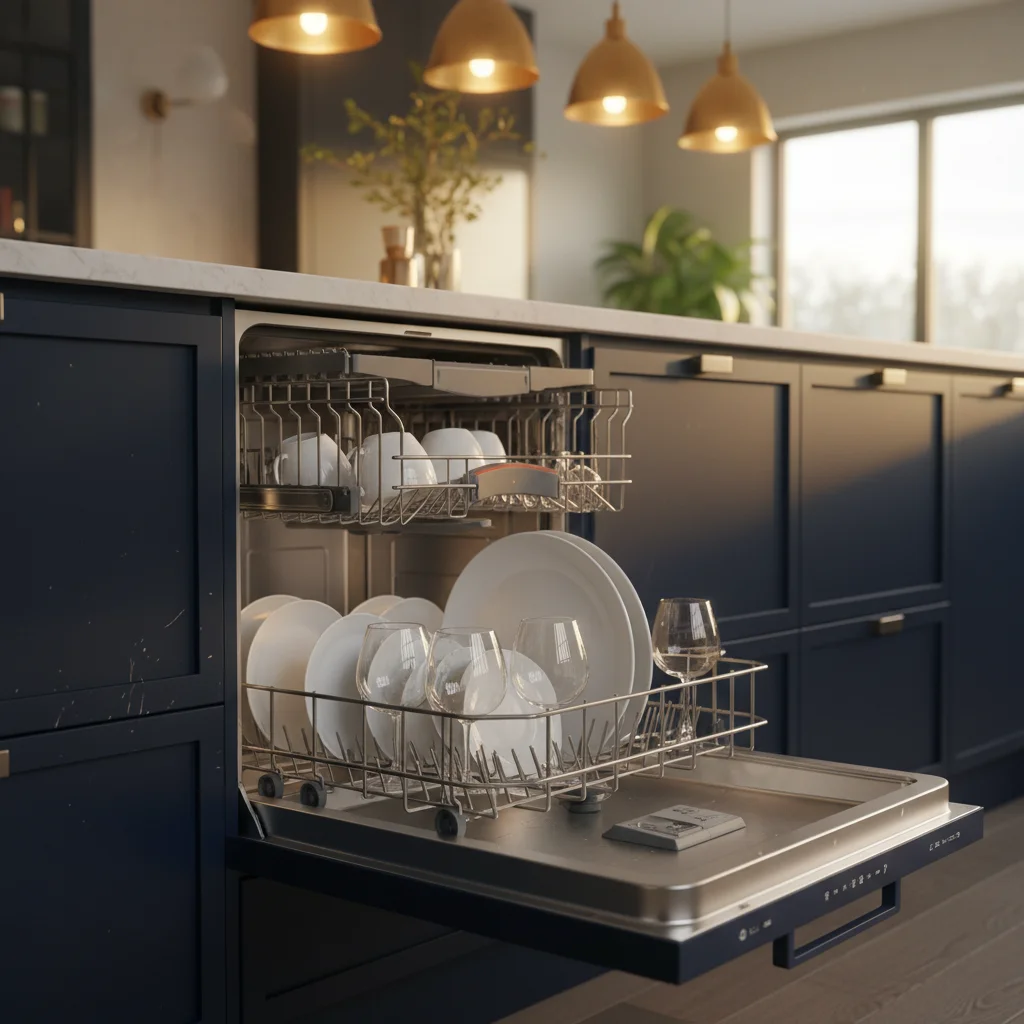
That matters more here than in most places. Across Centennial’s established subdivisions — the ones ringing the south Tech Center and feeding the Cherry Creek schools — the kitchens are large, two-story, and built around a full suite. The dishwasher is usually integrated and panel-ready, set flush into cabinetry designed in the same breath as the built-in fridge beside it. The machine is fully serviceable; the custom panel and the slab counter overhead are not. A good repair reaches the fault without leaving a mark on either.
Most common faults
Each complaint narrows to a short list, and Centennial’s water and elevation tip the odds before we open the door:
- An inch of standing water in the tub — a clogged filter, a stalled drain pump, or a check valve furred with scale.
- Cloudy, gritty, or still-damp glassware — hard-water film on the arms and element, routinely mistaken for a heated-dry failure.
- A cycle that won’t start or stops midway — usually the door latch, the control board, or a tripped thermal fuse.
- A slow seep onto the floor — a hardened door gasket, a split fill hose, or a weeping pump seal.
- A grinding or burnt note on the drain stroke — a failing pump or a glass shard wedged in the impeller.
Parts and longevity
What decides whether a repair holds for years or fails again by spring is the part and the diagnosis behind it. We fit OEM-grade and manufacturer-compatible components matched to your model and serial — drain pumps, control boards, door latches, heating elements, inlet valves, and gaskets sourced to spec, not the cheapest generic on the shelf. Just as important, we clear scale from the arms, element, and check valve instead of installing a fresh part into the same mineral load that killed the last one. In a busy two-story kitchen running a full built-in suite, that distinction is the difference between one visit and three.
The altitude and water angle
Three local forces sit behind nearly every Centennial dishwasher call. The air at 5,280 feet is roughly 15% thinner, so heated-dry and wash-heat cycles strain to hold their target temperature — dishes come out cooler and damper than the same machine would at sea level. The water runs hard, commonly 150 to 250 ppm, and that mineral load scales spray arms, heating elements, check valves, and inlet screens — the very same scale that clouds the ice maker a few feet away. And Denver’s dry, high-UV climate hardens door-gasket rubber years early, so seals here crack and leak ahead of schedule. We weigh all three on every diagnosis instead of treating a Centennial kitchen like a sea-level one.
How to book
A leaking or under-draining dishwasher costs almost nothing to fix on day one and a great deal once it has reached a subfloor or a finished basement. Repairs run daily, 8:00 AM to 6:00 PM, while the phone is answered 24/7 — so call the moment something looks wrong, even at midnight. Reach us at (720) 770-4189 or book online. The $89 diagnostic gets a technician to your Centennial door, pins down the real cause, and goes straight toward the repair once you give the go-ahead.