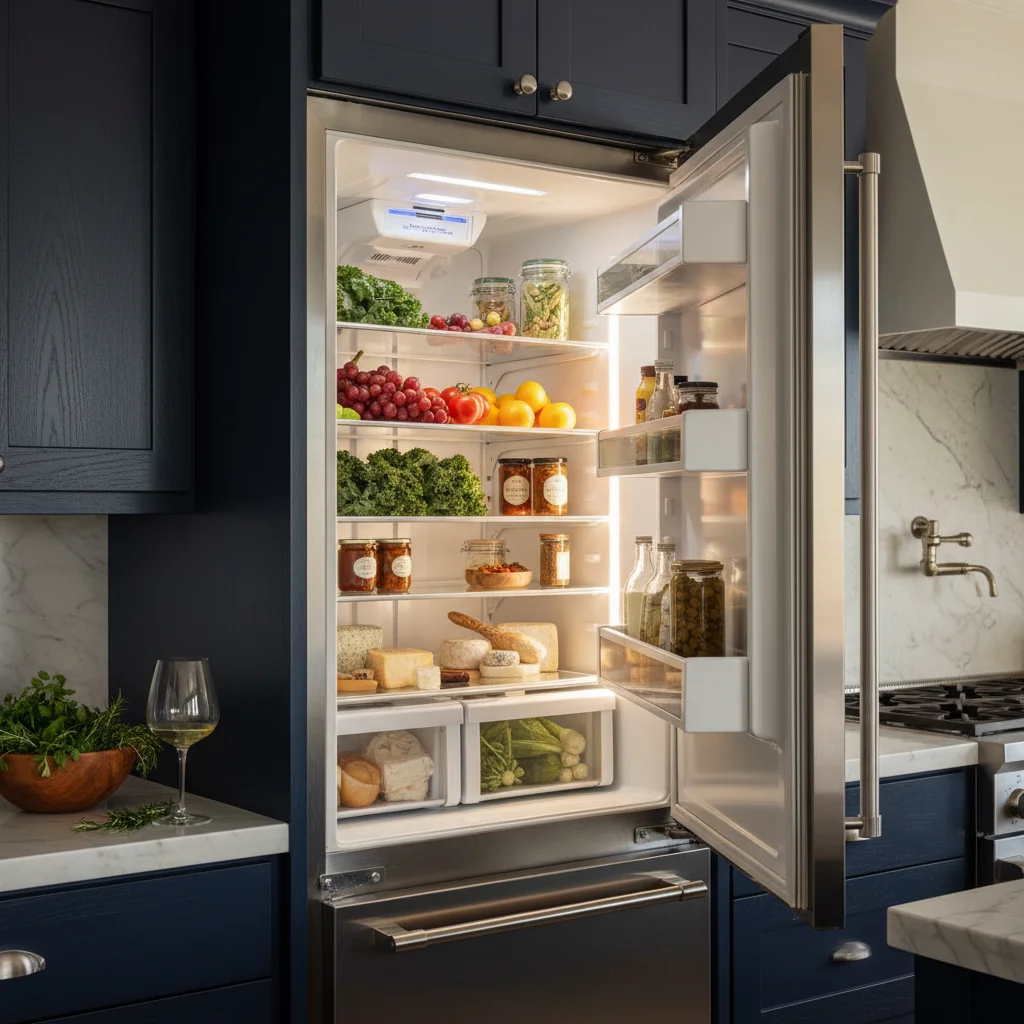
A Monogram column has been holding a steady 37 degrees for years, and this morning the produce drawers feel cool but no longer cold while the freezer column beside it is still rock hard. Nothing is beeping, the lights work, you can hear it running — and that is exactly the kind of split-temperature behavior that sends people looking for help before the milk turns.
Overview
Monogram is General Electric’s flagship luxury line, and its refrigeration reflects that: full-depth built-in columns and bottom-freezer units engineered to sit flush in millwork, with inverter-driven compressors, electronically controlled dampers, and sensors feeding a control board that quietly manages airflow between zones. Because the unit hides its mechanicals behind panels and grilles, the symptom you notice in the kitchen usually sits a step removed from the part that actually failed.
That is why these reward a specialist. We confirm what the refrigerator is doing, read the sensors and any stored fault data, and walk the airflow and sealed-system paths in order before naming a cause. You get a plain explanation and one firm number. The $89 service call covers the on-site inspection and folds into the repair if you go ahead. We are an independent Denver-metro company serving the area since 2012, not affiliated with, endorsed by, or sponsored by the manufacturer.
Common problems we diagnose
- Fresh-food zone warms while the freezer stays cold — typically the refrigerator-side evaporator fan, a defrost fault icing that coil, or a stuck damper, not a whole-unit failure.
- Both compartments slowly losing temperature — most often a condenser choked with dust and pet hair behind the grille, collapsing heat rejection.
- Compressor or fan running nonstop — a dirty condenser, failing condenser fan, leaking door gasket, or a charge that has drifted off.
- Frost or ice on the evaporator or rear wall — a defrost heater, defrost thermostat, sensor, or control-board timing no longer cycling defrost.
- Water pooling inside or on the floor — usually a frozen or blocked defrost drain backing up, or a cracked pan.
- Weak, hollow, or no ice — a water inlet valve, exhausted filter, or scale narrowing the line.
- Wine or beverage center off temperature — often a fan, thermistor, or door-seal issue specific to those cabinets.
How we run the diagnosis
- Listen first. We confirm the actual symptom and timeline — gradual drift versus a sudden change tells us a lot before any panel comes off.
- Read the electronics. Monogram boards track temperatures and can store fault information; we pull what the unit reports to point toward a sensor, fan, or defrost circuit instead of guessing.
- Map the airflow. We check evaporator fans, dampers, and the defrost system, since blocked or icing airflow mimics a “dead” system.
- Test the sealed system. Condenser, condenser fan, compressor behavior, and charge get evaluated only after airflow is ruled in or out.
- Quote once. You hear the cause and a single up-front price before we touch a part.
Why Denver changes the picture
A mile above sea level, the air is roughly 15% thinner, so a built-in’s condenser rejects heat less efficiently and a unit near its limit shows cooling complaints sooner than at sea level. Our hard water — commonly 150–250 ppm — scales up ice makers, inlet valves, and water lines, which is why ice and dispenser faults are so common here. And the dry Front Range climate hardens door gaskets faster than humid regions, letting warm air leak in and pushing run times up. We factor all three into the diagnosis so an environmental issue isn’t misread as a failed component.
Related Monogram work and other brands
Refrigeration is one piece of a Monogram suite. We also service Monogram professional ranges, gas and induction cooktops, wall ovens, and Advantium speed ovens — and we repair built-in refrigeration from Sub-Zero, Thermador, Viking, JennAir, and Liebherr across the same metro.
Book a Monogram refrigerator repair
If your Monogram is drifting warm, frosting up, or running without rest, call (720) 770-4189 — answered 24/7, with repairs daily from 8 AM to 6 PM. You can also book online anytime. The $89 diagnostic applies straight to your repair, and you’ll have an honest price before any work starts.