A Monogram cooktop is meant to disappear into the kitchen until you need it, then perform on demand — a burner that lights on the first turn, an induction zone that holds a bare simmer without scorching. The trouble is that when something slips, the symptom you see rarely sits on top of the part that failed — and that gap is exactly what a generic appliance call gets wrong.
The repair, explained
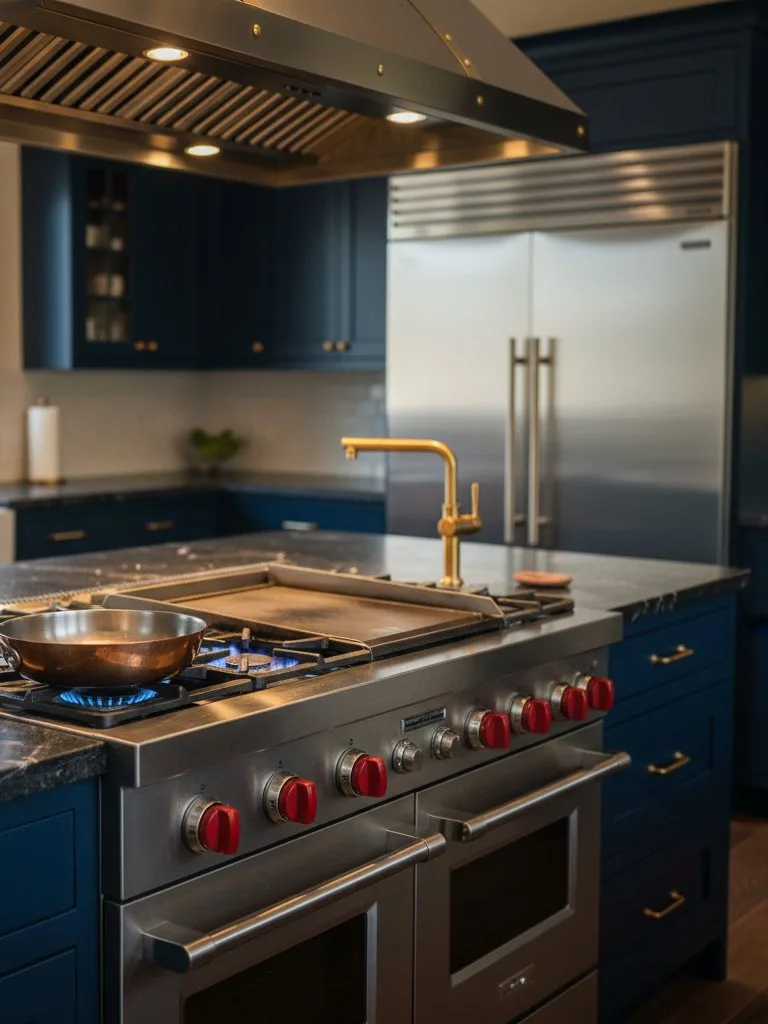
Monogram is General Electric’s flagship line, and the cooktops carry that pedigree in their construction. The sealed-burner gas models route each burner through its own spark igniter and a gas valve under the knob, with a sealed deck so spills can’t reach the burner box. The induction models are a different animal entirely — copper coils under a single sheet of ceramic glass, switched at high frequency by a power board, with no flame in the equation. GE also builds electric radiant versions with ribbon elements and a glass top.
That split is why a Monogram cooktop rewards a specialist. “It won’t heat” means a gas-and-ignition problem on one platform and a power-electronics problem on another, and the two share almost no parts. We confirm which platform is on the counter, read what the controls report, and isolate the failure before naming a price. The $89 service call covers that inspection and folds into the repair. We’re an independent Denver-metro company working the area since 2012 — not affiliated with, endorsed by, or sponsored by the manufacturer.
Symptoms and likely causes
The complaints that bring us to a Monogram cooktop fall into a few buckets:
- Burner clicks but never lights — a wet or food-fouled spark igniter, a misseated burner cap, or a blocked flame port; sometimes a cracked igniter shell.
- Clicking that won’t stop after the flame is up — usually moisture on an igniter or a cap that isn’t seated flat, occasionally a spark module firing every electrode.
- Weak, yellow, or lazy flame — a partly clogged port, an orifice issue, or low supply pressure, amplified by Denver’s lean air.
- Burner won’t hold a low simmer — a worn gas valve or debris narrowing the port, robbing the precise turndown.
- Induction zone won’t power up or quits mid-cook — a failing power board, an overheated cooling fan, or a thermal sensor protecting the electronics.
- Zone won’t recognize a pan — a detection sensor, a board fault, or non-induction cookware.
- Cracked glass — a structural failure that can expose the coil and must be addressed first.
If you ever smell gas, turn the supply off and call before using the cooktop.
Why a specialist matters
A builder-grade cooktop forgives sloppy diagnosis; a Monogram doesn’t. The same complaint can trace to four different repairs at four prices, and the induction electronics in particular punish parts-swapping. Reading board behavior, testing each igniter individually, and verifying valves and ports takes knowledge a general handyman rarely carries.
What a visit looks like
- Confirm the platform and symptom — gas, induction, or radiant routes everything that follows.
- Isolate it. One dead burner points local; an all-at-once failure points to a shared module, harness, or power feed.
- Test rather than assume — spark, cap, and port on gas; board, coil, fan, and detection on induction, with your real pans.
- Weigh the Denver factors — lean combustion, scale, and dried seals before any verdict.
- Explain and quote once, in plain language, before a single part is touched.
Pricing
Every visit opens with the $89 diagnostic service call, applied straight to the repair. The repair price itself comes only after the on-site inspection — up-front, with nothing tacked on later. We fit OEM-grade, manufacturer-compatible parts matched to your model.
A few questions worth answering
Does altitude really matter? Yes — thinner air makes gas burn leaner, so igniter health and orifice sizing show up faster than at sea level, and induction electronics shed heat less efficiently. Hard water? Also yes — 150–250 ppm leaves scale around burner bases and under caps that fouls ignition and flame quality. And the dry climate stiffens seals early.
Don’t cook around a burner you can’t trust. Call (720) 770-4189 anytime — answered 24/7, repairs daily 8 AM to 6 PM — or book online to get your Monogram cooktop lighting on the first turn again.