A mile above sea level, the same Monogram dishwasher ages on a different clock than it would at the coast. Front Range tap water runs hard, the air is unusually dry, and the thin atmosphere quietly shifts how heat moves — three forces that show up first in the wash, dry, and water-handling parts of an integrated machine. We build all three into the diagnosis so a Denver-specific symptom doesn’t get misread as a failed component.
What tends to go wrong
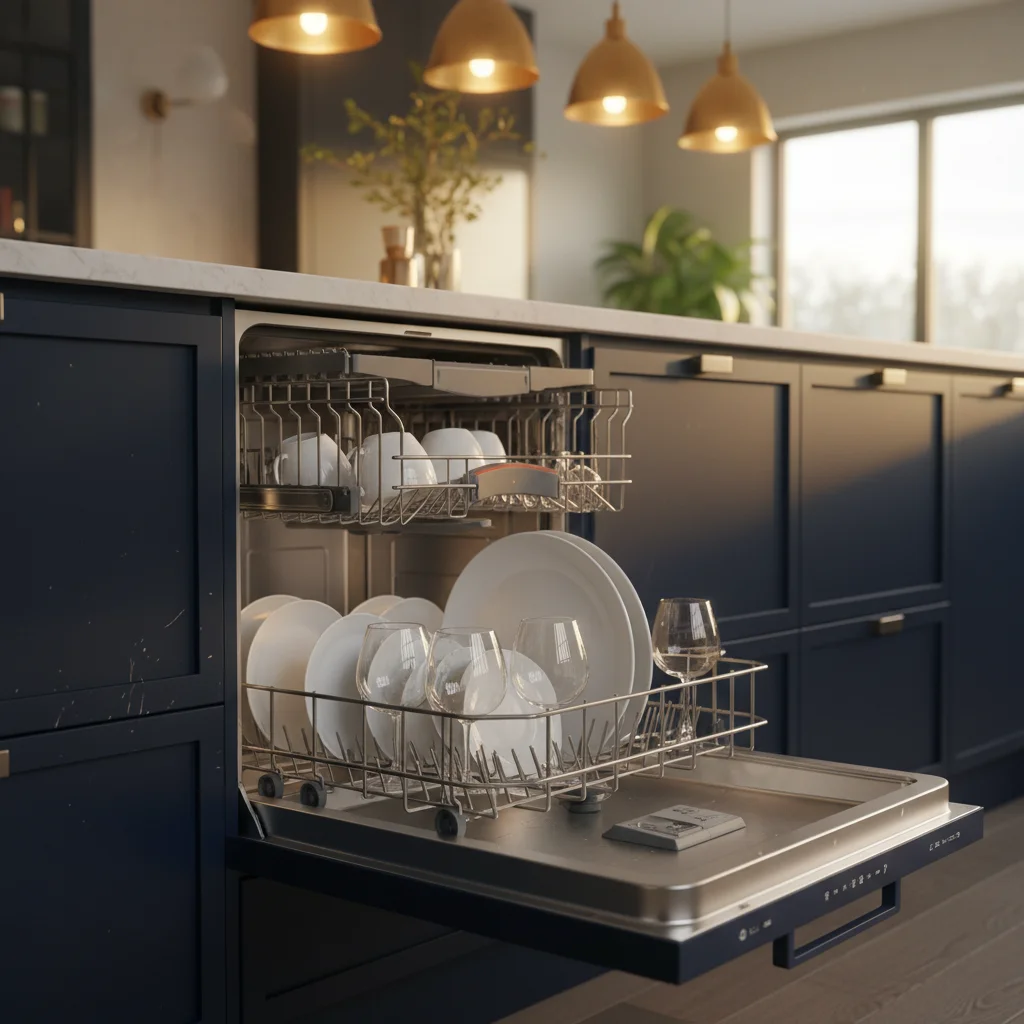
Monogram is General Electric’s flagship luxury line, and its dishwasher is built to disappear into millwork: a fully integrated, panel-ready front, a stainless tub, a pump-driven wash system, an adjustable third rack with dedicated bottle jets, and a control board reading temperature, turbidity, and leak sensors to run the cycle for you. The trade-off is that when something fails, the machine rarely makes noise about it — it holds a cycle, blinks a status light, or simply stops with water still inside.
That quiet, sensor-led design is exactly why guessing is expensive here. We confirm the real symptom, read what the unit reports, and verify a single root cause before naming a price. The $89 service call covers the on-site inspection and folds into the repair if you proceed. We’re an independent Denver-metro company serving the area since 2012, and we are not affiliated with, endorsed by, or sponsored by Monogram, GE Appliances, or any manufacturer.
Why Denver changes the picture
- Hard water, roughly 150–250 ppm. Much of the metro runs hard, and scale is the most common driver of Monogram complaints we see — it crusts the heater, narrows the spray jets and the slender bottle-jet passages on the third rack, and clogs the inlet valve until fills slow or glassware comes out cloudy. When scale is the cause, we suggest a descale interval matched to local water.
- Very dry climate. Persistent low humidity hardens and shrinks the door gasket and tub seals faster than a humid region, so a seal-shrinkage leak is realistic even on a fairly young unit — and on a leak-protected Monogram, that small weep is enough to trip a lockout.
- Thinner air at 5,280 feet. About 15% less dense than at sea level, the air nudges heat transfer at the margins. It matters less here than for a sealed fridge or a gas burner, but it keeps us from mistaking normal high-altitude drying behavior for a fault.
How we run the diagnosis
- Listen first. We confirm the exact symptom and when it started — a gradual drift versus a sudden stop tells us a lot before any panel comes off.
- Read the electronics. Monogram’s board tracks sensor data and status conditions; we pull what the unit reports to point toward a pump, valve, heater, or leak circuit instead of guessing.
- Trace water in and out. We check the inlet valve and supply, then the filter, sump, drain hose, check valve, and drain pump — the path where scale and debris cause the most trouble.
- Test wash and dry. Circulation pump, spray arms and bottle jets, heater, thermistor, vent, and dry-boost fan get evaluated against the live cycle.
- Quote once. You hear the cause and a single up-front price before we touch a replacement part.
Components we service
- Drain and circulation pumps — the drain pump is the most common mechanical failure; many “dead pump” calls are just debris lodged in the impeller.
- Water inlet valve — a frequent casualty of Denver hard-water scale, behind slow or no-fill complaints.
- Spray arms and third-rack bottle jets — fine passages that scale narrows, weakening wash coverage on upper items.
- Heater and thermistor — drives both wash temperature and the drying stage.
- Door gasket and tub seals — rubber the dry climate ages early; an early swap is cheap, a late one reaches the subfloor.
- Leak sensor and float, control board, and turbidity sensor — verified against the live circuit before anything is condemned.
Same-day scheduling
If your Monogram is holding water, locked out on a leak, or leaving dishes wet, call (720) 770-4189 — answered 24/7, with repairs daily from 8 AM to 6 PM. You can also book online any time. We typically offer same-day or next-day appointments across the metro, and the flat $89 diagnostic applies straight to your repair, so you’ll have an honest price before any work begins.