What this page is about
If your built-in refrigerator in Stapleton has stopped holding temperature, your professional range is lighting with a lazy yellow flame, or your ice maker has slowed to a trickle, this is the right place to start. We come to your Central Park home, diagnose the actual cause on site — not a guess off the symptom — and give you a clear, up-front price before any work begins. The $89 diagnostic service call covers that inspection and is credited toward the repair if you decide to go ahead. Call (720) 770-4189; the line is answered 24/7.
A neighborhood where the premium kitchen came standard
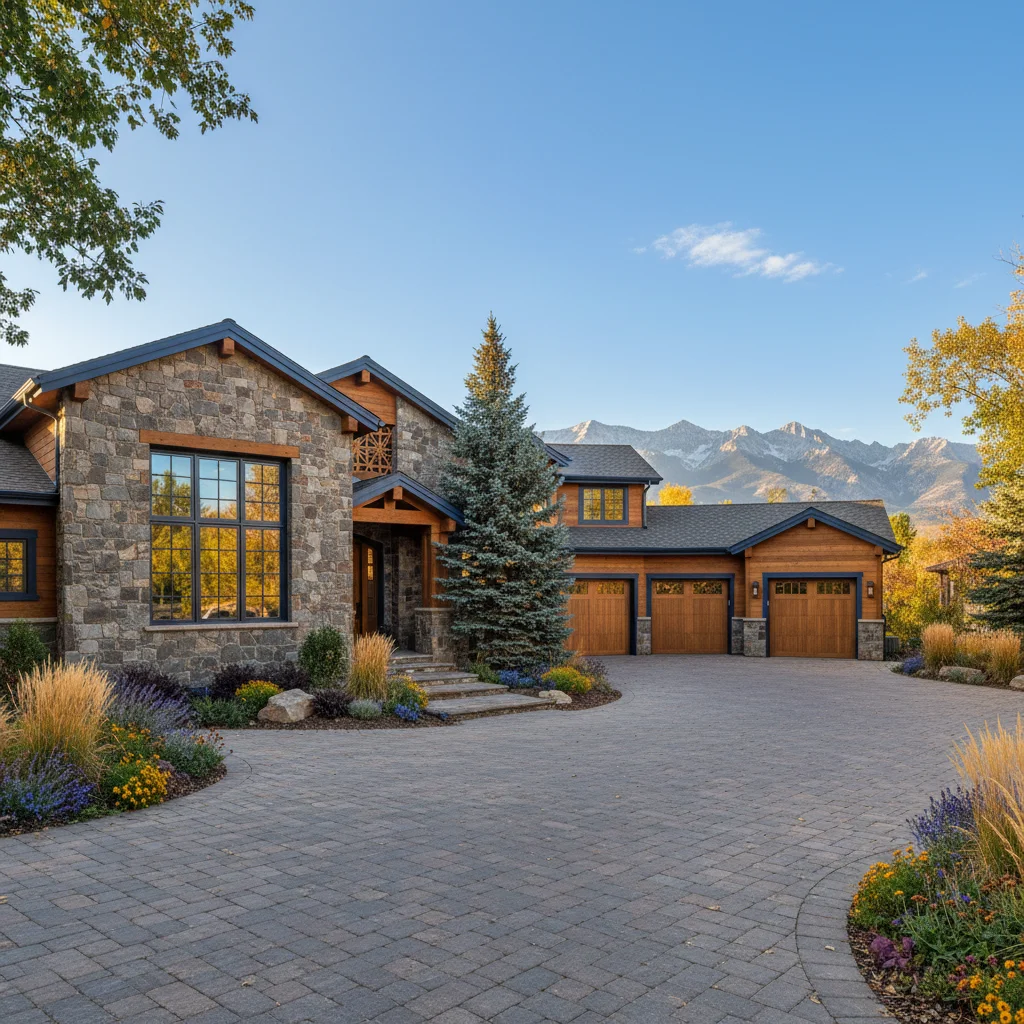
Most of Denver’s high-end appliance work lives inside a contradiction: a brand-new Sub-Zero column squeezed into a kitchen framed in 1924. Stapleton is the rare neighborhood where that’s flipped. Built on the footprint of the old Stapleton International Airport and now carrying the Central Park name, this is one of the largest master-planned communities in the country — block after block of homes raised from the early 2000s onward, laid out around pocket parks, greenways, and the parkway grid that defines the district.
What makes Stapleton matter for appliance repair isn’t just that the houses are newer. It’s how they were built. A meaningful share of these homes left the builder with a premium kitchen package already in place — the Sub-Zero or comparable built-in refrigerator, the professional gas or dual-fuel range, the panel-ready dishwasher, sometimes a wine column — installed as a coordinated suite on day one. The buyer in Eastbridge or Conservatory Green didn’t remodel their way into a serious kitchen. They moved into one.
That changes the service picture in a few concrete ways:
- The appliances are roughly the same age as the house. When a whole street goes up over a couple of build seasons, the kitchens age in lockstep. The Sub-Zeros that shipped with the first phases of Stapleton are now well into the window where original condenser fans, defrost heaters, start relays, and door gaskets reach the end of their service life. We see clusters of the same fault across the same vintage of home.
- The installs are clean but tight and integrated. Builder kitchens favor flush, panel-ready, built-in looks. The fridge disappears behind cabinet panels, the range sits framed in a custom surround, and the service access is deliberately tucked away. Pulling a unit forward means clearing a finished millwork run, not sliding a freestanding box on the floor.
- Original owners often don’t know the model history. When you remodel, you choose the appliance and keep the paperwork. When it came with the house, the model and serial are frequently a mystery until we read them off the unit. That’s fine — identifying the exact model is part of the first visit.
None of this is a problem. It’s the context. But it’s the context a national service playbook written for a suburban garage kitchen tends to skip right over.
What tends to go wrong in Stapleton kitchens
Across Central Park’s build phases, a recognizable set of failures comes up again and again. None of these is something to self-diagnose past “something’s off,” but knowing the pattern helps us arrive prepared:
- A built-in fridge that cools, but not enough. The most common call here. Usually a condenser blanketed in dust, a failing condenser or evaporator fan, a tired start relay, or — less often, but more serious — a slow sealed-system refrigerant fault. In a panel-ready column boxed into cabinetry, airflow is marginal to begin with, and Denver’s thin air makes it worse.
- Frost sheeting up the back of the freezer. Typically the defrost circuit: a defrost heater, a failed defrost sensor, or a control board that’s mistiming the cycle so the ice never clears.
- A compressor that runs constantly and never cycles off. Often a dirty condenser, a weakening fan, or a door gasket that no longer seals — and in Denver’s bone-dry air, gaskets harden and crack years earlier than the warranty math assumes.
- A professional range lighting with a lazy, yellow-tipped, or uneven flame. Frequently an altitude-and-combustion issue rather than a broken burner. Orifices and air-mix settings dialed in at sea level run rich at 5,280 feet.
- A burner that clicks but won’t catch. Usually a fouled igniter, a clogged port, or moisture in the spark module.
- An oven that overshoots or drifts off its set point. The usual suspects are the bake element, a wandering temperature sensor, or a control board that needs recalibration.
- Ice production that drops off or turns cloudy and small. Almost always scale from Denver’s hard water building up in the fill valve, the line, and the mold.
- A dishwasher leaving film or refusing to drain. Scale on the heating element and spray arms, a failed drain pump, or a clogged sump — hard water leads the list.
- A wine column that can’t hold its set temperature. A weak compressor or thermoelectric module, a fan fault, or a gasket gone brittle in the dry climate.
If your symptom isn’t on that list, it still belongs on the phone. These are the patterns we see most, not the limits of what we fix.
Services we handle in the neighborhood
Within Stapleton and the wider Central Park area, we regularly take on:
- Built-in and integrated refrigerator repair — full-height columns, under-counter drawers, and panel-ready units fitted flush into builder cabinetry.
- Freezer and ice maker service, including the scale-and-water problems that dominate here.
- Professional range and rangetop repair — gas and dual-fuel, with close attention to altitude-affected combustion.
- Wall oven and cooktop repair — temperature drift, igniter faults, and control-board failures.
- Dishwasher repair, where hard-water scale and drain blockages are the usual culprits.
- Wine and beverage column service for the units that came with the package or were added later.
How a Stapleton visit actually runs — and how we price it
We’re deliberately wary of the fast diagnosis, because in a tight, finished builder kitchen the cost of being wrong is a second trip back through someone’s cabinetry. Here’s the sequence:
- You tell us the symptom and, if you know it, the brand. When you call or book online, let us know what the appliance is doing and roughly where you are — Eastbridge, Northfield, Conservatory Green, near Bluff Lake. That lets us bring the right common parts and plan access ahead of time.
- The technician inspects on site and reads the system. They confirm the symptom, pull any stored fault codes, and work methodically through whatever the appliance calls for — the sealed refrigeration loop, the gas combustion path, the water path, or the control logic. On a warming column that means checking condenser condition and airflow, testing both fans and the start components, and verifying the charge behaves correctly at this elevation before anyone reaches for a refrigerant conclusion.
- We trace the fault to its cause, not just its symptom. A condenser fan is a quick swap, but if it burned out because a dust-caked condenser ran it hot — a pattern altitude makes worse — the new fan is simply the next part in line to fail. We follow the chain backward so the fix holds.
- You get a plain-English diagnosis and a firm, up-front price. Before any wrench turns, you know what failed and what it costs. The $89 service call covers this inspection and comes off the repair total if you proceed.
- We complete the repair and tell you what to watch. Using OEM-grade, model-matched parts, we finish the job and explain in plain terms what was replaced and why — so you’re not guessing later.
The whole point of running it this way is that nothing happens behind your back. You approve the cause and the cost before the work, and the price you’re quoted is the price you pay. No charges materialize after the fact.
Why Denver’s altitude and water change the job
It’s easy to read “mile-high” as a marketing line. It isn’t. Stapleton sits right at 5,280 feet, where the air is roughly 15% thinner than at sea level, and that genuinely changes how these appliances behave — in ways a sea-level repair manual tends to miss:
- Thinner air means weaker heat rejection. A Sub-Zero’s condenser and cooling fans move less-dense air, so the system sheds heat less efficiently than the same unit would near the coast. A panel-ready column that’s even slightly dusty or boxed tight into builder cabinetry — the standard Stapleton install — starts to struggle here sooner. Refrigerant charge and compressor heat rejection are both sensitive to that thin air, which is why we read the system the way it actually behaves in Denver.
- Combustion shifts on gas cooking. Less oxygen per cubic foot changes the fuel-to-air mixture. Orifice sizing and burner tuning that were correct at sea level can run rich at altitude, producing lazy, yellow-tipped, or sooty flames and harder ignition on ranges, cooktops, and ovens. A burner that looks “broken” is often a combustion-and-altitude problem we can correct on a properly equipped professional range.
- Hard water is relentless. Denver’s supply commonly runs around 150 to 250 ppm, and that mineral load is brutal on ice makers, dishwasher internals, and the thin water lines feeding a built-in fridge. It’s the leading reason ice output drops, cubes turn cloudy and undersized, and dishwashers start leaving film. A repair that ignores the water chemistry just resets the clock to the next failure.
- Dry air and strong UV age seals fast. Denver’s very low humidity and intense Colorado sun harden and crack door gaskets earlier than you’d expect. A gasket that no longer seals lets warm air leak in, the compressor runs longer, and the whole system works harder — so we check seals as part of every refrigeration diagnosis, not as an afterthought.
A technician who understands those four forces fixes the cause. One who doesn’t fixes the symptom — and you see them again next summer.
Brands and related repairs
A Stapleton kitchen package is usually built around a couple of marquee names, but a serious build often includes more. We service the full range of premium and built-in brands homeowners find in these homes:
- Refrigeration — Sub-Zero built-ins, columns, and under-counter drawers, plus other integrated and high-end refrigerators and freezer columns.
- Cooking — Wolf and comparable professional gas and dual-fuel ranges, rangetops, wall ovens, and cooktops.
- Dishwashers — integrated, panel-ready units where hard-water scale and drainage dominate the fault list.
- Wine and beverage columns — temperature, compressor, fan, and seal faults on built-in and standalone units.
If you’ve got a mixed suite — a Sub-Zero column, a professional range, an integrated dishwasher, and a wine column from a third brand — that’s the norm here, and it’s exactly the kind of kitchen we’re set up to service in a single visit. We’re independent specialists, not a manufacturer, and we’ve worked Denver metro kitchens since 2012.
Get your Stapleton repair on the books
We’ve kept booking simple and built it around how this neighborhood actually lives:
- Call (720) 770-4189. The phone is answered 24/7, so you can reach a real person the moment something quits — late at night, early morning, or over a weekend.
- Or book online any time that suits you.
- Repairs run daily, 8:00 AM to 6:00 PM. When we schedule, we’ll confirm a window and check any access details — a panel-ready install behind finished millwork, an alley-loaded garage entrance, or street parking on the busier parkway blocks.
- The $89 diagnostic service call covers a full on-site inspection and is applied straight to your repair, so the diagnosis is never wasted money.
Stapleton — Central Park — is precisely the kind of work we’re built for: premium, built-in kitchens that arrived with the house and are now hitting the age where parts wear out, all sitting a mile high where altitude, hard water, and dry air conspire against them. A slow fridge or a temperamental range only gets more expensive the longer it waits.
Ready to get a Sub-Zero column, a professional range, a wall oven, or any built-in back in service? Call (720) 770-4189 or book online today — same-day and next-day appointments are available across Stapleton and northeast Denver, and the $89 service call goes straight toward your repair.