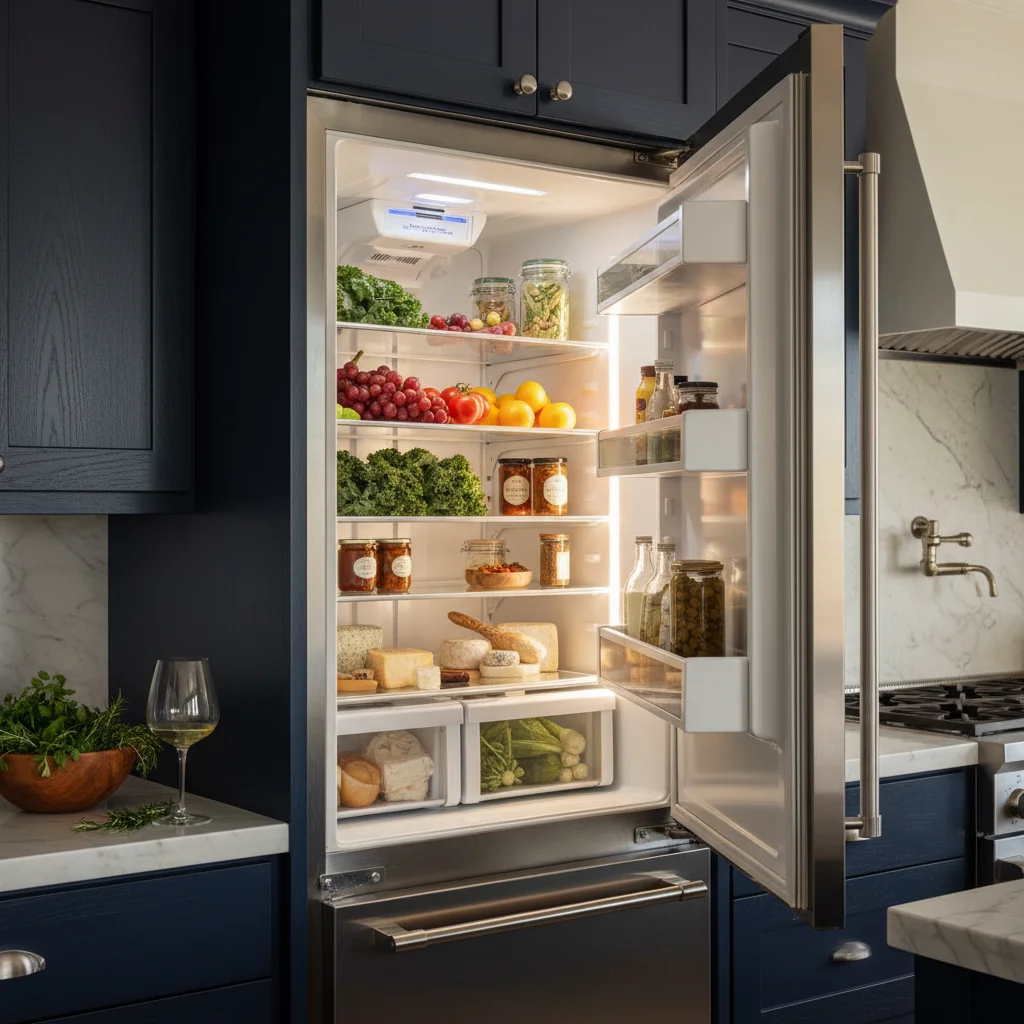
It’s a Saturday morning in a kitchen near Park Meadows, you reach for the milk, and it’s barely cool. The display still reads 38, the freezer below feels fine, but the butter has gone soft and the lettuce in the crisper is wilting. That gap, a fresh-food side drifting warm while the freezer holds, is one of the most common calls we get from Lone Tree built-ins, and it almost never means the whole unit is dying. It means something inside the cabinet has stopped moving cold air where it belongs.
Overview
The communities around Park Meadows and the Bluffs hold a tight cluster of integrated refrigeration: six-foot Sub-Zero columns boxed into custom millwork, panel-ready French-door units flush with the cabinetry, and beverage and produce drawers set into islands. These aren’t boxes you wheel out and swap. So when one slips, our first move is never to yank it from the cabinet. We measure, trace the fault, and set a firm price before any work starts, because on equipment finished to the inch a wrong guess means an unnecessary panel pull.
Common problems we see in Lone Tree kitchens
The symptom usually narrows the diagnosis fast. Across these homes, the patterns repeat:
- Fresh-food side warms while the freezer stays cold (airflow, damper, or evaporator fan)
- Compressor runs almost nonstop and the cabinet sides feel warm to the touch
- Water pooling under a crisper or beneath a drawer unit from a blocked defrost drain
- Cloudy, slow, or shrinking ice from hard-water scale
- A door that won’t seal, or a gasket that’s gone brittle and cracked
- Frost building on the back wall of the freezer compartment
A column running warm points first to a dust-choked condenser, a failed fan, a worn start relay, or a sealed-system fault, and in a flush install restricted airflow leads the list. A weeping drain and cloudy ice trace back to scale and a misfiring defrost cycle.
Our diagnostic process
We work the unit in order rather than chasing the easy answer:
- Tell us the brand, symptom, and where in Lone Tree you are when you call or book, so we arrive ready for a column, drawer, or freestanding fridge.
- We read airflow and the sealed system together, testing both fans, the compressor, the charge, and the damper, with altitude factored in.
- We trace water and frost through the defrost heater, sensor, control board, and drain line.
- We check the door and gasket, since a hardened seal quietly loads the compressor.
- You get one up-front price before a panel moves, with the $89 diagnostic credited the moment you approve.
The fast swap is often the wrong one. A new evaporator fan goes in quickly, but if a thin-air-strained condenser cooked that motor, the replacement is just next in line to fail. We follow the chain to the root.
Denver-specific factors
Lone Tree sits at the same mile-high elevation as the rest of the metro, climbing as the ground rolls toward the Bluffs. The air here is roughly 15% thinner, so a condenser sheds noticeably less heat than it would at sea level. A column wedged into a tall cabinet feels that penalty hardest and runs warm sooner, which is why we weigh airflow and charge together before reaching for refrigerant. The hard water, commonly 150 to 250 ppm, lays scale through ice makers, dispenser lines, inlet valves, and defrost drains. And the dry, high-UV Front Range climate hardens door gaskets early, so a seal that should outlast the warranty can crack and leave the compressor fighting to hold temperature.
Brands and related repairs
The parts that decide whether a fridge holds temperature are our daily work: compressors, evaporator and condenser fan motors, control boards, inlet valves, dampers, defrost heaters and sensors, and door gaskets. Replacements are OEM-grade or manufacturer-compatible parts from verified suppliers, matched to your model and serial. If the same kitchen has a separate freezer column, beverage drawers, or a wine unit acting up, we can look at all of it in one visit and hand you a single quote for the work you approve.
Book a Lone Tree refrigerator repair
The cheapest fix on equipment like this is the early one, caught before it loads the compressor for days. The diagnostic service call is $89 and credits toward the repair if you move ahead. Call (720) 770-4189, answered 24/7, or book online. Repairs run daily from 8:00 AM to 6:00 PM, and a technician will be at your Lone Tree door to find the real cause and quote it up front.