Why a premium appliance fails differently up here
A high-end appliance breaking down in a Golden foothills kitchen is not the same problem as a basic fridge quitting in a flatland apartment, and treating it that way is how repairs go sideways. The equipment in these homes is engineered as an integrated system: a sealed refrigeration loop tuned to hold a single degree, a control board juggling multiple temperature zones, a wine cabinet expected to keep two compartments at two different set points season after season. When one of those slips, the answer is rarely “replace the part that looks worn.” It’s a diagnosis — find which link in the chain actually failed, confirm it, and only then talk price.
That matters more in Golden than in a lot of the metro, because of where these kitchens physically sit. A home tucked into the foothills near the mouth of Clear Creek Canyon, or perched on the slopes below South Table Mountain, is operating its appliances at a higher elevation than the city on the plains. Thinner air, bigger day-to-night temperature swings off the rock and the canyon, and some of the driest air in the region all push on the same hardware. A built-in refrigerator and a dual-fuel range that would coast along at sea level have to work harder here, and the failure modes shift accordingly.
So the order of operations on every Golden call is the same: understand the appliance, isolate the real fault, then give a clear, up-front price before any work begins. The $89 diagnostic service call covers that inspection and is credited toward the repair if you move ahead. No guesses, no phone quotes on equipment we haven’t laid eyes on.
A foothills town with serious kitchens
Golden has a character all its own in the west metro. The historic downtown sits in the valley where Clear Creek spills out of the canyon, hemmed in by North and South Table Mountain — those flat-topped mesas you can’t miss from anywhere in town — with the foothills rising sharply to the west toward Lookout Mountain. It’s a town defined by topography: the land climbs fast, the canyon mouth funnels weather and wind, and the homes spread from a compact valley core up onto the slopes and ridgelines around it.
That terrain shapes the housing stock, and the housing stock shapes the appliance work. You’ll find three broad patterns here, and all three lean toward premium, built-in equipment:
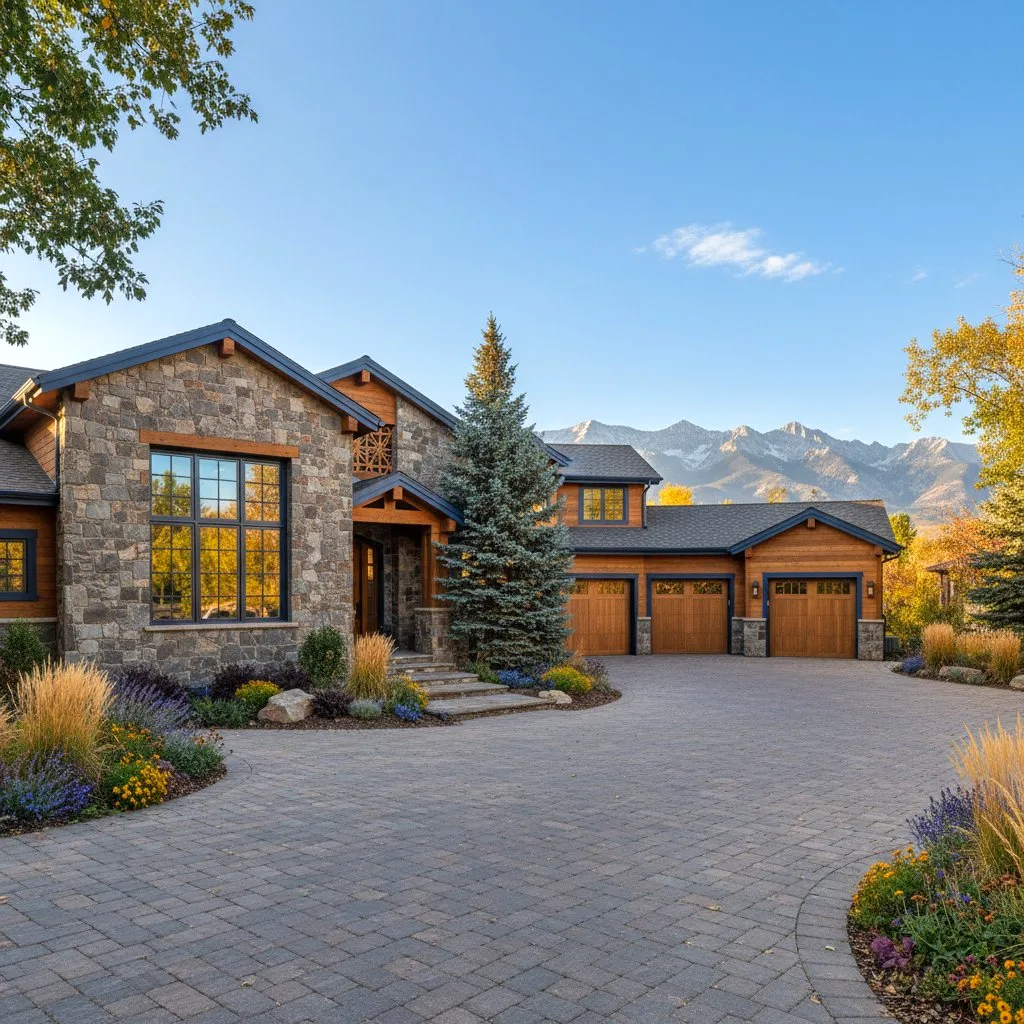
- Custom foothills homes on the slopes. Builds climbing toward Lookout Mountain, Mount Galbraith, and the higher ground near the canyon mouth tend to be architect-driven, view-oriented, and finished with chef’s kitchens at the center. Integrated, panel-ready refrigeration, dedicated wine storage, and 36- to 48-inch pro ranges are the norm, not the exception.
- Newer construction around South Table Mountain. The neighborhoods filling in below and around South Table — and out toward the Pleasant View and Fairmount edges — arrive with current high-end appliances specified during the build: flush-set refrigerator columns, beverage centers, dual-fuel ranges, and wall ovens.
- Renovated homes in and near downtown Golden. Older houses on the established blocks near Clear Creek and Washington Avenue have frequently had their kitchens reworked, with modern Sub-Zero and Wolf-class equipment dropped into homes whose gas, water, and electrical runs are decades older. That mismatch — new appliance, older infrastructure — is its own recurring service story.
The common thread is the one that matters for repair: Golden kitchens carry a high density of precision, built-in equipment, and they sit in a setting that is harder on that equipment than the average Denver address. We service all of it, across the whole town and up into the foothills above it.
Denver factors first: altitude, hard water, dry air
Before getting into specific symptoms, it helps to name the local variables, because they drive a surprising share of what we find in Golden kitchens. A sea-level repair manual quietly assumes conditions that simply don’t hold here.
Elevation — and then some. Denver’s mile-high baseline already thins the air to roughly 15% less dense than at sea level, and Golden’s foothills neighborhoods sit higher still. That thinner air has two direct consequences for your appliances:
- Refrigeration sheds heat less efficiently. Condensers and cooling fans move less-dense air, so a built-in refrigerator or a wine column that’s even slightly dusty or short on clearance starts to struggle here sooner than the identical unit would near the coast. Refrigerant charge and compressor heat rejection are both sensitive to that thinner air — which is why a tightly integrated Golden install can run warm without any single component being obviously “broken.”
- Gas combustion shifts. Less oxygen per cubic foot changes how a gas range, cooktop, or oven burns. Orifice sizing and air-to-fuel mixtures dialed in at sea level can throw lazy, yellow-tipped, or sooty flames at this elevation. A burner that looks like it’s failing is sometimes a combustion-and-altitude issue we can correct rather than a part we have to replace — and in a town where homes sit at noticeably different elevations from the valley to the ridge, getting that judgment right takes local experience.
Hard water. Denver-area water commonly runs hard, in the range of 150 to 250 ppm, and that scale is rough on ice makers, dishwasher internals, and the thin water lines feeding built-in refrigerators and in-door dispensers. It’s the leading reason ice production tails off or cubes come out cloudy and undersized in Golden kitchens.
Very dry air and strong UV. Golden’s climate is genuinely arid, and the canyon mouth pushes dry, gusty air through town. That dryness, plus strong high-elevation UV, ages door gaskets and seals faster than a humid climate would. A gasket that hardens and cracks lets warm air leak in, the compressor runs longer, and the whole system works harder — which matters double on a wine cabinet, where a failing seal shows up as temperature drift long before it shows up as anything obvious. We check seals on every refrigeration and wine-storage diagnosis for exactly that reason.
Serving the Denver metro since 2012, we’ve built these variables into how every Golden appliance gets diagnosed, rather than discovering them after the fact.
How we diagnose: the visit, step by step
We’ve built the service visit around how Golden actually runs — busy households, homes that can sit a fair drive up from the valley, and equipment that can’t stay broken for long. Here’s the sequence:
- You call (720) 770-4189 or book online. The phone is answered 24/7, so you reach a real person whenever the problem surfaces — late night, early morning, weekend, or holiday.
- We confirm a window and gather details. Repairs are performed daily, 8:00 AM to 6:00 PM. When booking, we note the appliance make and model if you have it, whether it’s a panel-ready or integrated install, and any access notes — a steep or gated foothills driveway, a long approach, anything that helps us arrive ready.
- The technician diagnoses on-site. This is the $89 service call: a full inspection to find the actual fault, not a glance and a guess. We test the system, account for elevation and water where they’re in play, confirm the cause, and rule out what it isn’t.
- You get an up-front price before any work begins. Once we know what’s wrong, we explain it in plain terms and quote the repair. Approve it, and the $89 is credited toward the total.
- We complete the repair and protect the kitchen as we go. Surfaces covered, custom panels handled with care, work area left clean.
Nothing is touched beyond the diagnosis until you’ve seen the price and said yes. That’s the entire arrangement — no surprises, no pressure.
Components and appliances we service in Golden
Across Golden’s foothills builds, newer construction, and renovated downtown homes, a recognizable set of failures comes up again and again. Here’s what we most often trace back to its real cause:
- A built-in refrigerator drifting warm. Usual suspects are a clogged condenser, a failed evaporator or condenser fan, a worn start relay, or a sealed-system refrigerant fault. In a tightly integrated install, condenser airflow gets restricted easily — and at Golden’s elevation, a unit that runs hot is often an airflow story before it’s a refrigerant story.
- A wine column that won’t hold its set temperature. Dual-zone wine storage relies on separate cooling stages and accurate sensors. Drift, a warm zone, or a unit running nonstop usually points to a sensor, a fan, a thermoelectric or compressor cooling fault, or a door seal the dry climate has finished off.
- Frost stacking on the freezer’s back wall. Typically a defrost heater, a defrost sensor, or a control board mistiming the defrost cycle.
- A compressor that never cycles off. Often a dust-choked condenser, a weak fan, or a gasket that no longer closes tight — and Golden’s dry, dusty foothills air is hard on both airflow and seals.
- Ice makers slowing down or making cloudy, undersized cubes. Almost always scale from the hard local water.
- A gas range or cooktop burning lazy, yellow, or uneven flames. Frequently an altitude-and-combustion issue rather than a failed burner — and more pronounced the higher up the foothills you are.
- An oven that won’t hold its set temperature. Usually an igniter, a temperature sensor, or a control-board fault.
- Water pooling under a fridge or dishwasher. Commonly a blocked defrost drain, a cracked pan, or a scaled-up water line.
The reason for listing these is simple: each symptom has several plausible causes, and the cheap guess is often the wrong one. A warm Sub-Zero might cost very little to put right or quite a bit more — and the only way to know is to diagnose it correctly the first time.
The services we bring to Golden
Within the town and the surrounding foothills, we regularly handle:
- Built-in and integrated refrigerator repair — full-height columns, drawer refrigeration, and panel-ready units.
- Wine and beverage center service — dual-zone wine cabinets, beverage columns, and under-counter coolers.
- Freezer and ice maker repair, including the scale-driven water problems so common across the metro.
- Range, cooktop, and rangetop repair — gas and dual-fuel, with attention to elevation-affected combustion.
- Wall oven and built-in oven repair — temperature, igniter, and control-board faults.
- Dishwasher repair, where hard-water scale and drainage issues dominate.
Why a specialist, not a generalist
It’s a fair question: why not just call a general appliance tech? The honest answer is that the equipment in a Golden kitchen punishes generalists. A built-in refrigeration column doesn’t behave like a freestanding fridge from a big-box store — its sealed system, control logic, and airflow design are specific, and a technician who doesn’t know the platform tends to throw parts at the symptom. That’s slow, expensive, and it often misses the underlying fault entirely.
Then there’s the install. In a newer foothills home, your refrigeration is flush-set behind custom panels, your wine cabinet is framed into millwork, and the service access is anything but obvious. Pulling a unit forward to reach a condenser or compressor is a deliberate operation, not a yank — do it wrong and you’ve damaged a cabinet front that cost real money. We plan access carefully and protect the surfaces around the work.
The parts decision compounds all of it. A premium appliance is an engineered system — a refrigeration loop, a control board, and a set of airflow and water paths that depend on one another. Drop in a generic substitute and you can be chasing the same fault within a year, which in a foothills home means a second visit up the mountain, a second access teardown, and a second disruption to a kitchen you’d rather not disturb twice. We use OEM-grade and manufacturer-compatible parts from verified suppliers, matched to your specific model and serial, precisely so the repair holds. When the job’s done, you get a straight account of what failed, what was replaced, and why — not a vague line on an invoice.
Same-day scheduling across Golden and the west metro
When a refrigerator or freezer stops cooling, the clock matters — and in a town where a service van may have a real drive up into the foothills, getting the dispatch right matters even more. That’s why the phone is answered 24/7. You can call the moment the problem shows up, day or night, and reach a real person rather than a machine.
Here’s how the timing works in practice:
- Call anytime. (720) 770-4189 is answered around the clock, every day of the week.
- Repairs run daily, 8:00 AM to 6:00 PM. That’s when the technician is at your door doing the work.
- Same-day or next-day appointments are the norm across Golden and the western metro. If something has stopped cooling and food or wine is at risk, say so when you call and we’ll move your visit up the queue.
The pricing stays just as simple. The diagnostic service call is $89 and covers a full on-site inspection. It’s credited toward the repair if you approve the work. The repair price itself is quoted only after we’ve seen the appliance — Golden kitchens hold too wide a range of equipment for an honest phone quote — and the number you approve is the number you pay. Nothing is added later.
Ready to get a built-in fridge, wine column, pro range, or wall oven back in service? Call (720) 770-4189 or book online today. The line is answered 24/7, repairs run daily from 8:00 AM to 6:00 PM, and same-day and next-day appointments are available throughout Golden and the western foothills.