Wait too long on a wine cooler that’s drifting warm and the damage isn’t one bottle — it’s a whole rack quietly cooking. A cabinet that creeps from 55°F into the upper 60s strips the aromatics out of reds and pushes corks toward seepage within days, and in a compact Capitol Hill kitchen there’s rarely a backup fridge for the overflow. Catching a failing fan or a leaking gasket early is almost always a smaller fix than waiting for the compressor to die. That’s why we push for same-day diagnosis instead of “let’s see if it settles.”
What you are noticing
The complaints we hear from Cap Hill bottle storage tend to cluster:
- The cabinet won’t hold its set temperature, or one zone of a dual-zone unit runs warm while the other is fine.
- A constant hum or a new rattle that vibrates against the surrounding cabinetry.
- Frost or condensation building inside, or water pooling at the base.
- The interior light or display works, but the cooling never kicks in.
- The unit short-cycles — humming on and off every few minutes without ever pulling temperature down.
What it usually means
At 5,280 feet, the air in your kitchen is about 15% thinner, so every condenser in the building rejects less heat than its maker assumed. In a wide kitchen that margin hides; in a Capitol Hill galley where the cooler is flush-set into a cabinet run with an inch of breathing room, it’s the difference between steady storage and a slow climb into the danger zone. A dusty coil or a blocked front vent — common when a unit is tucked under a counter in a pre-war condo — tips a borderline system over.
Two more local forces shape the failures here. Denver’s very dry air hardens door gaskets faster than a humid climate would, and a seal that no longer grips lets warm room air leak onto cold glass — which is where the frost and sweating come from. On water-line models, hard Denver supply (roughly 150–250 ppm) leaves scale worth checking. None of this means the unit is finished; it means the diagnosis has to account for the environment, not just the part.
How we approach it
Read the install before the component
In Capitol Hill that means checking whether a too-tight alcove or a clogged front grille is choking the condenser before we blame a fan or a board. Half the “broken” coolers in boxed-in cabinetry are starved for airflow.
Test it running, under load
We measure actual zone temperatures, pull any stored fault codes, then check the compressor, condenser and evaporator fans, thermostat, thermistors, and control board while the unit is working — not at rest. For thermoelectric under-counter models, we test the Peltier module and its fan stack instead.
Trace the sealed system and the seal
Refrigerant leaks and restrictions surface sooner in thin air, so the sealed system gets real attention. We also check the door gasket and hinge alignment, since a dry-climate-hardened seal is one of the most common and most overlooked causes of a cooler that “just won’t get cold.”
Explain it, then quote it
You get the cause in plain language and a firm price before any work starts. The $89 service call covers this diagnosis and comes off the repair.
Coverage & brands
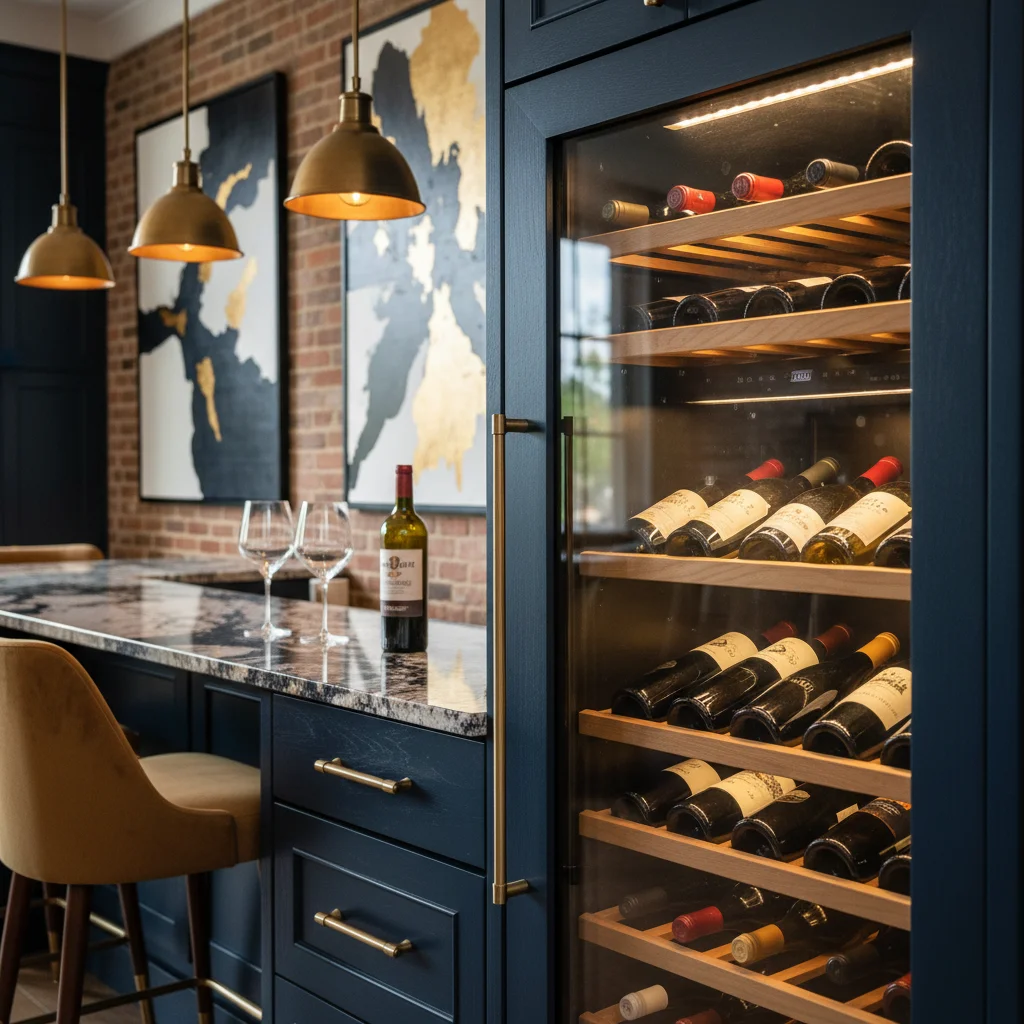
We work across Capitol Hill — from the apartments near the State Capitol to the condos along the parkways around Cheesman Park — on built-in, integrated, under-counter, and freestanding wine coolers, single- and dual-zone, compressor and thermoelectric. Typical repairs cover compressors and start relays, condenser and evaporator fan motors, thermostats and thermistors, control boards, door gaskets and hinges, and water-line parts on units that have them. We fit OEM-grade, model-matched parts. When a unit is genuinely choked by its cabinet, we’ll say so — a better-ventilated install often outlasts a fan motor that would just burn out again in the same heat-trapped nook.
Get it fixed
Capitol Hill’s central position makes it one of the faster neighborhoods for us to reach, so same-day and next-day slots are usually open. Repairs run daily 8:00 AM–6:00 PM and the phone is answered 24/7, so call the moment your bottles are at risk. Reach us at (720) 770-4189 or book online anytime — the $89 diagnostic gets a technician to your door, finds the real cause, and goes straight toward the repair once you approve it.