Quick orientation
A Wolf cooktop earns its place in a kitchen by being instant and precise — the burner lights the moment you turn the knob, the flame settles exactly where you set it, the induction zone holds a low simmer without scorching. So when that precision slips, it’s obvious and it’s annoying. Maybe one burner clicks and clicks but never catches. Maybe the whole cooktop sparks every electrode at once like it’s possessed. Maybe an induction element cuts out the instant the pan gets hot, right in the middle of searing.
We’re an independent appliance repair company that has served the Denver metro since 2012, and a large share of what we do is exactly this kind of high-end cooktop work. To be clear and up front: we are not affiliated with, endorsed by, or sponsored by Wolf or Sub-Zero Group, Inc. We’re technicians who understand how these cooktops are engineered, how their failure modes differ from a builder-grade range, and how Denver’s altitude and water quietly change the picture.
Our philosophy is simple. A Wolf cooktop has several systems that can produce the same complaint — a burner that won’t light might be a dirty port, a cracked electrode, a tired spark module, or a gas-valve issue, and those are four different repairs at four different prices. So we measure and isolate before we touch a part. You get a plain explanation of the real cause and a firm, up-front price. The $89 diagnostic service call covers that visit and is applied to the repair.
How Wolf builds the cooktop — and why it shapes the fix
Wolf doesn’t sell a single cooktop; it sells distinct platforms, and the first job on any call is recognizing which one is on the counter:
- Sealed-burner gas cooktops use brass or stamped burners that sit on top of a sealed surface, so spills can’t drip into the burner box. Each burner has its own spark electrode and a flame port ring, fed by a gas valve under the knob. Wolf’s signature here is a wide turndown — a true low simmer that depends on a clean, well-aligned burner and a correctly sized orifice.
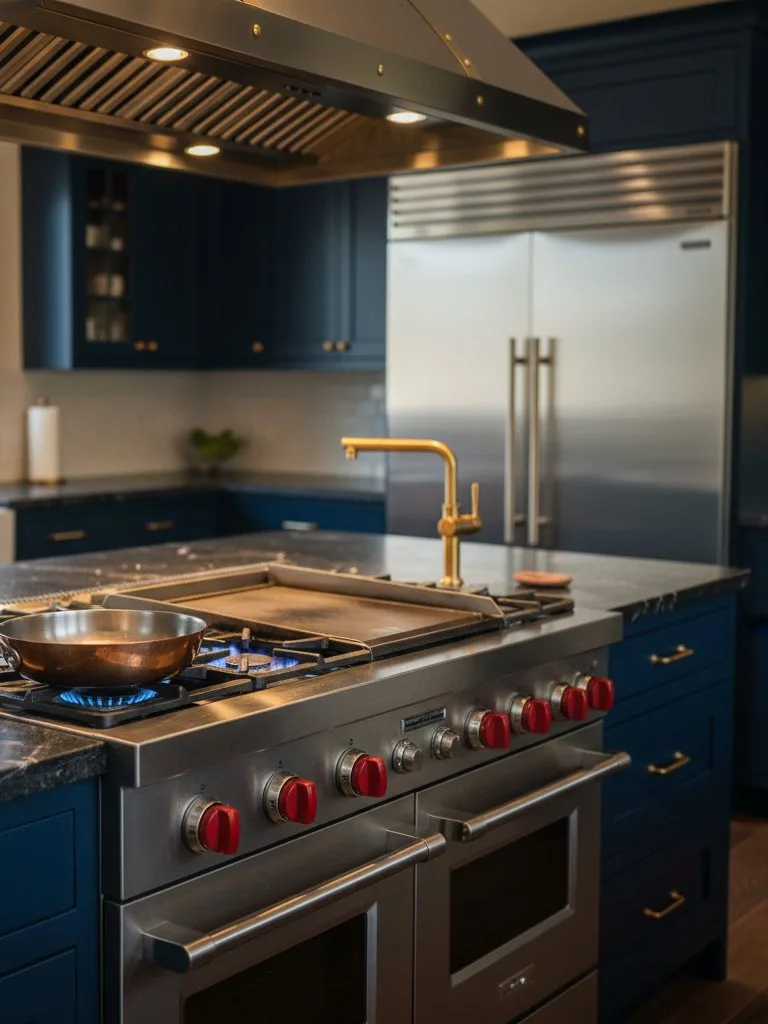
- Gas rangetops are the cooktop portion of Wolf’s pro-style ranges and standalone rangetops, often with higher-BTU dual-stacked burners and sometimes an integrated griddle or charbroiler. More burners and a charbroiler module mean more ignition points and more places for grease and scale to interfere.
- Induction cooktops have no flame at all. Each zone is a copper coil under a ceramic-glass top, driven by a power board that switches at high frequency to induce heat directly in the pan. The failure language here is entirely electronic — power modules, cooling fans, pan-detection sensors, and the glass itself — not igniters and valves.
That split matters because the same words (“my Wolf cooktop won’t heat”) mean a gas-and-ignition problem on one platform and a power-electronics problem on another. We don’t carry a single checklist across all three.
A few Wolf-specific construction details that show up in diagnosis:
- The spark electrodes sit right at the burner edge where boil-overs and cleaning water reach them, so a wet or carbon-fouled electrode is one of the most common reasons a burner clicks without lighting.
- The burner caps and rings must seat precisely. A cap that’s been knocked askew during cleaning will throw an uneven, lopsided flame or refuse to light at all — and it looks identical to a hardware failure until you reseat it.
- On induction, the cooling fans and thermal sensors are aggressive about self-protection. The board will shut a zone down rather than cook itself, which means an overheating fault often points at airflow, not the coil.
Most common faults we diagnose
Across the Wolf cooktops we see in Denver kitchens, the same patterns recur. The leading ones:
- Burner clicks but won’t light — the headline gas complaint. Usual causes are a wet or food-fouled spark electrode, a cracked electrode insulator leaking spark to ground, a misaligned burner cap, or a clogged flame port. Often it’s a five-minute clean; sometimes it’s an electrode.
- Continuous or random clicking after the burner is already lit — usually moisture on an electrode or a burner cap that isn’t seated, but a degraded spark module can also fire all electrodes at once until it’s replaced.
- Weak, low, or yellow flame — a partially blocked port, an orifice issue, or low gas pressure. Yellow flame in particular is worth a look at Denver’s altitude, where lean combustion changes how a marginal burner behaves.
- Burner won’t hold a low simmer — the thing people buy a Wolf for. A worn gas valve, a debris-restricted port, or an orifice mismatch can take away that precise turndown so the flame either gutters out or jumps.
- Knob feels loose, sloppy, or won’t turn smoothly — the valve stem and its detents wear, and the click-into-place feel that defines a Wolf knob fades.
- Induction zone won’t power on or keeps shutting off — a failed power/inverter board, an overheated cooling fan, or a thermal sensor protecting the electronics.
- Induction won’t detect the pan — a pan-detection sensor fault, a power-board issue, or genuinely incompatible cookware. We verify with your actual pans.
- Cracked or chipped glass on an induction or radiant top — a structural failure that can expose the coil and must be addressed before the surface is used again.
- All burners dead at once / no spark anywhere — points away from individual burners and toward the shared spark module, a wiring harness, or power to the cooktop.
- Gas smell at or around a burner — stop and call. We’d far rather diagnose a cold cooktop than have you run a suspected gas leak.
A safety note worth repeating: if you smell gas, turn the gas off and call us before using the cooktop. Combustion faults aren’t a DIY guessing game.
How we work the diagnosis
We move in order, because swapping parts and hoping is how a small repair turns into a big bill:
- Identify the platform and confirm the symptom. Gas sealed-burner, rangetop, or induction — that decision routes the entire diagnosis.
- Isolate to one burner or zone. If a single burner fails while the rest are fine, the shared parts are cleared and we look local. If everything fails together, we look at the shared module, harness, or power.
- Test, don’t assume. On gas, that means inspecting the electrode and cap, checking spark at each electrode, and verifying the valve and port. On induction, it means reading the power board, coil, fan, and pan-detection behavior with real cookware.
- Account for the Denver factor. Lean combustion, scale, and dried-out seals all change the picture here, so we factor them in rather than diagnosing for sea level.
- Explain and quote up front. You get the real cause in plain language and a firm price before any work begins. The $89 service call is applied to the repair.
Parts and longevity
Wolf builds cooktops to last, and most of what we replace are the parts that take the most direct abuse: spark electrodes that get soaked and fouled, burner caps that get scrubbed and bumped, gas valves whose simmer precision wears over years of daily turning, and on induction, the power boards and cooling fans that bear the electrical and thermal load.
We use OEM-grade and manufacturer-compatible parts from verified suppliers, matched to your specific Wolf model. That matters more on a cooktop than people expect. A burner cap or orifice that’s close-but-not-exact will give you a flame that looks fine and simmers wrong; an electrode that doesn’t seat properly will spark to the wrong place. For ignition and induction components, we source parts spec’d to your exact cooktop rather than a generic substitute.
A few habits genuinely extend a Wolf cooktop’s life in Denver:
- Dry the burners after cleaning. Wet electrodes are the number-one cause of nuisance clicking. Let everything air-dry before you cook.
- Reseat caps carefully. After cleaning, make sure each burner cap drops flat into its locating notches. A lopsided cap mimics an ignition failure.
- Keep ports clear. A bent paperclip or a soft brush clears the flame ports; clogged ports are behind a lot of weak-flame complaints.
- On induction, keep the vents clear and the glass un-cracked. Airflow protects the electronics, and a chipped surface only gets worse with heat cycling.
The altitude and water angle
Most cooktop troubleshooting you’ll find online was written for sea level. Denver isn’t sea level, and it changes how a Wolf cooktop behaves in concrete ways.
Thin air and gas combustion. At 5,280 feet the air is roughly 15% thinner, so there’s less oxygen per cubic foot reaching every burner. Gas runs leaner up here, which has real consequences on a Wolf cooktop: orifice sizing and burner calibration matter more than they do at the coast, a marginal electrode or a slightly clogged port shows itself sooner, and a flame that would look fine at sea level can run yellow or lazy in Denver. When we diagnose a weak-flame or won’t-simmer complaint, the altitude is part of the math, not an afterthought.
Hard water and scale. Denver’s water commonly runs 150–250 ppm, and that mineral content leaves its mark. Scale and spotting build up around burner bases, under caps, and in the seams of the cooktop surface; on a rangetop with a griddle or any feature touched by water, mineral deposits accumulate faster than in soft-water regions. Scale around a port or under a cap interferes with both ignition and flame quality, and it’s an easy thing to miss if you don’t know to look for it here.
Very dry air. Denver’s low humidity is hard on rubber and silicone. The seals and gaskets around a cooktop’s surface and knob assemblies dry out and stiffen faster than they would in a humid climate, which over time lets debris reach places it shouldn’t. Combined with strong high-altitude UV on anything exposed, materials simply age quicker here.
Heat rejection on induction. Thinner air carries away less heat, so an induction cooktop’s cooling fans and power electronics run a touch warmer than their sea-level baseline. That extra thermal margin is small, but over years it nudges fans and boards toward earlier failure — and it’s why an induction overheating fault in Denver deserves a real look at airflow, not just a board swap.
None of this is exotic. It’s the difference between a repair that holds and one that comes back next season, and it’s why we diagnose for the climate the cooktop actually lives in.
Wolf, Sub-Zero, and the rest of your kitchen
Wolf and Sub-Zero are sister brands under one parent, and they’re usually installed together — a Wolf cooktop or rangetop alongside a Sub-Zero refrigerator and a Cove dishwasher. We service the whole premium tier, so if your cooktop isn’t the only thing acting up, one trip can often cover more than one appliance. Beyond Wolf, our technicians regularly work on cooktops and ranges from Thermador, Viking, Miele, Gaggenau, Dacor, BlueStar, Bosch, KitchenAid, Monogram, and Fisher & Paykel, with model-specific knowledge instead of a one-size-fits-all routine. If a Wolf wall oven or range oven is misbehaving along with the cooktop, mention it when you book and we’ll come prepared for both in a single visit.
How to book
You don’t have to cook around a burner that won’t light or an induction zone you can’t trust. Our technicians repair Wolf cooktops across Denver and the surrounding suburbs, with same-day or next-day appointments in most cases. Every visit begins with the $89 diagnostic service call, applied toward the repair, and you’ll always get an up-front price before we start — we quote the repair only after we’ve actually inspected the cooktop.
Call (720) 770-4189 anytime; the phone is answered 24/7 and repairs run daily from 8:00 AM to 6:00 PM. Prefer to handle it yourself? Reserve a visit online at nexfield.pro and get your Wolf cooktop back to lighting on the first turn.