Quick orientation: how a KitchenAid range is built
A KitchenAid range is really a cooktop and an oven sharing one shell, so the first job is figuring out which half failed. A “my range is acting up” call can mean a fouled igniter up top, a tired oven sensor, or a control board touching both — and we sort that out before quoting anything.
We’re an independent shop that has worked Denver-metro kitchens since 2012, and we are not affiliated with, endorsed by, or sponsored by KitchenAid or its parent company. We bring familiarity with how these ranges are engineered and how the mile-high climate nudges them off spec.
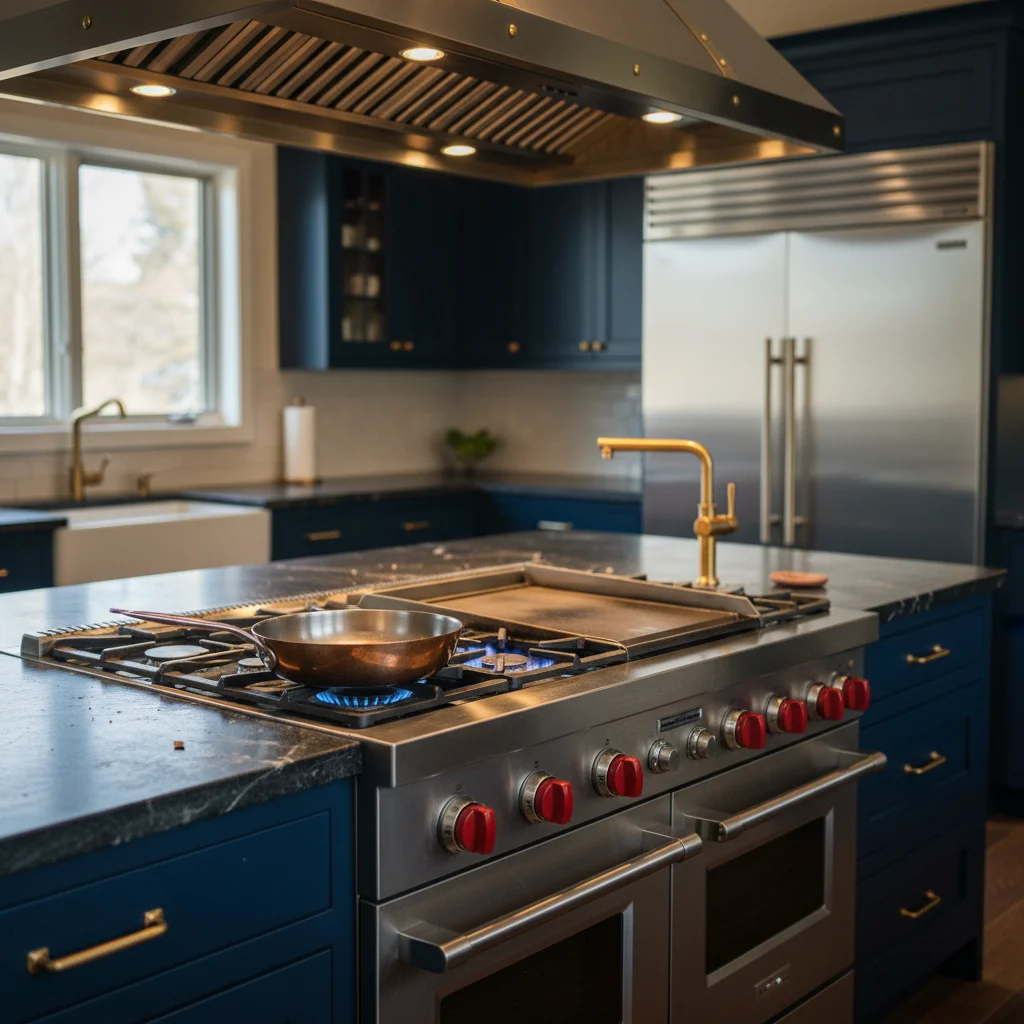
KitchenAid builds the range on a few platforms, and knowing yours shapes the diagnosis:
- Gas ranges pair sealed surface burners with a gas oven lit by a hot-surface igniter — combustion top to bottom, so altitude touches the whole appliance.
- Electric ranges use radiant elements up top and electric bake, broil, and convection below, where faults center on elements, sensors, and relays.
- Dual-fuel ranges keep gas burners but run an electric oven, so cooktop problems read as gas faults and oven problems read as electric.
- Even-Heat true convection adds a third element around the fan, which is why so many “uneven baking” calls trace to airflow, not the bake element.
Most common KitchenAid range faults we see
The same handful of patterns show up across KitchenAid ranges in Denver homes:
- Burner clicks but won’t light — a spark igniter fouled by spillover, a misaligned cap, trapped moisture, or a weak module firing every burner.
- Lights on high, dies on simmer — a worn electrode or a partly blocked port, worsened by Denver’s thin air narrowing the flame’s margin.
- Oven won’t reach or hold temperature — a drifting sensor, a failed bake or convection element, a weakening hot-surface igniter, or a miscalibrated control.
- Display dead or unresponsive — KitchenAid’s glass-touch controls mean a blank panel is often a relay or control board, not a simple switch.
- AquaLift self-clean trouble — a cycle that won’t start, add water, or finish, usually the water valve, door lock, or control.
- Stored fault codes — logged by the oven control, which we read as a lead toward a sensor, relay, or fan, never the final verdict.
If you ever smell gas, shut the supply off and call before running the range.
How we run the diagnosis
- Confirm the platform and the real symptom — gas, electric, or dual-fuel, and cooktop, oven, or both.
- Pull any stored oven codes, then test ignition directly: gap each electrode, or measure igniter draw against the gas valve’s response.
- Measure the heat path — compare the sensor’s reading against actual cavity temperature and check element continuity.
- Explain the cause plainly and quote a firm price, only after inspection.
Parts and longevity
KitchenAid ranges run for many years, and most of what fails is a wear item, not the whole appliance. The parts we replace most often are spark igniters and electrodes, oven sensors, bake and convection elements, hot-surface igniters on gas ovens, fan motors, and the boards behind a dead display — each matched to your exact model and serial so the fitment is right the first time.
The altitude and water angle
Denver’s 5,280-foot elevation means roughly 15% thinner air, which changes combustion. Gas burners and oven igniters jetted for sea level run leaner here, showing up as lazy yellow flames, soot, or a burner that won’t hold a low simmer. The same thin air alters how an Even-Heat cavity circulates heat, so a slow convection fan or a drifting sensor bakes worse here than near the coast. Add a dry climate that’s hard on gaskets, and hard water around 150 to 250 ppm that leaves scale wherever a range touches water, including AquaLift.
How to book
Call (720) 770-4189 any time — the line is answered 24/7, and repairs run daily from 8:00 AM to 6:00 PM, or book online through the link on this site. Every visit starts with the $89 service call, which covers a full on-site diagnosis and is credited toward the repair. Let’s find the real fault and get your KitchenAid range cooking again.