What this repair actually involves
When you call us about a Bosch oven, we come out, reproduce the fault in person, and trace it to a single component — a drifting sensor, a tired igniter, an open element, a leaking door seal, or a logged control fault — then quote one flat price before touching a tool. No parts swapped on a hunch. We’re an independent shop serving the Denver metro since 2012, and we are not affiliated with or endorsed by Bosch or BSH.
How Bosch builds the oven, and why it matters here
Bosch designs around European convection — a dedicated rear element wrapped behind the fan, so heated air does much of the cooking. That gives even results but adds a fan and a third element as failure points. Across the lineup you’ll find:
- Electric wall ovens and slide-in ranges with bake, broil, and convection elements driven by relays on the control board.
- Gas and dual-fuel ranges using sealed burners and a hot-surface igniter feeding a safety valve — no standing pilot.
- Steam and combi ovens that add a reservoir, generator, lines, and valves to the usual anatomy.
- Electronic controls that manage each cavity, run self-clean and convection cycles, drive the door lock, and store readable fault codes.
Problems we see most on Bosch ovens
- Bakes low or uneven — usually the oven temperature sensor (RTD) reading off, or a failed bake/broil element.
- Slow or no ignition on gas models — a fading hot-surface igniter that can’t pull enough current to open the gas valve.
- Long preheats and door-side hot spots — a hardened door gasket leaking heat at the seal line.
- Convection roar or rattle — a worn or seizing fan motor.
- Error code or dead display — a control-board relay, the door-lock circuit, or a tripped thermal cutoff.
- Weak or no steam on combi models — scale fouling the generator, valves, or level sensor.
- Self-clean won’t start or won’t unlock — a failed door lock or its switch.
Inspection and honest pricing
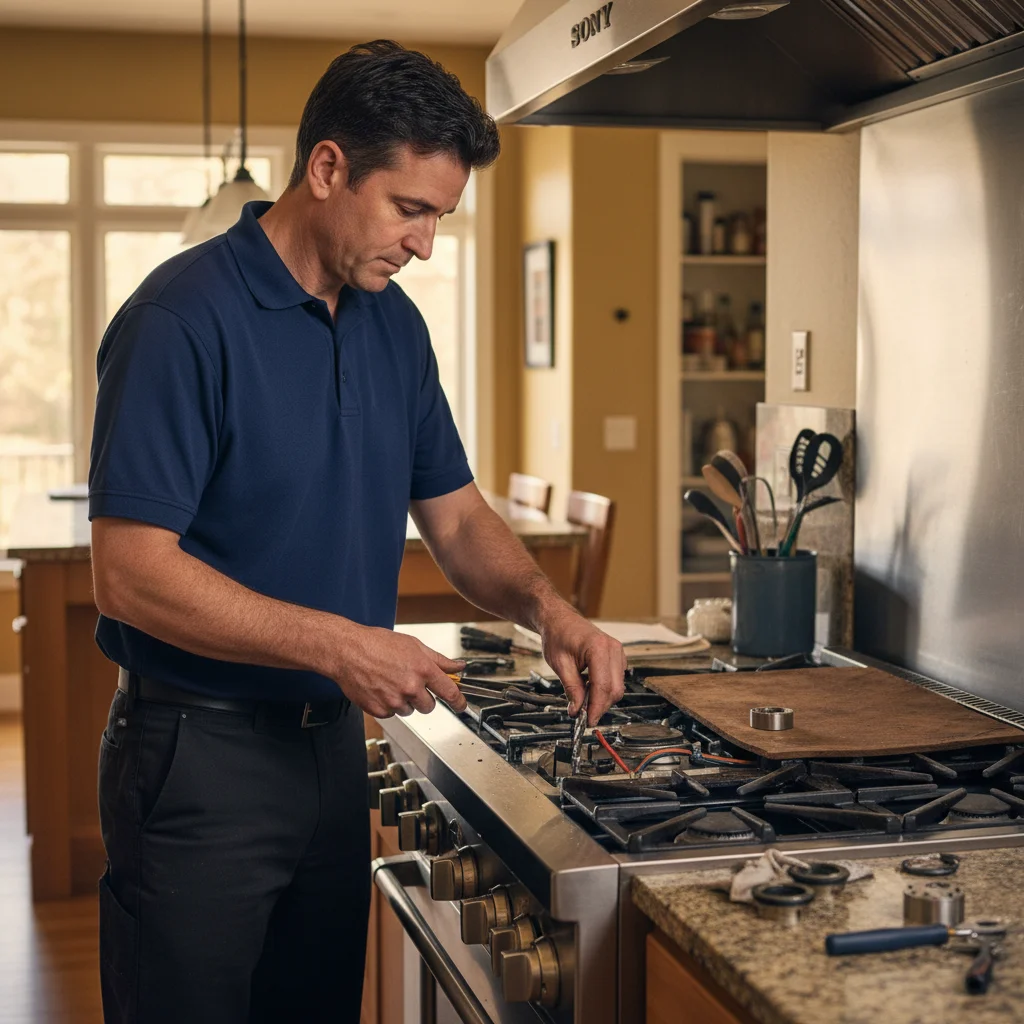
The visit is deliberate. We confirm the symptom ourselves, pull any stored fault codes, then measure real cavity temperature with an independent probe against both the setpoint and the oven’s own sensor. On electric ovens we check each element and relay for continuity and draw; on gas, we measure igniter current and confirm the valve opens. We inspect the door, gasket, and hinges for heat leaks, and on steam units we check the generator and valves for scale. Then you hear the cause and a single up-front number. The $89 diagnostic is applied straight to that repair, and the exact repair price is quoted only after the in-person inspection.
Why Denver is harder on these ovens
Most Bosch ovens are validated near sea level, then installed a mile up. Three local factors change how they age:
- Thin air at 5,280 feet — roughly 15% less dense. Gas burners mix a fixed volume of air with fuel, so the flame runs leaner and a marginal igniter falls short sooner, producing slow lights and the occasional whiff of gas before ignition.
- Very dry climate — Front Range air dries and stiffens the door gasket faster than humid regions, so heat leaks drive up preheat times and uneven baking that people often blame on the thermostat.
- Hard water at 150–250 ppm — only matters on steam and combi ovens, but there it drives scale into the generator, lines, and valves, making mineral-aware descaling central rather than optional.
Related Bosch repairs
If the trouble isn’t only the oven, we also handle Bosch range, cooktop, dishwasher, and ventilation repair across the same service area.
Get your Bosch oven looked at
If yours bakes low, overshoots, won’t ignite, throws an error, or leaks heat at the door, the sooner we look the smaller the fix tends to be. Call (720) 770-4189 any time — the line is answered 24/7 — or book online, and we’ll get your Bosch oven back to the even heat it was built to hold. The on-site diagnostic is a flat $89, credited toward the repair.