The repair, explained
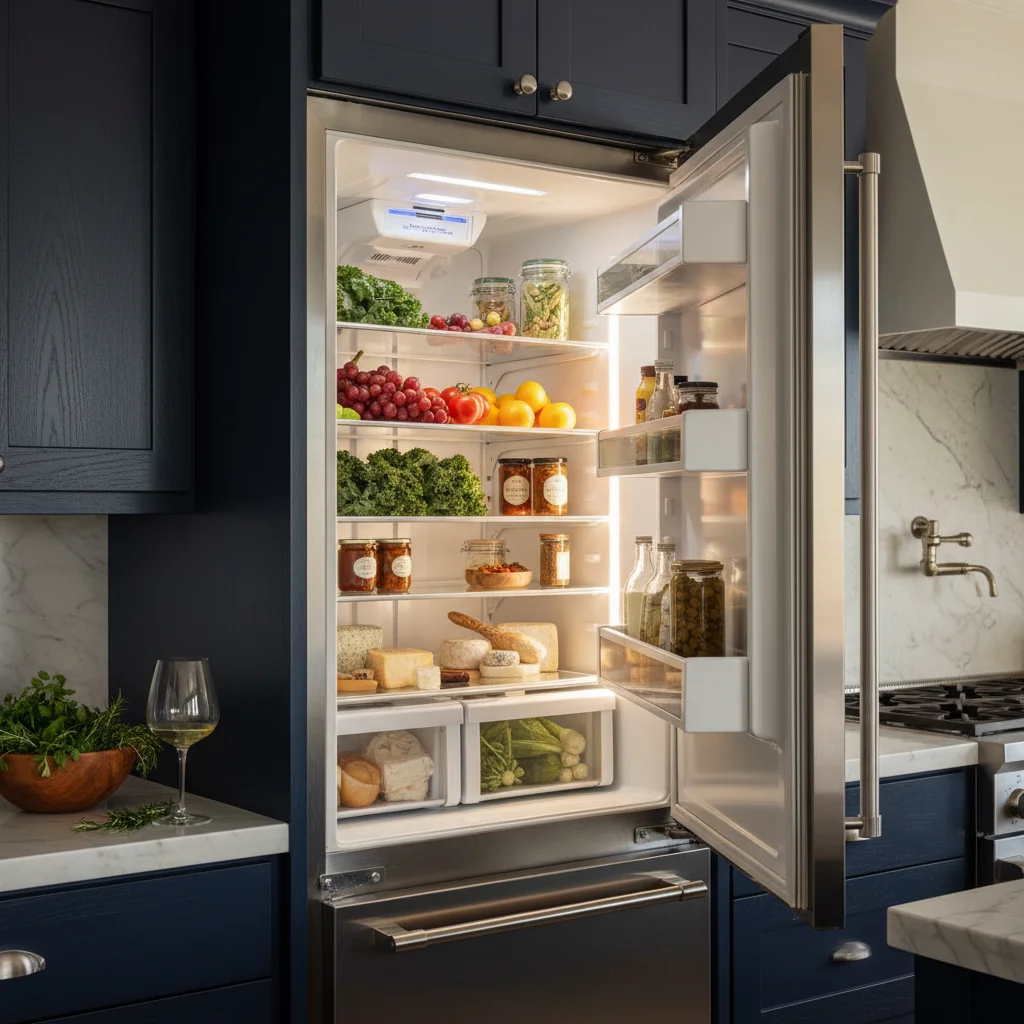
A Bosch refrigerator is built to be unobtrusive — set close to flush with the cabinets, run by thermistors and a control board rather than a dial, and driven by a variable-speed inverter compressor that throttles itself for efficiency instead of cycling hard on and off. That refinement is the reason a fault can be hard to read: the part that failed and the symptom you noticed are often one step apart, and the compressor’s habit of running long and slow can make a real problem look like normal behavior. Our job is to tell those apart on the first visit, name the actual cause, and hand you one firm price.
On a machine this integrated, the costly mistake is replacing a control board when a cheap thermistor, a fouled condenser, or a stuck damper was the real story. The on-site diagnostic is a flat $89, credited toward the repair if you go ahead. We are an independent Denver service that has worked on premium refrigeration since 2012, and we are not affiliated with, endorsed by, or sponsored by Bosch or any manufacturer.
Symptoms and causes
Across Bosch counter-depth french-door, bottom-freezer, and built-in models, the failures cluster in a few places:
- Fridge warm, freezer cold — a stalled evaporator fan, a damper stuck closed, or defrost frost blocking the air path on the single-evaporator design.
- Runs nonstop or won’t reach temperature — a dust-choked condenser, a weak condenser fan, a hardened gasket, or a drifting sealed-system charge.
- Frost buildup or pooling water — a defrost heater or sensor fault, or a clogged defrost drain that ices up and overflows.
- Weak, hollow, or no ice — Denver’s hard water scaling the inlet valve, fill tube, line, or mold long before the ice module itself fails.
- Soggy or freezing produce drawers — a VitaFresh humidity control or thermistor reading off, not a sealed-system problem.
Why a specialist
Repairing a Bosch in Denver isn’t the same as doing it at sea level, and the local factors land on the parts most likely to fail. At 5,280 feet the air is roughly 15% thinner, so a condenser sheds less heat per pass — a lightly dusty condenser or a slightly slow fan bites here far sooner than the same unit would near the coast, and a marginal refrigerant charge shows up earlier and looks worse. Denver’s hard water scales the entire ice and water path. And the very dry climate stiffens and shrinks door gaskets faster than a humid region would, so a seal that no longer seats drives up run time and frost on a fridge only a few years old. A diagnosis that ignores all three is the one that comes back next summer.
What a visit looks like
The visit is deliberately methodical:
- Confirm the symptom by measuring actual compartment temperatures, not taking the complaint at face value.
- Read the control system — pull stored faults and check thermistor resistance and component status against what the board reports.
- Trace the airflow from evaporator through fan and damper, looking for frost blockage or a stuck part.
- Work the condenser and sealed system in sequence, measuring compressor and charge behavior rather than assuming.
- Quote before touching it — cause, part, and total up front, with the $89 applied to the repair.
Pricing
The $89 covers the full on-site inspection and is credited toward any repair you approve. We don’t quote Bosch refrigerator repairs over the phone beyond that fee, because two units with the same warm-fridge complaint can need entirely different parts — a $40 thermistor on one, sealed-system work on the next. One inspection, one honest price, your decision.
Questions people ask
If your Bosch refrigerator is warming, running nonstop, frosting over, leaking, or making poor ice, the sooner we see it the smaller the fix tends to be. We use OEM-grade parts matched to your model, and we’ll tell you exactly what failed before we fix it. Call (720) 770-4189 — answered 24/7 — or book online to get your Bosch refrigerator back to holding temperature across the Denver metro.