Quick orientation
A BlueStar cooktop is bought for raw, restaurant-grade output from an open burner that throws a wide, hot, controllable flame. When that slips — a burner that ticks but won’t catch, a high flame that won’t drop to a clean simmer, a star flame gone lazy and yellow — anyone who cooks on it notices at once. Our job is to find why, not swap parts on a hunch.
We’re an independent appliance repair company that has served the Denver metro since 2012, and high-output gas cooktops are squarely in our lane. To be clear up front: we are not affiliated with, endorsed by, or sponsored by BlueStar or Sub-Zero Group, Inc. The philosophy is simple — “this burner won’t light” can mean a fouled electrode, a clogged port, a misseated head, or a tired gas valve, four different repairs at four prices. So we measure and isolate first, then give you the cause in plain language and a firm price. The $89 diagnostic service call covers that visit and is applied to the repair.
How BlueStar builds the cooktop — and why it shapes the fix
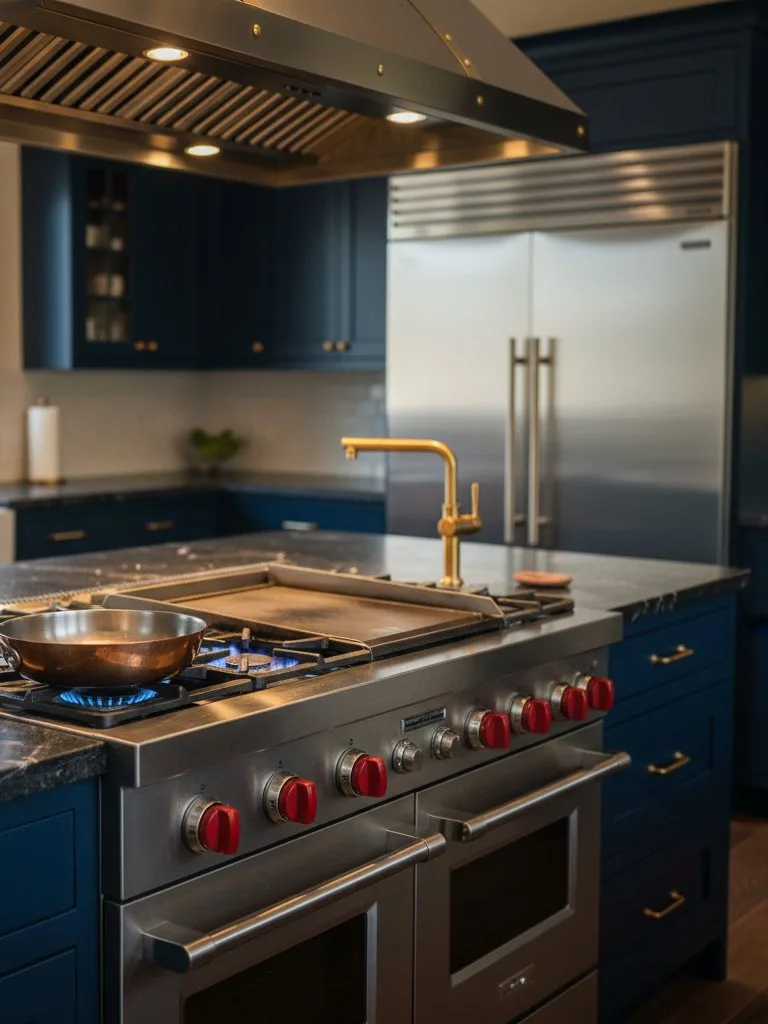
BlueStar’s calling card is the open burner: a brass head above a recessed drip bowl rather than sealed flush to a flat top. That layout delivers very high BTU and a broad flame, but it also means spills, crumbs, and cleaning water reach the ports and electrode directly, with no sealed cap deflecting them. The heavy cast-iron grates are removable, so a head set down out of position throws an uneven flame until it’s reseated, and the burners swing from a roaring high to a true low simmer — which is why simmer faults are felt instantly on this brand.
Most common faults we diagnose
Across the BlueStar cooktops in Denver kitchens, the same patterns recur:
- Burner clicks but won’t light — usually an electrode fouled by boil-over, a cracked insulator leaking spark to ground, debris in the open ports, or a crooked burner head.
- Continuous clicking after it’s lit — moisture or residue on an electrode, a head that isn’t square, or a degraded spark module firing every electrode at once.
- Won’t hold a low simmer — a blocked port ring, a worn gas valve, or an orifice mismatch takes away the low end people buy a BlueStar for.
- Lazy, yellow, or lifting flame — air-fuel mix off from a clogged port, a misseated head, or air-shutter and orifice settings that don’t suit Denver’s thin air.
- Loose knob, or a burner that won’t shut off — worn valve stems, or a stuck switch that earns a same-day call. (If you smell gas, shut off the supply and call before running the cooktop — combustion faults aren’t a trial-and-error project.)
Parts and longevity
BlueStar builds these cooktops to be rebuilt rather than thrown away, and most of what we replace are the parts that take direct abuse on an open burner: electrodes that get soaked and carbon-fouled, brass heads scrubbed and bumped during cleaning, orifices, and gas valves whose simmer precision drifts after years of daily turning.
We use OEM-grade and manufacturer-compatible parts from verified suppliers, matched to your exact BlueStar model. That precision matters here — an orifice that’s close-but-not-right simmers wrong, and an electrode that doesn’t seat properly sparks to the wrong place. A few habits genuinely extend a BlueStar’s life in Denver:
- Dry the burners fully after cleaning — wet electrodes are the number-one cause of nuisance clicking.
- Reseat heads and grates square so the flame ring stays even.
- Keep the open ports clear with a soft brush; clogged ports cause most weak-flame complaints.
The altitude and water angle
Most cooktop troubleshooting online was written for sea level. Denver sits a mile up, and that changes a BlueStar in concrete ways. Thin air leans out combustion: at 5,280 feet the air carries roughly 15% less oxygen per cubic foot, so every open burner runs a leaner mix. Orifice sizing and air-shutter settings matter more than the manual assumes — a BlueStar configured for sea level can show yellow, sooty flames and a simmer that won’t settle, so we check flame quality on site and tell you what the elevation calls for.
Hard water here commonly runs 150–250 ppm; mineral scale collects around burner bases, in the open ports, and in the drip bowls, fouling electrodes and choking the flame. And very dry air embrittles the ceramic insulators around the electrodes so they crack more readily — one quiet cause of intermittent no-light faults up here.
How to book
You don’t have to cook around a burner that won’t catch or a flame you can’t trust. Our technicians repair BlueStar open-burner cooktops and rangetops across Denver and the suburbs, with same-day or next-day appointments in most cases. Every visit opens with the $89 diagnostic service call, applied toward the repair, and you’ll always have an up-front price before we start — quoted only after we’ve inspected the cooktop in person.
Call (720) 770-4189 anytime; the phone is answered 24/7 and repairs run daily from 8:00 AM to 6:00 PM. Prefer to book yourself? Reserve a visit at nexfield.pro and get your BlueStar back to a clean, roaring blue flame.