What makes this different from a standard fridge fix
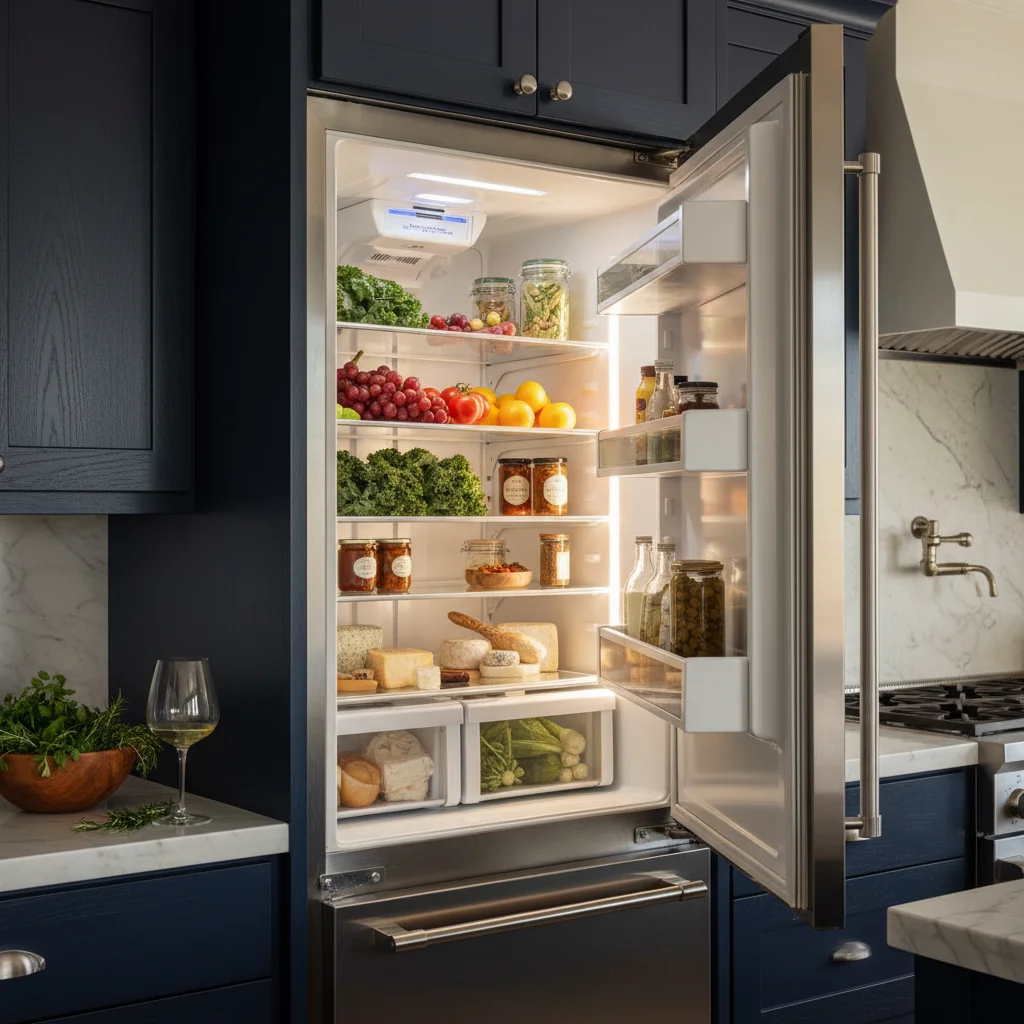
A freestanding refrigerator that quits is an appliance problem. A built-in column drifting warm in a Greenwood Village estate is a system problem. The equipment behind these custom panels is engineered to hold a single degree across a six-foot column, juggle several temperature zones from one board, and keep a wine room steady for years. Swapping the part that “looks worn” rarely fixes it — and on the larger lots in the Tech Center corridor, where a kitchen often pairs a Wolf range with a Sub-Zero column, a separate freezer, drawer units in the island, and a wine room off the pantry, getting the diagnosis right is the whole job. We work the appliance as the precision system it is, then quote before lifting a panel.
What you are seeing, and what it usually means
Greenwood Village refrigeration tends to fail in recognizable patterns, and the symptom usually points the diagnosis:
- The fresh-food side warms while the freezer still seems fine
- A wine-room zone creeps up a degree at a time or never cycles off
- Frost stacks on the freezer’s back wall
- The compressor runs constantly and the cabinet feels warm
- Ice comes out cloudy, small, or barely at all
- Water pools under a drawer unit, or a door no longer seals
A column drifting warm is most often a clogged condenser, a failed evaporator or condenser fan, a worn start relay, or a sealed-system fault — and in a flush install boxed into millwork, restricted airflow is the first suspect. A wine room that won’t hold usually traces to a sensor, a cooling stage, a fan, or a gasket gone stiff in Denver’s dry air. Frost on the freezer wall points to a defrost heater, sensor, or a board mistiming the cycle. Cloudy ice is nearly always hard-water scale.
Why an estate kitchen needs a specialist
These homes carry an unusual density of premium refrigeration, and each unit behaves differently under load. A generalist who treats a $12,000 column like a basic top-freezer tends to misread airflow as a compressor failure, or a sensor fault as a dead cooling stage. We read stored fault codes where the unit reports them, trace the sealed system and airflow as one path, and test electrical parts while the unit runs — so the part we replace is the part that actually failed.
What a visit looks like
- We measure real fresh-food and freezer temperatures and inspect how the unit sits in the cabinetry — clearances and exhaust path first.
- We pull fault codes where available and trace condenser, evaporator, compressor, fans, and defrost parts together.
- We factor in Denver’s altitude — air about 15% thinner, so condensers shed less heat and a built-in column runs warm here sooner — plus our 150–250 ppm hard water and dry, high-UV climate that scales ice lines and hardens gaskets early.
- We explain the cause in plain language and give a firm price before any work starts.
Pricing
The diagnostic service call is $89, and it’s credited toward the repair if you approve the work. Greenwood Village kitchens hold a wide spread of equipment, so the exact repair price is set only after an on-site inspection — never quoted blind, never padded afterward. You see the full number before anyone begins.
Common questions, answered
Can you protect my custom panels and stone? Yes — we plan access around panel-ready fronts and shield surrounding millwork. Do you handle multiple units in one visit? Yes, with a single up-front price. How soon can you come? Usually same-day or next-day across the southeast metro.
If a refrigerator or wine room has slipped, the cheapest fix is the early one. Call (720) 770-4189 — answered 24/7 — or book online, and a technician will be at your Greenwood Village door to find the real cause and quote it up front.